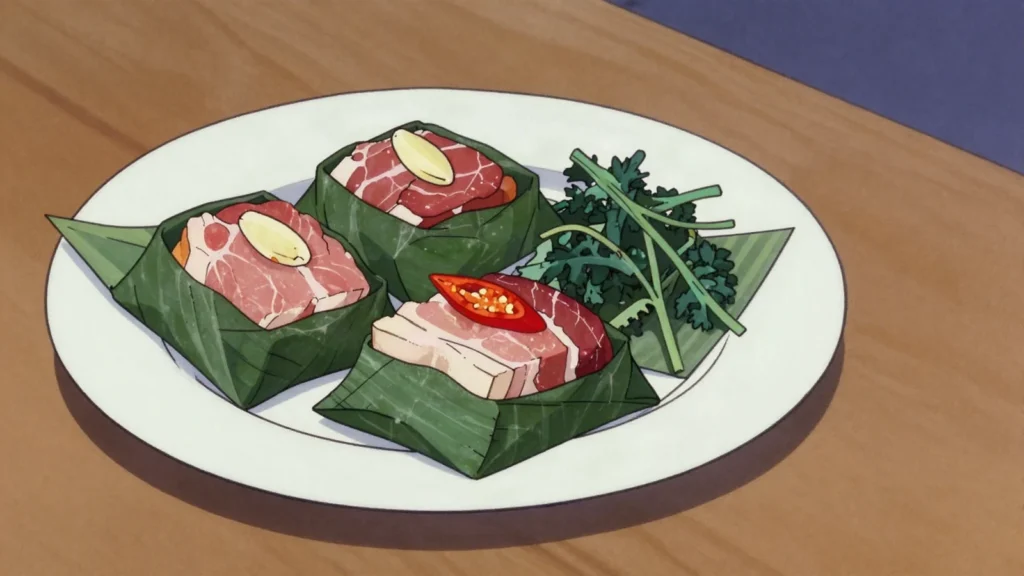

A small cube or cylinder of raw pork soured in banana leaf over two or three days, pink and firm and sharply acidic, eaten uncooked with beer across Vietnam and associated above all with Thanh Hoa.
Acidity alone does not kill what raw pork carries. Nem chua is a recognised vehicle for trichinellosis, Streptococcus suis and Salmonella in Vietnam, and the industry’s answer has been irradiation and controlled starter cultures rather than better home technique — the same route taken with Thai naem. Producers also rely on pork slaughtered hours earlier, which a domestic kitchen has no way to match. The atlas records what nem chua is rather than telling you to ferment raw pork on a counter
What goes into it
- Very finely minced raw pork, always from a freshly killed pig
- Shredded boiled pork skin, which gives the springy bite
- Cooked rice or roasted rice powder, which feeds the lactic bacteria
- Garlic, sugar, salt and fish sauce
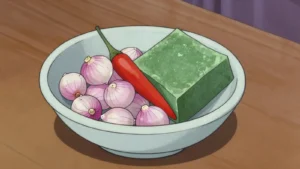
- A slice of raw garlic and a whole bird’s eye chilli pressed onto the outside
How it is made
The pork is pounded or minced fine while still warm from slaughter, mixed with the rice, skin and seasoning, then wrapped very tightly in banana leaf so no air remains inside. Bundles are stacked at room temperature for two to four days, during which lactic bacteria drop the pH until the pork is firm, pink and sour. It is then sold and eaten as it is, unwrapped at the table and chewed with the garlic and chilli on the outside.
How long it takes: Two to four days at room temperature, less in hot weather
How it is eaten
Raw, unwrapped from the leaf, with beer, raw garlic and chilli, or sliced into salads
History
Thanh Hoa is the best-known source; lactic fermentation from cooked rice acidifies the pork enough to be eaten uncooked with beer.
Frequently asked questions
What is Nem Chua?
Nem Chua is a fermented & pickled from Vietnam: raw pork cured with garlic, chilli and rice, soured in banana leaf in days. Thanh Hoa is the best-known source; lactic fermentation from cooked rice acidifies the pork enough to be eaten uncooked with beer.
How is Nem Chua made?
The pork is pounded or minced fine while still warm from slaughter, mixed with the rice, skin and seasoning, then wrapped very tightly in banana leaf so no air remains inside. Bundles are stacked at room temperature for two to four days, during which lactic bacteria drop the pH until the pork is firm, pink and sour. It is then sold and eaten as it is, unwrapped at the table and chewed with the garlic and chilli on the outside. It takes two to four days at room temperature, less in hot weather.
Can I make Nem Chua at home?
No, and the atlas gives no method for it. Acidity alone does not kill what raw pork carries. Nem chua is a recognised vehicle for trichinellosis, Streptococcus suis and Salmonella in Vietnam, and the industry’s answer has been irradiation and controlled starter cultures rather than better home technique — the same route taken with Thai naem. Producers also rely on pork slaughtered hours earlier, which a domestic kitchen has no way to match. The atlas records what nem chua is rather than telling you to ferment raw pork on a counter.
What goes into Nem Chua?
Very finely minced raw pork, always from a freshly killed pig, shredded boiled pork skin, which gives the springy bite, cooked rice or roasted rice powder, which feeds the lactic bacteria, garlic, sugar, salt and fish sauce, a slice of raw garlic and a whole bird’s eye chilli pressed onto the outside.
How is Nem Chua eaten?
Raw, unwrapped from the leaf, with beer, raw garlic and chilli, or sliced into salads.