
Ingredients
Meat and casing
- 2 kghorse rib meat with its attached layer of fat, cut in long strips with the rib bones left in
- 1length of cleaned horse large intestine, about 60–70 cm, rinsed and turned
- kitchen twine
Cure
- 50 gcoarse salt (2.5 percent of the meat weight)
- 3 gcuring salt with nitrite, optional but recommended
- 2 tbspcoarsely cracked black pepper
- 1 tbspground cumin
- 6garlic cloves, crushed to a paste
To serve
- sliced thin over beshbarmak noodles, or cold with raw onion rings and black pepper
Directions
- Choose ribs from a well-fattened autumn horse. The fat seam over the ribs is the whole point of kazy, and lean meat makes a dry, disappointing sausage.
- Cut the rib section into strips 3–4 cm wide, each carrying meat, its fat layer and a rib bone, and trim off any bloody or bruised parts.
- Rub the salt, curing salt if using, pepper, cumin and garlic into the strips. Pack them into a tray, cover, and cure at 2–4 C for 1 to 2 days, turning once. The surface should firm up and darken.
- Scrape and rinse the intestine inside and out several times in salted water, then in water with a splash of vinegar, until it has no smell at all. Tie one end tightly.
- Feed the cured strips in one by one, fat side outward and bones included, without packing them so tight that the casing strains. Press out air as you go, then tie off the second end and prick the casing all over with a needle.
- Hang the sausage in a cool, dry, airy place at 8–12 C for 3–7 days, or cold-smoke it over birch or fruit wood at under 25°C (75°F) for 2–3 days for the smoked kazy of the north. It should dry to a firm, slightly wrinkled tube.
- To cook, put the sausage into cold water, prick it again, and bring it very slowly to a bare simmer over 30 minutes. Rapid heat bursts the casing.
- Hold at 85°C (185°F), never boiling, for 2 hours until a skewer slides through easily and the fat is translucent. Cool the sausage in its own broth for the juiciest result, or lift it out and let it firm.
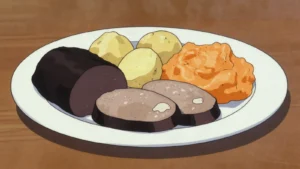
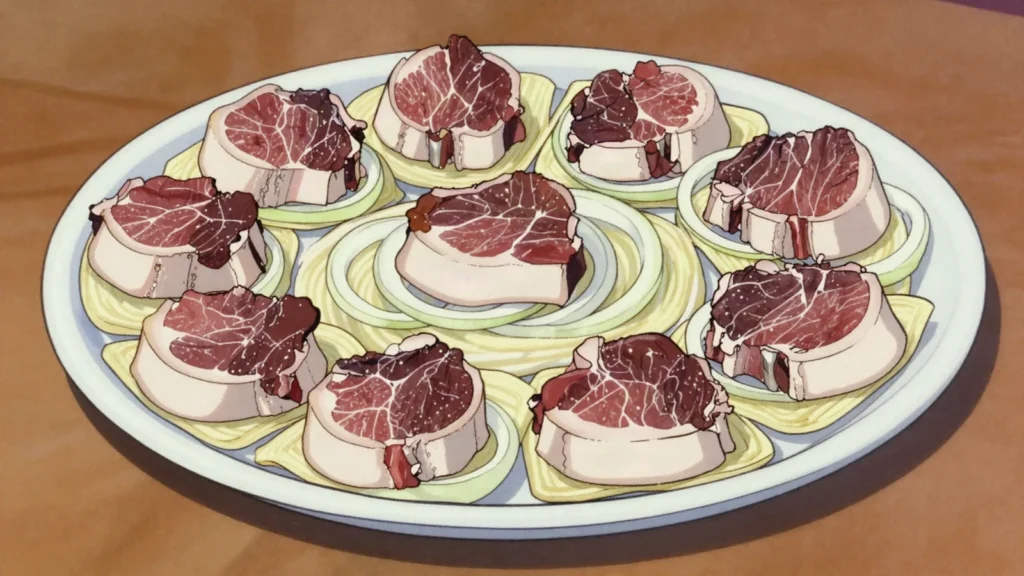
- Slice into 5 mm rounds with a sharp knife, each round showing a ring of white fat around dark meat, and lay them over beshbarmak or serve cold as the first thing offered to a guest.
Technique
- Kazy is a status food. It is offered to honoured guests, brought to weddings, and the fatter the sausage the greater the respect implied.
- Food safety: work cold, keep everything at or below 4°C (40°F) until the sausage is hung, use at least 2.5 percent salt, and use nitrite if you intend a long air-cure. If it ever smells sour, sticky or ammoniac, throw it away.
- Prick before and during cooking and never let the water boil, or the casing splits and all the rendered fat escapes into the pot.
- The rib bones stay in during curing and cooking for flavour, and are usually removed at the table.
Substitutions
- No horse: the same method works with fatty beef brisket and short rib, and is sold across Central Asia as a substitute, though nobody pretends it is the same.
- No natural casing: a 60 mm beef middle or a sewn muslin sleeve will hold the meat, though it will not dry in quite the same way.
Variations
- Karta, made from the horse rectum turned inside out so the fat is inside, and shuzhuk, minced rather than whole-strip.
- Zhaya and zhal, cured horse rump and neck fat, served on the same platter as kazy.
- Smoked kazy from northern Kazakhstan versus the plain air-dried version of the south.
History
A sausage made from horsemeat and horse fat, packed into a length of intestine casing and traditionally dried, smoked or boiled, closely tied to Kazakhstan’s historic nomadic pastoral economy, in which horses served simultaneously as transportation, a symbol of wealth and status, and an important food source, distinguishing Kazakh cuisine from many other cultures where horse is rarely or never eaten. Its preparation, carefully selecting and layering specific cuts of horse fat and meat within the casing, is treated as a specialized skill within Kazakh households and butchery, and kazy carries particular ceremonial significance, traditionally served as a mark of hospitality to important guests and at significant celebrations including weddings rather than treated as routine everyday food.
Frequently asked questions
What is Kazy?
Kazy is a charcuterie & cured from Kazakhstan: cured horse-rib sausage, sliced for honored guests. A sausage made from horsemeat and horse fat, packed into a length of intestine casing and traditionally dried, smoked or boiled, closely tied to Kazakhstan’s historic nomadic pastoral economy, in which horses served simultaneously as transportation, a symbol of wealth and status, and an important food source, distinguishing Kazakh cuisine from many other cultures where horse is rarely or never eaten. Its preparation, carefully selecting and layering specific cuts of horse fat and meat within the casing, is treated as a specialized skill within Kazakh households and butchery, and kazy carries particular ceremonial significance, traditionally served as a mark of hospitality to important guests and at significant celebrations including weddings rather than treated as routine everyday food.
How long does Kazy take to make?
Kazy takes 1 hr 30 min of preparation and 3 to 7 days curing, then 2 hr boiling of cooking. The recipe makes 1 sausage of about 1.5 kg, serving 10 as a slice. It is rated hard to make.
What can I substitute in Kazy?
Yes, within limits. No horse: the same method works with fatty beef brisket and short rib, and is sold across Central Asia as a substitute, though nobody pretends it is the same. No natural casing: a 60 mm beef middle or a sewn muslin sleeve will hold the meat, though it will not dry in quite the same way.
What is the most important thing to get right in Kazy?
Choose ribs from a well-fattened autumn horse. The fat seam over the ribs is the whole point of kazy, and lean meat makes a dry, disappointing sausage.