
Ingredients
The brew
- 5 tablespoonsblack tea leaves
- a strong Indian or Ceylon blend
- 1 litrewater, for the pot
- 1.5 litreswater, for topping up
To serve
- 600 mlwhole milk
- or 300 ml cream
- sugar, to taste
- a pinch of salt, in some homes
Alongside
- baursak, fried dough pieces
- irimshik, dried curd
- kurt, dried salted cheese balls
- jam and butter
- dried fruit and nuts
Directions
- Rinse the teapot out with boiling water. Swirl it around and then pour it away. A warm pot keeps the brew properly hot.
- Put the tea leaves into the warmed pot. Use a generous amount for a small pot. Pour on about a litre of boiling water. Cover it and let it steep properly. Give it a good five to eight minutes.
- Set the pot somewhere warm as you serve. Never let the concentrate boil hard. Heat the milk gently in a small pan. Bring it to just below a simmer only. Cold milk cools the bowl too much.
- Pour warm milk into the bottom of the bowl. Use about a third of the intended pour.
- Add the strong tea concentrate to it. Top it up with plain boiling water. Fill it only to about halfway up the bowl. It should be a warm and light brown.
- Adjust the concentrate to get it right. Serving it is done with food alongside. Set out baursak, the fried dough pieces.
- Put out irimshik and kurt if you have them. It is drunk hot and continuously refilled. Make it fresh each day where you can.
Technique
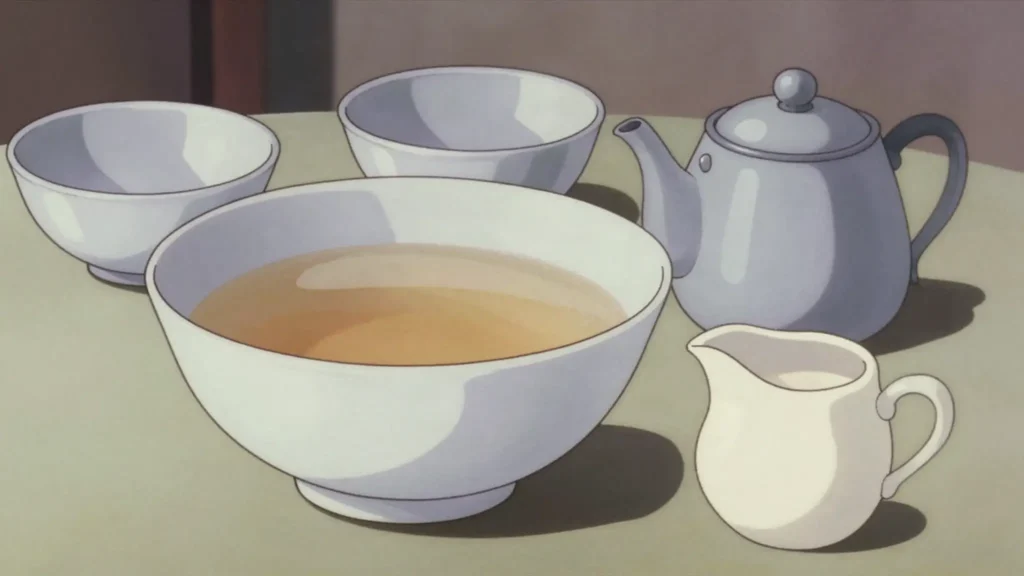
- The bowl is filled only about halfway on purpose: a small pour stays hot to the last mouthful and means the guest is served again and again, each refill a renewed act of hospitality. Filling a bowl to the brim signals there will be no more refills and is read as a hint that the guest should leave.
- The tea is brewed as a very strong concentrate in a small pot and then diluted in the bowl with boiling water from a larger kettle, which is the samovar method in domestic form; do not judge the concentrate as though it were a finished cup.
- Tea is drunk from a handleless bowl called a kese, held in the hand, and the milk goes in before the tea; some households add a pinch of salt as well.
Substitutions
- Cream in place of milk makes it noticeably richer and heavier.
- Any strong Indian or Ceylon black blend works for the concentrate.
Variations
- Some households salt the tea lightly and others sweeten it.
- The spread alongside, the dastarkhan, varies with what the house has.
- Similar half-filled bowl customs are found across Central Asia.
History
Kazakhstan has among the world’s highest per-capita tea consumption, and the hostess refills small servings constantly.
Frequently asked questions
What is Kazakh tea?
Kazakh tea is a drink from Kazakhstan: black tea drunk with milk or cream, poured into half-filled bowls. Kazakhstan has among the world’s highest per-capita tea consumption, and the hostess refills small servings constantly.
How long does Kazakh tea take to make?
Kazakh tea takes 5 minutes of preparation and 15 minutes of cooking. The recipe makes serves 6. It is rated easy to make.
What can I substitute in Kazakh tea?
Yes, within limits. Cream in place of milk makes it noticeably richer and heavier. Any strong Indian or Ceylon black blend works for the concentrate.
What is the most important thing to get right in Kazakh tea?
Set the pot somewhere warm as you serve. Never let the concentrate boil hard. Heat the milk gently in a small pan. Bring it to just below a simmer only. Cold milk cools the bowl too much.