
Ingredients
The cutlets
- 4thin veal or beef cutlets
- about 120 g each
- beaten out thin
The marinade
- 3garlic cloves, crushed
- a handful of parsley, chopped
- juice of 1 lemon
- salt and black pepper
The coating
- 2eggs, beaten
- 200 gfine dry breadcrumbs
- 50 gplain flour
- 1 teaspoonsalt
To fry
- oil, for shallow frying
To build
- 4crusty bread rolls
- mayonnaise
- lettuce leaves
- sliced tomato
- sliced raw onion, optional
Directions
- Put the cutlet between two sheets of film. Beat it out with a heavy pan or mallet. Work from the centre outwards. Aim for about half a centimetre. Flour first, then egg, then breadcrumbs. Flour gives the egg something to grip.
- Use one hand for dry and one for wet. That stops your fingers caking up. Trim any gristle or sinew off them. Lay them between two sheets of film. Beat them out until thin and even. Thick spots stay raw while thin ones burn. Work the whole surface evenly. Put the crushed garlic in a dish. Add the chopped parsley to it. Squeeze in all of the lemon juice.
- Season it with salt and pepper. Lay the cutlets in the marinade. Turn them so they are coated on both sides. Cover the dish and refrigerate it. Give it at least one full hour. Put the flour on one wide plate. Beat the eggs in a shallow bowl.
- Put the breadcrumbs on another plate. Add salt to the flour and the crumbs. Season each stage rather than only the meat. Lift a cutlet from the marinade. Wet marinade stops the flour sticking.
- Press the cutlet into the flour. Coat it evenly on both of its sides. Shake off all of the excess flour. Shake it off properly each time. Dip the floured cutlet into the beaten egg. Coat it completely on both sides. Let all of the excess egg drip off. Press the cutlet firmly into the crumbs. Turn it and press the other side.
- Press it in firmly all over the surface. It is worth doing if you want more crunch. Lay the coated cutlets on a tray. Refrigerate them for twenty minutes. Pour oil into a wide heavy pan. Fill it about a centimetre deep.
- Heat it to about one hundred and eighty degrees. A centimetre is enough to cook it. Drop a single crumb into the oil. It should sizzle immediately and steadily. Keep a lid nearby to smother a flare-up. Never put water on an oil fire at all.
- Turn it over carefully with tongs. Give it another three minutes. Adjust it in between the batches. Lift them out onto a wire rack. That softens the crust within minutes.
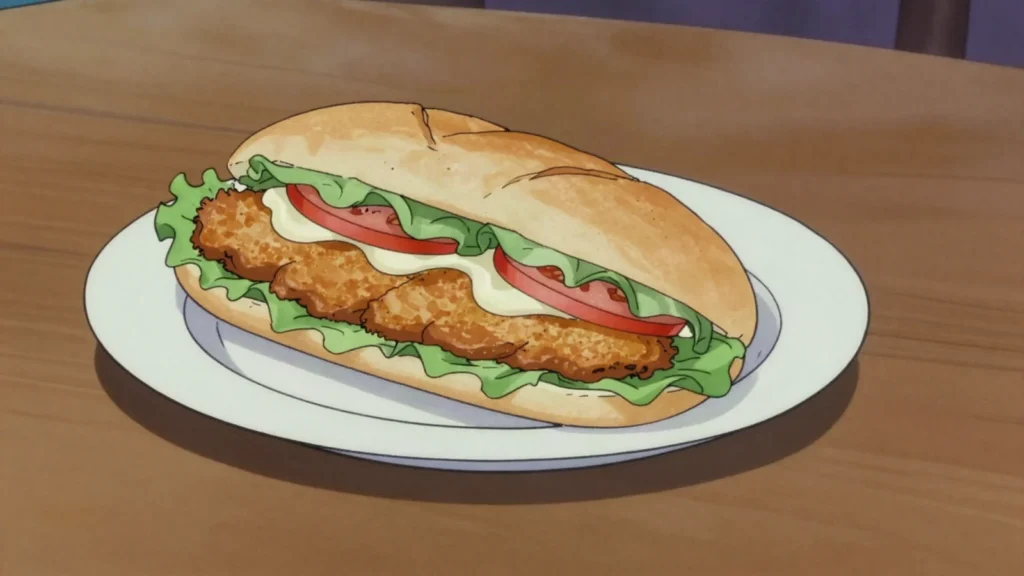
- Spread mayonnaise on both cut sides. It also stops the bread going dry. Lay lettuce leaves on the bottom half. Add the sliced tomato over them. Lettuce under the hot cutlet stays crisp. Lay the hot cutlet on the salad. Fold it over if it is larger than the roll.
- Add sliced raw onion if you want it. Put the top half of the roll on. Press it down on top of it gently. Serving it is always done immediately. Wrap it in paper so that it holds. It must be eaten while the cutlet is hot.
Technique
- The cutlet must be beaten genuinely thin, about half a centimetre: a thin one cooks through in the same three minutes the coating takes to brown, so the two finish together, while a thick one burns outside before it cooks inside.
- The three coating stages each do a job — flour gives the egg something to grip, egg is the glue, crumbs are the shell — and skipping one makes the coating fall off. Press the crumbs in firmly rather than laying them on, and chill the coated cutlets twenty minutes so the coating sets.
- Drain them on a wire rack rather than paper, which traps steam underneath and softens the crust within minutes; and put the lettuce under the hot cutlet, where it stays crisp and acts as a barrier against soggy bread.
Substitutions
- Beef stands in for veal and is used at least as often.
- Dipping in egg and crumb twice gives a thicker crunchier crust, common across Uruguay and Argentina.
Variations
- The atlas also carries chivito, the more elaborate Uruguayan steak sandwich with bacon, egg and ham; this is the simpler cheaper one.
- The cutlets are marinated in garlic, parsley and lemon before coating, which many recipes skip.
- It is sold through street windows in Montevideo as the everyday working lunch.
History
Sold from bars and street windows in Montevideo as the everyday cheap lunch.
Frequently asked questions
What is Milanesa al pan?
Milanesa al pan is a street food from Uruguay: breaded veal cutlet in a bread roll with salad and mayonnaise. Sold from bars and street windows in Montevideo as the everyday cheap lunch.
How long does Milanesa al pan take to make?
Milanesa al pan takes 30 minutes of preparation and 20 minutes of cooking. The recipe makes serves 4. It is rated easy to make.
What can I substitute in Milanesa al pan?
Yes, within limits. Beef stands in for veal and is used at least as often. Dipping in egg and crumb twice gives a thicker crunchier crust, common across Uruguay and Argentina.
What is the most important thing to get right in Milanesa al pan?
Use one hand for dry and one for wet. That stops your fingers caking up. Trim any gristle or sinew off them. Lay them between two sheets of film. Beat them out until thin and even. Thick spots stay raw while thin ones burn. Work the whole surface evenly. Put the crushed garlic in a dish. Add the chopped parsley to it. Squeeze in all of the lemon juice.