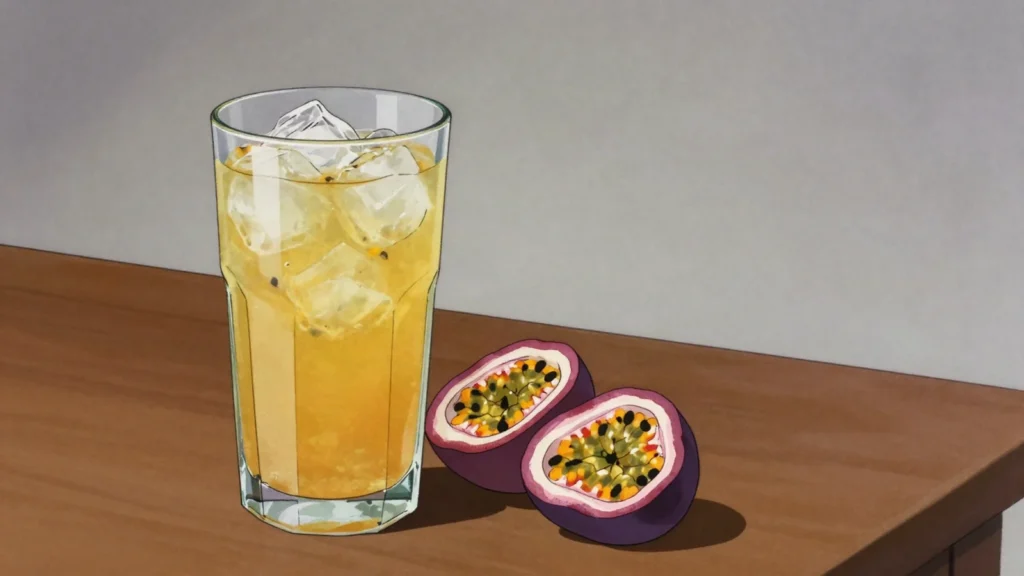

Ingredients
The fruit
- about 20 passionfruit
- markusa, ripe and wrinkled
- or 500 ml passionfruit pulp
- frozen, from a Latin grocer
- or 700 ml bottled passionfruit juice
The liquid
- 1.5 litreswater
- boiled and cooled
- or filtered water
The sweetening
- 250 gsugar
- or to taste
- passionfruit is very sour
- or a cold sugar syrup
Sometimes added
- a pinch of salt
- juice of half a lime
- a little grated ginger
- condensed milk, for a creamy version
Equipment
- a blender
- a fine sieve
- clean bottles
- ice, to serve
Directions
- Leave them a few days until they wrinkle. Do not refrigerate them until they are ripe. Check the fruit content on the label. Cut each fruit in half. Scoop the pulp and seeds into a bowl.
- Use a teaspoon and get every bit. Do not scrape it into the bowl. Take only the orange pulp. The seeds must not be broken.
- Put the pulp in a blender with some water. Work the pulp with your hands in a bowl of water. Rub it between your fingers. That takes about five minutes. Pour it through a fine sieve into a jug.
- Press the seeds with the back of a spoon. Press gently rather than grinding. Discard them once they are clean. Some people keep a few for texture.
- Return the seeds to the bowl. Add a little water and work them again. Strain that into the jug too. Add the rest of the water. Neat passionfruit juice is far too sour to drink. Adjust it to taste. It needs a lot of sugar. Heat equal weights of sugar and water until dissolved.
- Cool it completely. It keeps a month refrigerated. Adjust it to your own taste. Passionfruit is acidic enough to curdle milk. Add it to the sweetened juice, not the reverse. Add it cold and stir gradually.
- Pour it into clean bottles. Refrigerate it for at least three hours. Keep it refrigerated at all times. Use clean bottles and clean utensils. Discard it if it fizzes or smells fermented. Serve it very cold over plenty of ice. Shake or stir it before pouring. It keeps three days refrigerated.
Technique
- Pulse the pulp for three or four seconds only, no longer. Passionfruit seeds turn bitter when crushed, and a long blend breaks them — that is the commonest failure with this drink. It will look barely blended, and that is correct.
- Working the pulp off the seeds by hand in a bowl of water takes five minutes and carries no risk of crushing them at all.
- Press the seeds gently when straining rather than grinding them against the sieve, for the same reason.
- A wrinkled passionfruit is ripe, not old. A smooth shiny one is underripe, more sour and less aromatic — leave smooth fruit at room temperature for a few days until it wrinkles.
- Do not scrape the white pith into the bowl. It is bitter; take only the orange pulp.
- Passionfruit gives very little pulp for its size — twenty fruit yields perhaps 300 ml — which is why the drink is heavily diluted and why frozen pulp from a Latin grocer is worth buying. It is seedless, excellent and what many people use.
- Taste bottled juice before adding any sugar. Most are already sweetened and some are heavily diluted.
- Dissolve the sugar first, either as a cold simple syrup of equal sugar and water or into a warmed portion of the juice. Granulated sugar sinks and sits at the bottom of a cold drink.
- Keep it clearly sour. Passionfruit needs a lot of sugar, but the sourness is the character of the drink and one that tastes only sweet has missed it. A pinch of salt sharpens both.
- Passionfruit is acidic enough to curdle milk. For the creamy version add condensed milk — more stable than fresh — to the sweetened juice rather than the other way round, and drink it soon after.
- This is unpasteurised and never heated, so it is not preserved. Its acidity slows spoilage but does not replace refrigeration — keep it cold, use clean bottles, drink it within three days, and discard it if it fizzes or smells fermented.
- A concentrated syrup diluted to order keeps two weeks and is the practical way to have this on hand.
Substitutions
- Frozen passionfruit pulp replaces fresh fruit and is far less work.
- Bottled passionfruit juice replaces both; taste it before sweetening.
- Cold simple syrup replaces granulated sugar and mixes instantly.
- Condensed milk makes the creamy version.
- Lime juice or a little grated ginger sharpen the drink further.
- Sparkling water in place of some still water makes a fizzy version.
Variations
- Guarapita in Venezuela mixes passionfruit juice with rum and sugar.
- Soursop juice, sap dushi, is another Surinamese roadside drink.
- Tamarind and orgeade drinks are sold from the same stalls.
- A version blended with condensed milk is thicker and sweeter.
- Passionfruit sorbet and ice lollies use the same juice.
- Dawet and other drinks from Suriname’s Javanese community share the same stalls.
Frequently asked questions
What is Markusa?
Markusa is a drink from Suriname: cold sweetened passionfruit juice, sold at roadside stalls.
How long does Markusa take to make?
Markusa takes 20 minutes of preparation and none of cooking. The recipe makes makes about 2 litres. It is rated easy to make.
What can I substitute in Markusa?
Yes, within limits. Frozen passionfruit pulp replaces fresh fruit and is far less work. Bottled passionfruit juice replaces both; taste it before sweetening. Cold simple syrup replaces granulated sugar and mixes instantly. Condensed milk makes the creamy version. Lime juice or a little grated ginger sharpen the drink further. Sparkling water in place of some still water makes a fizzy version.
What is the most important thing to get right in Markusa?
Leave them a few days until they wrinkle. Do not refrigerate them until they are ripe. Check the fruit content on the label. Cut each fruit in half. Scoop the pulp and seeds into a bowl.