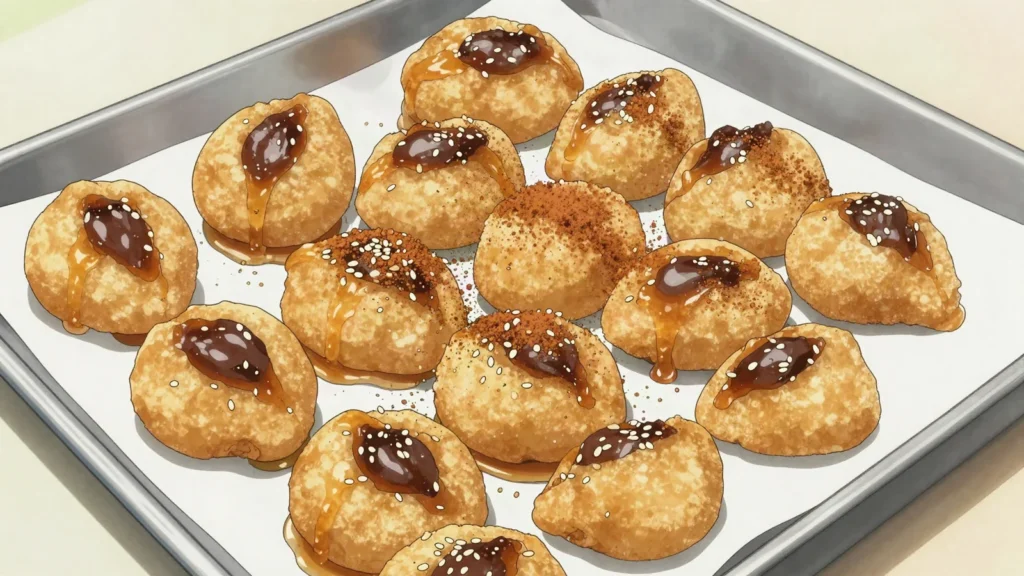

Ingredients
Semolina dough
- 500 gmedium semolina
- 150 gunsalted butter, melted, or 130 g smen
- 1 pinchsalt
- 1 tbspcaster sugar
- 1 tbsporange-flower water
- About 150 ml warm water
Date filling
- 400 gsoft dates, stoned
- 40 gbutter, softened
- 1 tspground cinnamon
- ½ tspgrated nutmeg or ground clove
- 1 tbsporange-flower water
To fry and dip
- 1 litresunflower oil for deep frying
- 500 ghoney
- 2 tbsporange-flower water
- sesame seeds, for scattering (optional)
Directions
- Rub the melted butter into the semolina, salt and sugar with your fingertips for 5 minutes, until every grain is coated and the mixture holds when squeezed.
- Add the orange-flower water, then the warm water in small additions, gathering rather than kneading, until you have a dough that just holds together; rest it for 20 minutes.
- Blend the dates with the softened butter, cinnamon, nutmeg and orange-flower water to a smooth stiff paste, then roll it into ropes about 1.5 cm thick.
- Take a quarter of the dough at a time and press it out on the work surface into a strip about 6 cm wide and 1 cm thick.
- Lay a date rope down the centre, fold the dough over to enclose it completely and roll gently to seal, keeping the strip even in thickness.
- Flatten the top slightly, press the traditional diamond pattern into the surface with a wooden makroud stamp or the back of a fork, then cut on the diagonal into 4 cm diamonds.
- Heat the frying oil to 160°C (325°F) and fry the pieces in batches for 4 to 6 minutes, turning, until deep golden and firm; frying too hot leaves the semolina raw inside.
- Lift out with a slotted spoon and drain for 30 seconds only, while you warm the honey with the orange-flower water to about 60°C (140°F) in a wide pan.
- Drop the hot makroud into the warm honey for 1 to 2 minutes, turning once, then lift onto a rack to drain, scatter with sesame if using, and cool completely. They keep two weeks in a tin.
Technique
- Hot pastry into warm honey, never the reverse; cold makroud in cold honey stays greasy and sticky rather than soaking through.
- The dough is bound by fat, not gluten. Kneading it like bread makes the finished sweet hard, so gather it and stop.
- Makroud is claimed above all by Kairouan in Tunisia and by Biskra and Constantine in Algeria, where the date growing is. The Algerian version tends to be fried and honeyed rather than baked.
Substitutions
- The honey can be replaced by a sugar syrup of 400 g sugar to 200 ml water boiled to a light thread with a squeeze of lemon, which is what many households use.
- Baking at 180°C (350°F) for 20 minutes instead of frying gives a lighter, drier sweet, common in Constantine and known as makroud el koucha.
Variations
- Makroud el louz from Constantine is made with an almond paste and dipped in syrup rather than fried.
- A southern version from the Ziban oases uses only local ghars dates and no spice but cinnamon.
- Some cooks add a pinch of ground fennel seed to the date paste.
History
The name means cut into diamonds; Kairouan in Tunisia claims its origin, and the date-stuffed semolina sweet became a fixture of eastern Algeria.
Frequently asked questions
What is Makroud?
Makroud is a dessert from Algeria: semolina diamonds stuffed with date paste, fried and dipped in honey. The name means cut into diamonds; Kairouan in Tunisia claims its origin, and the date-stuffed semolina sweet became a fixture of eastern Algeria.
How long does Makroud take to make?
Makroud takes 40 min of preparation and 30 min of cooking. The recipe makes about 30 pieces. It is rated medium to make.
What can I substitute in Makroud?
Yes, within limits. The honey can be replaced by a sugar syrup of 400 g sugar to 200 ml water boiled to a light thread with a squeeze of lemon, which is what many households use. Baking at 180°C (350°F) for 20 minutes instead of frying gives a lighter, drier sweet, common in Constantine and known as makroud el koucha.
What is the most important thing to get right in Makroud?
Add the orange-flower water, then the warm water in small additions, gathering rather than kneading, until you have a dough that just holds together; rest it for 20 minutes.