A summer squash picked young and small — zucchini in America and Italy — mild, watery and sweet, best either barely cooked or cooked hard enough to drive the water off.
Where it comes from
Squashes are American, but the courgette as we know it — a small, dark green, cylindrical summer squash eaten immature — was bred in Italy in the nineteenth century, and Italian immigrants carried it to the United States, which is why the American word is Italian. It reached Britain and France in the twentieth century and is now among the most grown garden vegetables in Europe, partly because it is so prolific that one plant overwhelms a household.
It is a fruit eaten as a vegetable, and its flowers are eaten too — stuffed and fried across Italy and Mexico. Left on the plant it becomes a marrow: large, watery, seedy and bland. The best courgettes are small, when the flesh is dense and the flavour nutty; the water content rises with size, which is why a big one is fit only for grating into fritters or bread.
Varieties
- Dark green courgette — The standard supermarket kind: slim, cylindrical, glossy. Best under fifteen centimetres.
- Yellow courgette — Same shape, golden skin, slightly sweeter and firmer. Good raw or grilled for colour.
- Romanesco (costata) — Ribbed, pale green with a nutty flavour and firmer flesh; the Roman courgette and the best for frying.
- Round (Tondo di Nizza) — Ball-shaped; for stuffing and baking whole.
- Pattypan and other summer squash — Scalloped, saucer-shaped, cooked like courgettes.
- Courgette flowers — The large yellow blossoms, stuffed with ricotta or cheese and fried in batter.
In the kitchen
Cook it fast and hot, or not at all. Sliced thin and grilled or fried hard so the edges brown, it is sweet and nutty; sliced thin raw and dressed with lemon, oil and mint it is a salad. Steamed or boiled it turns to grey mush. Salting grated courgette and squeezing it dry is essential before fritters or bread.
Slow-cooking is the other route: cooked very slowly in olive oil with garlic until it collapses into a jammy paste — the Italian zucchine trifolate or a Turkish kabak — it becomes something else entirely, and the water is the point of the long cooking. Courgette pairs with mint, basil, lemon, garlic, feta and Parmesan.
Choosing and keeping
Small, firm, heavy for their size, with glossy unbroken skin and a fresh-cut stem. Large courgettes are watery and seedy; soft spots and wrinkles mean age. They keep about a week in the fridge.
They do not freeze well raw — the water turns them limp — but grated and squeezed, or cooked down, they freeze acceptably for later fritters and sauces.
Dishes with courgette
 Ftattorn pieces of thin dough steamed and soaked in a meat and tomato sauce
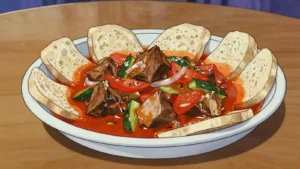 Gursanthin dried bread layered under stewed meat and vegetables
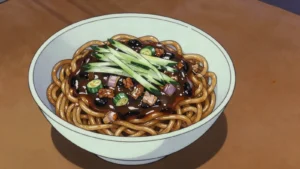 JjajangmyeonKorean-Chinese noodles in glossy black-bean sauce with pork and onion
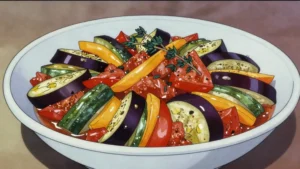 RatatouilleProvençal stew of aubergine, courgette, peppers, and tomato.
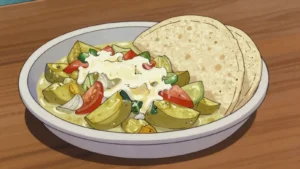 Guiso de pipiánYoung squash stewed with tomato, cheese and cream, eaten with tortillas
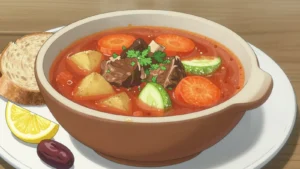 ChourbahBeef soup with potato, carrot and chilli, taken to break the fast
 Budae JjigaeArmy-base stew of spam, hot dogs, kimchi and instant noodles in red broth
 Sopa de gallina indiaFree-range hen soup with vegetables, served with rice and lime
Courgette is tagged on 43 dishes from 33 countries in the atlas. These notes are written from general knowledge and carry no per-fact citation — see About.