
Ingredients
Grain
- 500 gmillet
- or 500 g sorghum
- water, for soaking
Spices
- 5cm fresh ginger
- 1 teaspooncloves
- or 10 whole cloves
- 1 teaspoonblack peppercorns
- 1small chilli, optional
- a few grains of alligator pepper, optional
The drink
- about 2 litres water
- 150 gsugar, or to taste
- a pinch of salt
To serve
- chilled, in tumblers
- with masa or kosai
- at breakfast or in the heat
Directions
- Keep it refrigerated once made. Discard it if it smells sharply sour. Discard it if it fizzes strongly. Use clean equipment throughout. Wash and rinse everything thoroughly. Use clean water for soaking and blending. Those versions are pasteurised and keep longer. Rinse the millet thoroughly in cold water.
- Pick out any stones or loose chaff. Put it into a large clean bowl. Cover it with plenty of cold water. Leave it to soak for a full day. Twenty-four hours is a good starting point. Warm rooms ferment it much faster. Cool rooms take considerably longer. It should smell pleasantly sour. Drain the soaked grain thoroughly. Rinse it once in fresh cold water. Both are done depending on preference.
- Put the drained grain in a blender. Add the ginger, cloves and peppercorns. Add the chilli if you are using it. Add enough water to blend it smoothly. Blending it takes a few minutes. Blend it until it is completely smooth. Work in batches if your blender is small. Blend it longer than seems necessary. Divide the paste into two portions. Make one about two thirds of the total.
- Keep the smaller third raw and aside. Adjust it once you have made it once. Put it in a pot with about a litre of water. Bring the pot up to a full boil. Stir it constantly as it heats.
- Stir right into the corners each time. Cooking it takes a few minutes. Let it cook for about five minutes. It becomes a thick smooth paste. Take the pot right off the heat. Let it cool for a few minutes. Those enzymes are what thin the drink. Let it cool a little before combining. It should be hot but not boiling.
- Stir it well as it visibly changes. If it does not thin, the mixture was too hot. Let it cool more the next time. Add the rest of the water gradually. Stir it in until it is thin enough. It should pour like thin cream. Pour it through a fine mesh sieve. Press it through with a spoon. Sweetening it is done to taste. Add the sugar and stir it well in. Add a good pinch of salt with it.
- Taste it and adjust the sweetness. It should be sweet and tangy together. Stir it well before every pour. Pour it out into tall tumblers. Serve masa or kosai alongside. It keeps two days refrigerated. Discard it if it smells sharply sour.
Technique
- Two thirds of the ground grain is cooked to gelatinise its starch and thicken the batch, then the raw third is stirred in; the raw portion carries active enzymes that break that thickened starch down, and the paste visibly loosens to a pourable drink within minutes. If it does not thin, the mixture was too hot and the enzymes were destroyed, and there is no fixing that batch.
- This is a lightly fermented uncooked drink that spoils fast in warm conditions: keep it refrigerated, drink it within a day or two, use clean equipment throughout, and discard it if it smells sharply sour or fizzes strongly.
- The day-long soak both softens the grain for grinding and begins the fermentation that gives kunu its characteristic tang; longer soaking gives more sourness, and it should smell pleasantly sour rather than sharp.
Substitutions
- Sorghum is used as often as millet, and maize in some versions.
- Alligator pepper is optional but distinctive, related to grains of paradise.
Variations
- Rinsing the soaked grain removes the sharpest sourness; skipping it gives a tangier drink.
- Commercially bottled kunu is pasteurised, keeps longer and is usually sweeter.
- It is drunk with masa or kosai at breakfast.
History
A Hausa drink of soaked millet or sorghum blended with ginger and cloves, sold across the north and now bottled commercially.
Frequently asked questions
What is Kunu zaki?
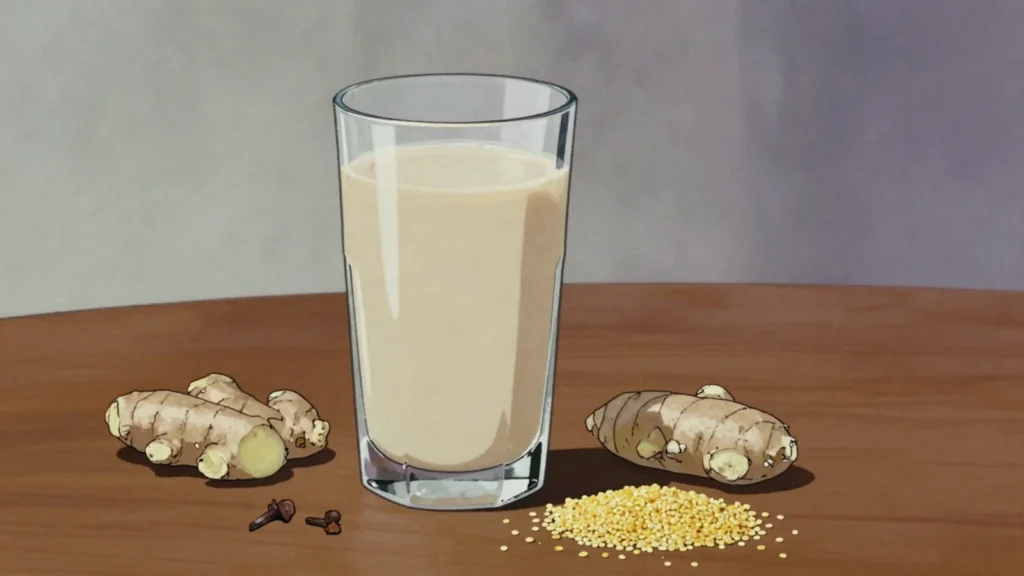
Kunu zaki is a drink from Nigeria: chilled spiced millet gruel, tangy and thin, drunk by the tumbler. A Hausa drink of soaked millet or sorghum blended with ginger and cloves, sold across the north and now bottled commercially.
How long does Kunu zaki take to make?
Kunu zaki takes 30 minutes plus soaking of preparation and 20 minutes of cooking. The recipe makes about 3 litres. It is rated medium to make.
What can I substitute in Kunu zaki?
Yes, within limits. Sorghum is used as often as millet, and maize in some versions. Alligator pepper is optional but distinctive, related to grains of paradise.
What is the most important thing to get right in Kunu zaki?
The day-long soak both softens the grain for grinding and begins the fermentation that gives kunu its characteristic tang; longer soaking gives more sourness, and it should smell pleasantly sour rather than sharp.