
Ingredients
Ferment
- 2 tbsplive kefir grains
- 1 litrewhole milk
Equipment
- a glass jar
- a plastic or nylon sieve
- a wooden or plastic spoon
To serve
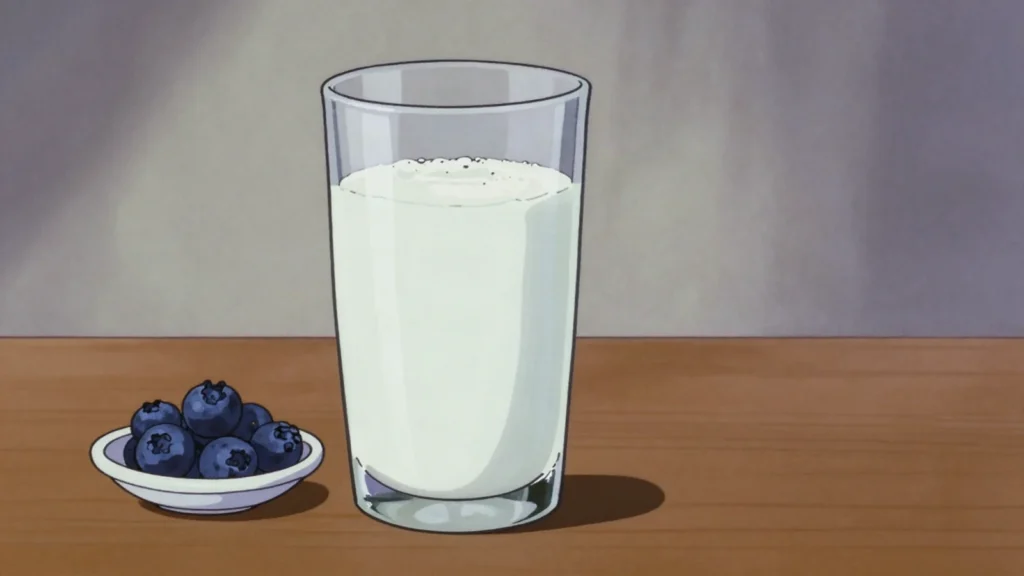
- plain from the glass
- or with honey and berries
Directions
- Put the grains in a clean jar and pour over the milk, leaving a few centimetres of headspace.
- Cover with a cloth or a loose lid — never sealed tight. Kefir produces carbon dioxide, and a properly sealed jar can build enough pressure to burst.
- Leave at room temperature, around 20 to 24°C (68 to 75°F), for 18 to 24 hours. It is ready when it has thickened, tastes tart and fizzy, and the whey is just beginning to separate at the bottom.
- Strain it through a plastic or nylon sieve, stirring gently with a plastic or wooden spoon to help it through. Use no metal in prolonged contact with the grains — a stainless sieve for a moment is fine, but metal spoons and metal jars weaken the culture over time.
- The rubbery cauliflower-like lumps left in the sieve are the grains. Rinse nothing. Put them straight into fresh milk and start again.
- Chill the strained kefir and drink it within a week. It goes on souring in the fridge.
- The grains grow. Every few weeks you will have more than you need — give some away, which is how kefir grains have travelled since they left the Caucasus.
- If you need a break, put the grains in fresh milk in the fridge, where they will sit for two or three weeks without feeding.
Technique
- Never seal the jar tight. Pressure build-up is the one real hazard here.
- No prolonged metal contact, and do not rinse the grains. Both weaken the culture.
- You cannot make grains from shop-bought kefir. They have to come from someone who already has them, which is exactly how the culture has spread for a century.
Substitutions
- Goat’s or sheep’s milk, both of which work.
- A shop-bought kefir starter sachet, which makes kefir once but does not produce grains that continue.
- Water kefir grains, which are a different culture entirely and ferment sugar water.
Variations
- Left a second day off the grains it develops more fizz and a little alcohol — under 1%, but present.
- Strained through muslin it becomes a thick soft cheese.
History
Kefir grains were obtained from the North Caucasus in 1908 for a Moscow dairy, reportedly through a scheme involving a kidnapped envoy.
Frequently asked questions
What is Kefir?
Kefir is a fermented & pickled from Russia: tart, slightly fizzy fermented milk drunk plain from the bottle. Kefir grains were obtained from the North Caucasus in 1908 for a Moscow dairy, reportedly through a scheme involving a kidnapped envoy.
How long does Kefir take to make?
Kefir takes 10 min a day of preparation and no cooking at all. The recipe makes makes 1 litre, and grains that run indefinitely. It is rated easy to make.
What can I substitute in Kefir?
Yes, within limits. Goat’s or sheep’s milk, both of which work. A shop-bought kefir starter sachet, which makes kefir once but does not produce grains that continue. Water kefir grains, which are a different culture entirely and ferment sugar water.
What is the most important thing to get right in Kefir?
Cover with a cloth or a loose lid — never sealed tight. Kefir produces carbon dioxide, and a properly sealed jar can build enough pressure to burst.