
Ingredients
Ferment
- 500 gblack carrots, peeled and cut in batons
- 1small beetroot, peeled and sliced, if using ordinary carrots
- 2 litreswater, boiled and cooled
- 3 tbspblack mustard seed, coarsely ground
- 2 tbspsalt
- 1 tspchilli powder
- ½ tspasafoetida
Equipment
- a large glass or ceramic jar
- muslin, to cover
Directions
- Peel and cut the carrots into batons, leaving them fairly thick so they stay firm through the ferment.
- Grind the mustard seed coarsely rather than to a powder. The mustard is not only flavouring — its enzymes and the wild organisms on it drive the fermentation, which is why kanji is a mustard ferment rather than a plain brine.
- Put the carrots into a large jar and add the ground mustard, salt, chilli and asafoetida.
- Pour over the cooled boiled water so the carrots are well submerged, and stir well.
- Cover the mouth with muslin tied on — not a sealed lid — and stand the jar in the sun, or in the warmest spot you have.
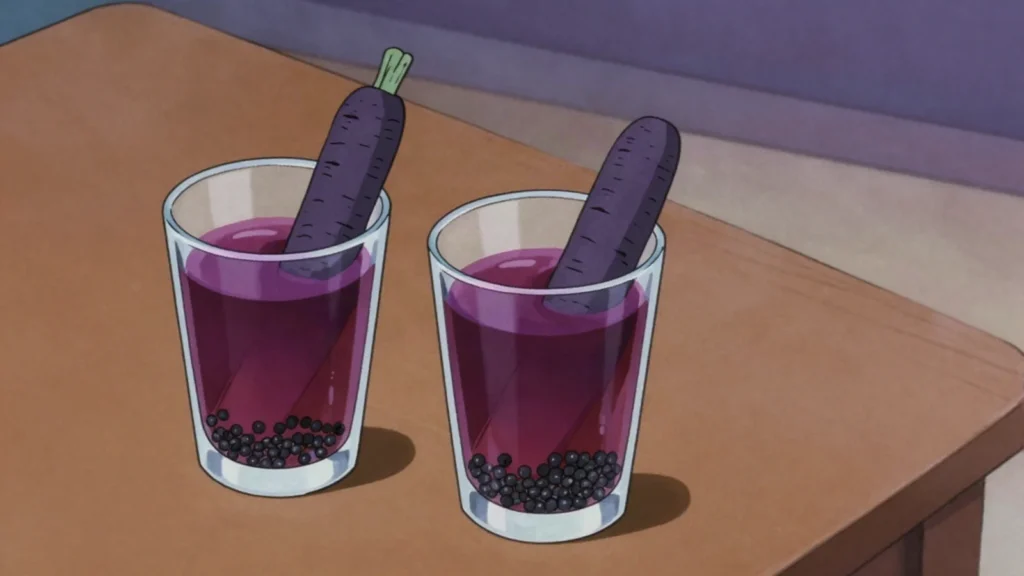
- Stir once a day with a clean dry spoon. Over three to six days the liquid will turn deep purple, cloudy and sharply sour, and it will smell strongly of mustard.
- Taste from day three. When it is properly sour, move it to the fridge, where it keeps two weeks and goes on souring slowly.
- Serve cold in small glasses, with a few of the carrot batons in each — the carrots are eaten as well as the liquid.
Technique
- Black carrots are what give it the colour and the flavour. With ordinary orange carrots, add a beetroot for colour; the taste is not quite the same but it works.
- Cover with muslin, never a sealed lid. The ferment gives off gas and a sealed jar can build real pressure.
- Sun and warmth are what make this fast. In a cold kitchen it takes a week or more.
Substitutions
- Orange carrots with beetroot, which is the standard substitute outside north India.
- Yellow mustard seed if black is unavailable, though it is milder.
Variations
- A version with turnip alongside the carrot, which is common in Punjab.
- Kanji vada floats fried lentil dumplings in the fermented liquid.
History
Made in north India around Holi in late winter, when black carrots are in season; the mustard seeds drive the fermentation.
Frequently asked questions
What is Kanji?
Kanji is a fermented & pickled from India: black carrot and mustard seed lacto-fermented into a sour purple drink. Made in north India around Holi in late winter, when black carrots are in season; the mustard seeds drive the fermentation.
How long does Kanji take to make?
Kanji takes 20 min plus 3 to 6 days fermenting of preparation and 5 min of cooking. The recipe makes makes 2 litres. It is rated easy to make.
What can I substitute in Kanji?
Yes, within limits. Orange carrots with beetroot, which is the standard substitute outside north India. Yellow mustard seed if black is unavailable, though it is milder.
What is the most important thing to get right in Kanji?
Grind the mustard seed coarsely rather than to a powder. The mustard is not only flavouring — its enzymes and the wild organisms on it drive the fermentation, which is why kanji is a mustard ferment rather than a plain brine.