
Ingredients
Milk and culture
- 10 litresraw or gently pasteurised sheep milk, or full-fat cow milk
- ¼ tspmesophilic starter culture, or 200 ml live kos yoghurt
- ½ tspvegetarian microbial rennet, diluted in 50 ml cool unchlorinated water
- ½ tspcalcium chloride, if the milk is pasteurised
Scalding and brine
- 5 litreswater at 75°C (165°F), for stretching
- brine: 1 litre water with 200 g coarse salt, chilled
Equipment
- a curd knife or long blade, a thermometer, a pH strip set or meter, a 1 kg mould or lined basket
Directions
- Warm the milk to 32°C (90°F), stir in the starter and hold 45 minutes to ripen; the milk should smell faintly yoghurty and drop to around pH 6.5.
- Stir in the diluted rennet for 1 minute, still the milk and leave undisturbed 40 minutes, until it gives a clean break, splitting sharply over a finger with clear whey in the crack.
- Cut the curd to 1 cm cubes, rest 5 minutes, then stir gently while raising the temperature to 42°C (110°F) over 30 minutes, until the grains firm to the bounce of a rubber eraser.
- Drain off the whey, saving it for gjizë, and let the curd mass knit together under its own weight for 30 minutes.
- Ripen the slab at 30 to 34°C (95°F), turning it every hour for 12 to 16 hours, until it reaches pH 5.1 to 5.3. Test a sliver in 75°C (165°F) water: it is ready when it stretches into a shiny rope without tearing.
- Slice the ripened curd into 1 cm strips, drop into the 75°C (165°F) water and work it with two wooden spoons for 5 to 8 minutes until it becomes one smooth, glossy, elastic mass.
- Stretch and fold it three or four times, then tuck the edges under to make a taut ball, press into the mould and cool in cold water for 1 hour.
- Float the wheel in the chilled brine for 12 hours per kilo, then dry it for two days and age at 12 to 14°C (55°F) and 85 percent humidity for 2 to 3 months, wiping any mould off weekly with a brine-damp cloth.
Technique
- Kaçkavall is a pasta filata cheese, made by the same acid-then-stretch route as caciocavallo and kashkaval. The ripening step to pH 5.2 is what makes the curd stretch; go too far, past pH 5.0, and it turns to grainy porridge in the hot water.
- Traditional dairies set the milk with animal rennet from a young animal. Microbial rennet gives an identical set and keeps the cheese vegetarian.
- Sheep milk gives the sharper, richer Sharri and Korça style; cow milk gives the mild yellow supermarket kind. Raw milk cheeses need the full three months of ageing for safety.
Substitutions
- No mesophilic starter: 200 ml of live kos does the same job, though ripening takes an hour or two longer and is less predictable.
- A large stainless bowl of 75°C (165°F) water and rubber gloves replaces a proper stretching vat perfectly well at this scale.
Variations
- Kaçkavall i Sharrit, from the Sharr mountains, is made from sheep milk and aged longer for a piquant, crumbly wheel.
- Young kaçkavall of three to four weeks is sliced and pan-fried until it blisters, served with lemon.
History
The Balkan stretched-curd cheese related to Italian caciocavallo; Albanian versions come mostly from the sheep pastures of the south.
Frequently asked questions
What is Kaçkavall?
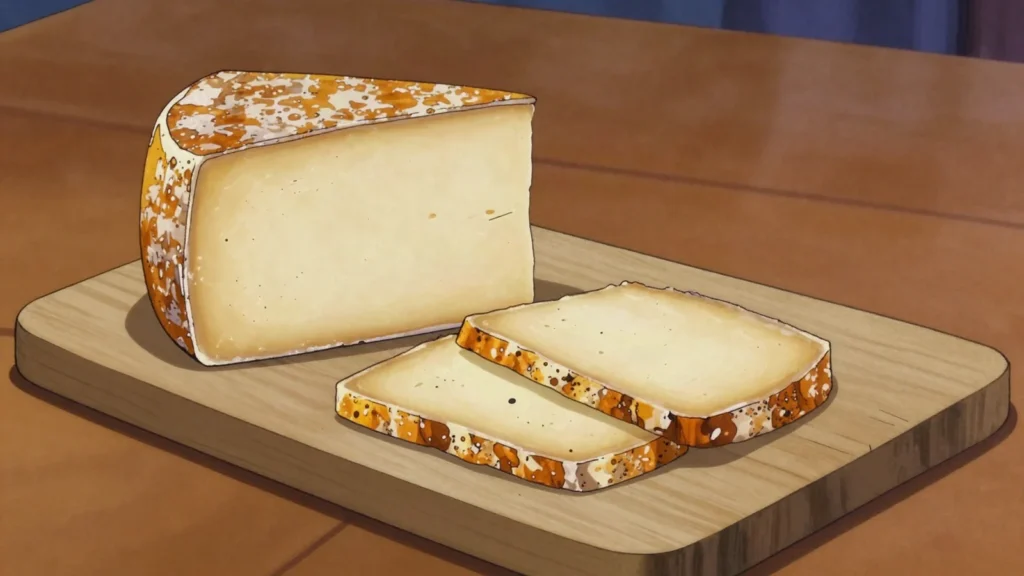
Kaçkavall is a cheese & dairy from Albania: firm yellow sheep or cow cheese, sliced, grilled or grated. The Balkan stretched-curd cheese related to Italian caciocavallo; Albanian versions come mostly from the sheep pastures of the south.
How long does Kaçkavall take to make?
Kaçkavall takes 1 hr 30 min of preparation and 16 hr ripening plus 2 to 3 months ageing of cooking. The recipe makes about 1 kg cheese. It is rated hard to make.
What can I substitute in Kaçkavall?
Yes, within limits. No mesophilic starter: 200 ml of live kos does the same job, though ripening takes an hour or two longer and is less predictable. A large stainless bowl of 75°C (165°F) water and rubber gloves replaces a proper stretching vat perfectly well at this scale.