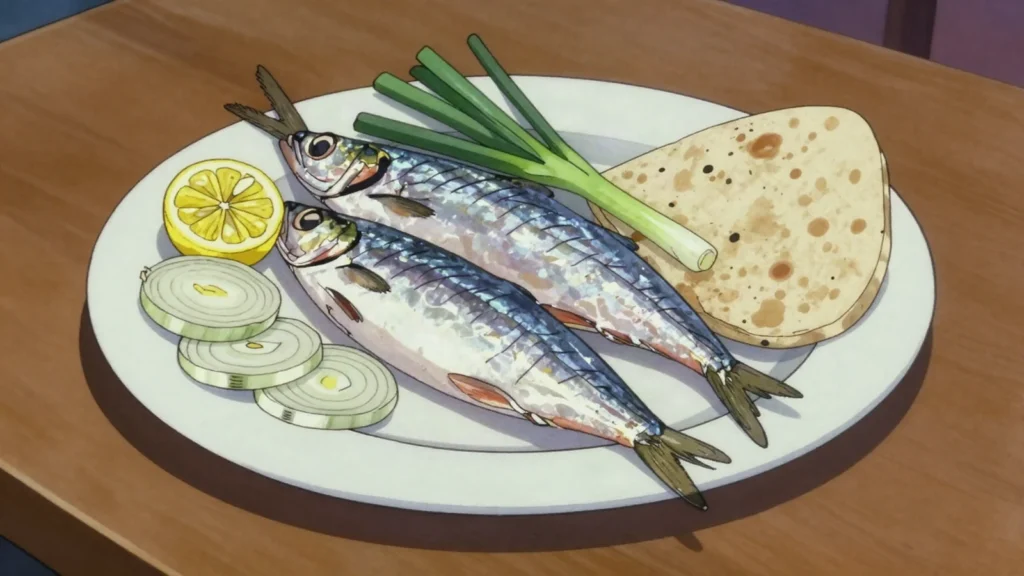

Grey mullet salted and fermented in sealed barrels for weeks, then eaten with raw onion and bread at Sham el-Nessim, the Egyptian spring feast of pharaonic origin. It is made by licensed fasakhani shops, and eaten once a year.
Egyptian health authorities record botulism cases from badly made feseekh most years, and warn against home preparation specifically. It is a sealed, low-acid, ambient ferment of ungutted fish — the exact conditions Clostridium botulinum needs — and the licensing of fasakhani shops exists for that reason.
What goes into it
- grey mullet, ungutted
- coarse salt in quantity
How it is made
The fish are left in the sun to begin softening, then packed ungutted in heavy salt in sealed barrels and left for several weeks while their own gut enzymes break the flesh down. The salt concentration is the only barrier to what else could grow, and it is judged by weight against the fish.
How long it takes: three weeks to several months
How it is eaten
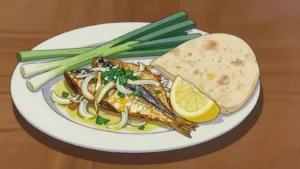
With raw onion, lemon, flatbread and spring onions at Sham el-Nessim.
History
Fermented, salted mullet, prepared by drying the whole fish and then curing it in salt for an extended period until it develops a very strong smell and flavour, documented across Egypt for many centuries, with some historians tracing preparations of fermented fish back to ancient Egyptian tradition, and the dish is specifically and traditionally eaten during Sham el-Nessim, an ancient Egyptian spring festival that predates and has continued alongside the country’s later Christian and Islamic religious calendars. Its long, careful curing process, requiring precise salt levels and timing to ferment the fish safely, is treated as a specialized traditional skill, since improperly prepared feseekh carries genuine food safety risk. Feseekh remains deeply tied to Sham el-Nessim celebrations specifically, one of Egypt’s oldest continuously observed seasonal festivals.
Frequently asked questions
What is Feseekh?
Feseekh is a fermented & pickled from Egypt: fermented salted grey mullet eaten with onions at the Sham el-Nessim festival. Fermented, salted mullet, prepared by drying the whole fish and then curing it in salt for an extended period until it develops a very strong smell and flavour, documented across Egypt for many centuries, with some historians tracing preparations of fermented fish back to ancient Egyptian tradition, and the dish is specifically and traditionally eaten during Sham el-Nessim, an ancient Egyptian spring festival that predates and has continued alongside the country’s later Christian and Islamic religious calendars. Its long, careful curing process, requiring precise salt levels and timing to ferment the fish safely, is treated as a specialized traditional skill, since improperly prepared feseekh carries genuine food safety risk. Feseekh remains deeply tied to Sham el-Nessim celebrations specifically, one of Egypt’s oldest continuously observed seasonal festivals.
How is Feseekh made?
The fish are left in the sun to begin softening, then packed ungutted in heavy salt in sealed barrels and left for several weeks while their own gut enzymes break the flesh down. The salt concentration is the only barrier to what else could grow, and it is judged by weight against the fish. It takes three weeks to several months.
Can I make Feseekh at home?
No, and the atlas gives no method for it. Egyptian health authorities record botulism cases from badly made feseekh most years, and warn against home preparation specifically. It is a sealed, low-acid, ambient ferment of ungutted fish — the exact conditions Clostridium botulinum needs — and the licensing of fasakhani shops exists for that reason.
What goes into Feseekh?
Grey mullet, ungutted, coarse salt in quantity.
How is Feseekh eaten?
With raw onion, lemon, flatbread and spring onions at Sham el-Nessim.