
Ingredients
Dough
- 500 gplain flour
- 1 tspsalt
- 300 mlwarm water
Layering
- 100 gghee or oil, melted
- extra flour, for dusting
To serve
- butter bean curry
- rougaille
- any curry
Directions
- Mix the flour and salt, add the warm water gradually and bring it into a soft dough, then knead for 10 minutes.
- Oil the surface, cover, and rest for at least an hour. Rested dough stretches; unrested dough tears the moment you push it thin.
- Divide into eight and roll each piece out as thin as you possibly can, almost to transparency.
- Brush generously with melted ghee and dust lightly with flour.
- Fold it like a fan, in concertina pleats, then coil the pleated strip into a spiral and tuck the end underneath.
- The pleats and the coil are what make the layers. Simply folding it into quarters gives you a thick flatbread rather than a farata.
- Rest the coils for another 20 minutes.
- Press each coil flat and roll it out gently to about 20 cm, working from the centre outward without squashing the layers back together.
- Cook on a hot tawa for 1 minute, brush with ghee, flip it, brush again, and cook for 1 to 2 minutes a side until brown spots appear.
- Take it off the heat and immediately clap it between your palms, or gather it in a cloth and crush it.
- That clapping is what separates the layers and makes it flaky, and it has to be done hot. Left even a minute it stiffens and will not open.
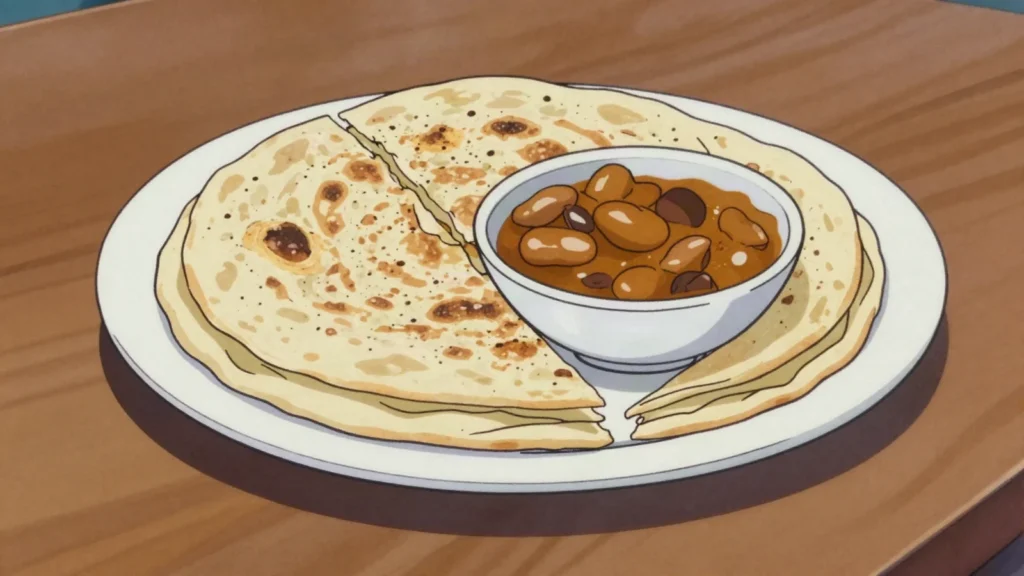
- Serve torn, with butter bean curry, rougaille or any curry, from the hand.
Technique
- It is the Indian paratha as it arrived and settled in Mauritius, slapped and folded on a hot plate at roadside stands.
- Ghee between the layers rather than oil, if you have it. The flavour is a large part of the bread.
- Stack them under a cloth as they come off, which keeps them soft.
Substitutions
- Oil in place of ghee, which is what most vendors use for volume.
- Half wholemeal flour for a coarser bread.
Variations
- Stuffed with spiced potato or split peas, as dholl puri.
- Made small and thick for a chewier bread.
- With an egg cracked on and folded in, cooked as a filled farata.
History
A flaky, layered flatbread, similar to the wider South Asian paratha tradition, documented across Mauritius with clear roots tracing to Indian indentured laborer culinary tradition, brought to the island by Indian workers who arrived during the 1800s following the abolition of slavery in the British Empire and subsequently adapted into Mauritian Creole cuisine. Its flaky, layered texture, achieved through a specific rolling and folding technique with oil worked between the layers, reflects that shared South Asian paratha-making tradition, and farata is commonly served in Mauritius alongside curries or simply with sugar as a sweet snack. Farata remains a staple bread across Mauritius, closely tied to the island’s significant Indo-Mauritian cultural and culinary heritage.
Frequently asked questions
What is Farata?
Farata is a bread & pastry from Mauritius: flaky layered flatbread torn to scoop curries. A flaky, layered flatbread, similar to the wider South Asian paratha tradition, documented across Mauritius with clear roots tracing to Indian indentured laborer culinary tradition, brought to the island by Indian workers who arrived during the 1800s following the abolition of slavery in the British Empire and subsequently adapted into Mauritian Creole cuisine. Its flaky, layered texture, achieved through a specific rolling and folding technique with oil worked between the layers, reflects that shared South Asian paratha-making tradition, and farata is commonly served in Mauritius alongside curries or simply with sugar as a sweet snack. Farata remains a staple bread across Mauritius, closely tied to the island’s significant Indo-Mauritian cultural and culinary heritage.
How long does Farata take to make?
Farata takes 25 min plus 1 hr 20 min resting of preparation and 25 min of cooking. The recipe makes 8 breads. It is rated medium to make.
What can I substitute in Farata?
Yes, within limits. Oil in place of ghee, which is what most vendors use for volume. Half wholemeal flour for a coarser bread.
What is the most important thing to get right in Farata?
The pleats and the coil are what make the layers. Simply folding it into quarters gives you a thick flatbread rather than a farata.