
Ingredients
The pot
- 500 gshelled whole wheat (korkot or pearled wheat), soaked overnight
- 1chicken, about 1.5 kg, or 1 kg chicken thighs on the bone
- 3 litreswater
- 2 tspsalt
To finish
- 120 gbutter
- 1 tspground cumin (optional)
- salt and black pepper
Directions
- Simmer the chicken in the water with a teaspoon of salt for about 1 hour, until it is falling off the bone. Lift it out, keep every drop of the broth, and when it is cool enough to handle strip all the meat, discarding skin and bones.
- Drain the soaked wheat and add it to the broth with the stripped meat. Bring to a bare simmer.
- Cook, uncovered, for 4 hours or more over the lowest heat you can hold, stirring every 20 minutes and scraping the bottom. Top up with hot water whenever it thickens past a loose porridge. This is a long, unhurried cook and there is no way to shorten it.
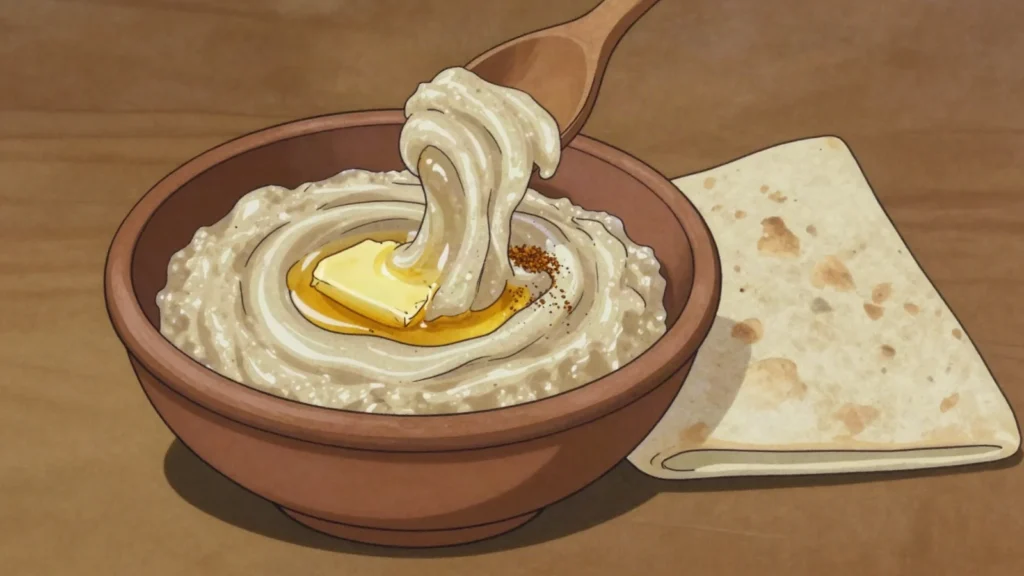
- In the last hour the dish has to be beaten rather than stirred. Work it hard against the side of the pot with a wooden spoon or a mallet, so the wheat grains burst and the chicken breaks into threads. Keep going until no whole grain and no recognisable piece of meat is left and the mass pulls away from the spoon in a single elastic mass.
- Season generously with salt and pepper. It takes far more salt than seems reasonable, because there is nothing else in it.
- Melt the butter until it foams and just begins to brown. Ladle the harissa into bowls, make a well in each, and pour the hot butter in. Dust with cumin if you like.
Technique
- The beating is the dish. Harissa that has merely been simmered is a wheat and chicken soup; harissa that has been beaten is smooth, stretchy and holds a spoon upright. Nothing else distinguishes them.
- It catches and scorches easily once it thickens. A heavy pot and regular scraping of the base are what stop it.
- This is not Tunisian harissa, which is a chilli paste and an entirely unrelated thing that happens to share the name.
Substitutions
- Lamb on the bone replaces the chicken in many households and needs an extra hour.
- Pearled spelt or coarse bulgur can stand in for korkot, though bulgur breaks down faster and needs less time.
Variations
- Cooked communally in enormous cauldrons at the Musa Ler pilgrimage each September, commemorating the 1915 resistance on Musa Dagh — which is why it is eaten as a dish of endurance rather than simply a winter porridge.
History
Wheat and chicken beaten to a porridge; cooked communally at the Musa Ler pilgrimage that commemorates the 1915 resistance.
Frequently asked questions
What is Harissa?
Harissa is a main from Armenia: wheat and chicken slowly beaten into savory porridge; dish of resilience. Wheat and chicken beaten to a porridge; cooked communally at the Musa Ler pilgrimage that commemorates the 1915 resistance.
How long does Harissa take to make?
Harissa takes 20 min plus soaking overnight of preparation and 5 hr of cooking. The recipe makes serves 8. It is rated medium to make.
What can I substitute in Harissa?
Yes, within limits. Lamb on the bone replaces the chicken in many households and needs an extra hour. Pearled spelt or coarse bulgur can stand in for korkot, though bulgur breaks down faster and needs less time.
What is the most important thing to get right in Harissa?
In the last hour the dish has to be beaten rather than stirred. Work it hard against the side of the pot with a wooden spoon or a mallet, so the wheat grains burst and the chicken breaks into threads. Keep going until no whole grain and no recognisable piece of meat is left and the mass pulls away from the spoon in a single elastic mass.