
Ingredients
The beans
- 500 gdanyin thee
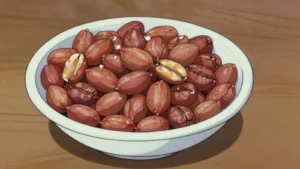
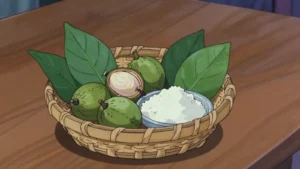
- Archidendron jiringa seeds
- mature rather than young
- in the shell or shelled
- read the safety note first
For soaking and boiling
- plenty of water
- for a long soak
- 1 teaspoonbicarbonate of soda
- optional, in the soak
- 2 teaspoonssalt
- for the boil
To serve
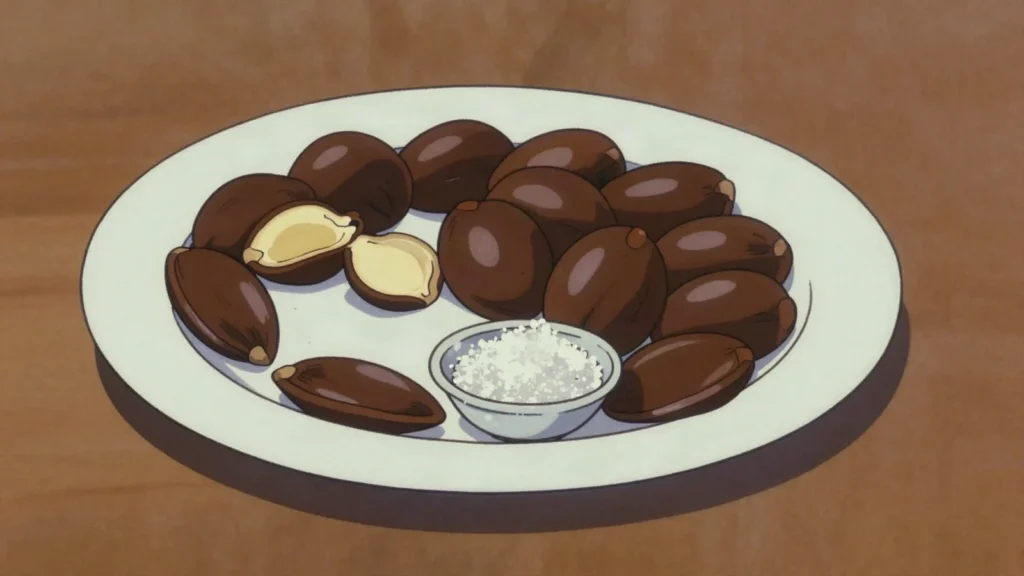
- salt, for dipping
- or salt with ground chilli
- sesame oil, a little
- ngapi, fermented fish paste
- optional
- plenty of drinking water
- see the safety note
Directions
- Crack it with a stone or a heavy knife handle. There is a thin papery skin over it. Peel that off after soaking. Cover the seeds with plenty of cold water. Soak them for at least twenty-four hours.
- Discard every batch of soaking water. Never use it for cooking or for anything else. Rinse them thoroughly afterwards. They leave them until they begin to sprout.
- Drain the soaked seeds and rinse them well. Put them in a pot with plenty of fresh water. Add salt and bring them to a boil. Boil them for at least an hour.
- Drain and refill halfway through if you can. They should be tender enough to bite through.
- Rub it away with your fingers. They are grilled in the shell until it blackens. Grill outdoors in open air only. Serve them warm or at room temperature.
- Serve a small dish of salt for dipping. Salt mixed with ground chilli is common. Serve plenty of drinking water with them.
- Keep drinking water for the rest of the day. Cooked seeds keep three days refrigerated.
Technique
- Danyin thee are the seeds of Archidendron jiringa and they contain djenkolic acid, which can crystallise in the urinary tract and cause djenkolism — severe loin pain, painful urination, blood in the urine and in serious cases acute kidney injury. Cases are documented in the medical literature of Myanmar, Indonesia, Malaysia and Thailand. This is not folklore.
- The reaction is idiosyncratic. Some people eat them regularly with no trouble and others react after a modest amount, and there is no way to know in advance. The atlas therefore quotes no safe quantity, because doing so would imply a threshold that does not exist.
- Risk is raised by eating a large quantity at once, by eating them raw or undercooked, by using young immature seeds, and by being dehydrated — concentrated urine lets the crystals form more easily. Choose mature darker seeds, keep the portion to a handful, and drink plenty of water with them and for the rest of the day. That is traditional practice and it has a real reason behind it.
- Severe loin pain or blood in the urine after eating these needs medical attention rather than waiting to see. Tell the doctor exactly what was eaten — it genuinely changes the diagnosis. Treatment is chiefly hydration and supportive care, and the atlas gives no advice beyond that.
- Anyone with kidney disease or a history of kidney stones should not eat them, anyone pregnant should treat them with caution, and anyone who has reacted before should not eat them again.
- Soak for at least twenty-four hours, changing the water at least twice daily, then boil for at least an hour, changing that water halfway if you can. The point is to draw out water-soluble compounds and then discard them — never use the soaking or cooking water for anything.
- The grilled preparation involves no soaking or boiling, so it removes none of the soluble compounds and is the higher-risk method. The atlas records that rather than omitting it.
- The atlas’s own description calls these stink bean seeds, and that name usually means petai or sator, Parkia speciosa — a different plant. Both smell strongly of sulphur and both are eaten across Southeast Asia, but only jiringa carries the djenkolic acid problem. The atlas records the correction rather than leaving the two conflated.
- The strong sulphurous smell on the breath and in the urine for a day or two afterwards is normal and is not itself a symptom. Pain or blood is the warning sign; smell alone is not.
- Burying the seeds until they sprout is a genuine documented practice said to mild them. The atlas records it without recommending it, since sprouting in soil raises its own hygiene questions.
- They stay firm and dense however long you cook them, never softening like a lentil. That density is the character of them.
- Charcoal produces carbon monoxide, which has no colour, smell or taste and kills in enclosed spaces. If you grill them, grill outdoors only.
Substitutions
- Frozen or dried danyin thee replace fresh; dried need longer soaking.
- Petai, Parkia speciosa, is a different plant with a similar smell and no djenkolic acid problem, and is the safer choice if you simply want the sulphurous flavour.
- Salt with ground chilli replaces plain salt for dipping and is at least as common.
- Sesame oil, ngapi or a squeeze of lime all serve as accompaniments.
- Bicarbonate of soda in the soak is optional and softens the seeds.
- Boiling replaces grilling and is the lower-risk preparation.
Variations
- Danyin thee cooked into a pork curry is common in Myanmar.
- Jengkol balado in Indonesia fries them in a chilli sambal.
- Rendang jengkol treats them like meat in a slow coconut braise.
- Sambal goreng jengkol is the Javanese preparation.
- Petai stir-fried with prawns and sambal is the Parkia speciosa dish of the same family of flavours.
- Pe bok and other Burmese bean snacks are the milder everyday alternatives.
Frequently asked questions
What is Danyin Thee?
Danyin Thee is a snack from Myanmar: boiled or grilled djenkol seeds with a strong sulphurous smell, eaten with salt.
How long does Danyin Thee take to make?
Danyin Thee takes 10 minutes plus soaking of preparation and 1 hour of cooking. The recipe makes serves 4 as a snack. It is rated easy to make.
What can I substitute in Danyin Thee?
Yes, within limits. Frozen or dried danyin thee replace fresh; dried need longer soaking. Petai, Parkia speciosa, is a different plant with a similar smell and no djenkolic acid problem, and is the safer choice if you simply want the sulphurous flavour. Salt with ground chilli replaces plain salt for dipping and is at least as common. Sesame oil, ngapi or a squeeze of lime all serve as accompaniments. Bicarbonate of soda in the soak is optional and softens the seeds. Boiling replaces grilling and is the lower-risk preparation.
What is the most important thing to get right in Danyin Thee?
Discard every batch of soaking water. Never use it for cooking or for anything else. Rinse them thoroughly afterwards. They leave them until they begin to sprout.