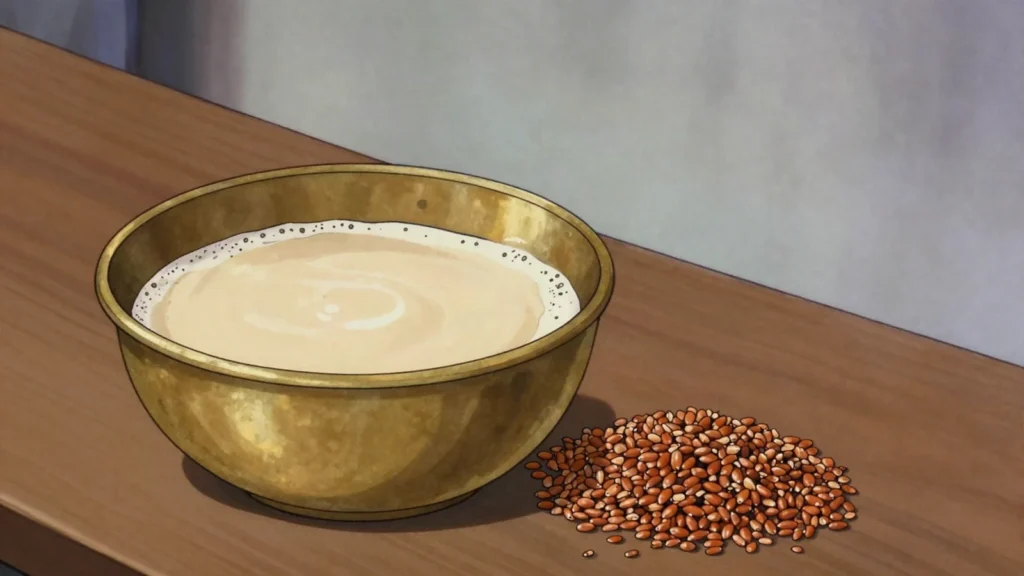

A milky, tart beer brewed from millet or rice, often drunk warm in winter. Tibetan-influenced hill communities brew it, and Sherpa and Tamang households serve it at festivals and to arriving guests.
Producing alcohol at home is licensed or restricted in most of the atlas’s readership, and the ferment depends on a starter cake carrying local moulds and yeasts.
What goes into it
- finger millet, rice or barley
- murcha or phab starter cake
- water
How it is made
Grain is cooked, cooled and mixed with a crushed starter cake, then sealed in a vessel for several days to weeks while moulds convert the starch and yeasts ferment it. Water is added to the fermented grain and the milky liquid strained off, or served warm over the grain itself.
How long it takes: several days to weeks of fermenting
How it is eaten
Warm in winter, cold in summer, in a bowl or metal cup, offered to arriving guests.
History
A fermented alcoholic beverage made from millet, barley or rice, closely tied to Tibetan and Himalayan mountain communities across Nepal, Tibet and neighboring regions, where the specific grain used varies by what grows best at a given elevation and climate. Its fermentation technique, using a specific yeast starter culture passed down within families and communities, predates any precise written documentation, though it is understood to be an old practice among Himalayan mountain peoples given the beverage’s deep integration into ritual, hospitality and daily social life in those communities. Chhaang is traditionally served warm, particularly in colder mountain regions, and carries significant social and ceremonial weight, commonly offered to guests as a mark of hospitality and consumed at festivals and gatherings.
Frequently asked questions
What is Chhaang?
Chhaang is a wine & spirit from Nepal: milky, tart beer brewed from millet or rice, often drunk warm in winter. A fermented alcoholic beverage made from millet, barley or rice, closely tied to Tibetan and Himalayan mountain communities across Nepal, Tibet and neighboring regions, where the specific grain used varies by what grows best at a given elevation and climate. Its fermentation technique, using a specific yeast starter culture passed down within families and communities, predates any precise written documentation, though it is understood to be an old practice among Himalayan mountain peoples given the beverage’s deep integration into ritual, hospitality and daily social life in those communities. Chhaang is traditionally served warm, particularly in colder mountain regions, and carries significant social and ceremonial weight, commonly offered to guests as a mark of hospitality and consumed at festivals and gatherings.
How is Chhaang made?
Grain is cooked, cooled and mixed with a crushed starter cake, then sealed in a vessel for several days to weeks while moulds convert the starch and yeasts ferment it. Water is added to the fermented grain and the milky liquid strained off, or served warm over the grain itself. It takes several days to weeks of fermenting.
Can I make Chhaang at home?
No, and the atlas gives no method for it. Producing alcohol at home is licensed or restricted in most of the atlas’s readership, and the ferment depends on a starter cake carrying local moulds and yeasts.
What goes into Chhaang?
Finger millet, rice or barley, murcha or phab starter cake, water.
How is Chhaang eaten?
Warm in winter, cold in summer, in a bowl or metal cup, offered to arriving guests.