
Ingredients
Dough
- 500 gplain flour
- 1½ tsp salt
- 1 tbspsugar
- 300 mlwarm water
- 100 mloil
To layer and cook
- 2 tbspmelted ghee or margarine
- extra oil, for the pan
Directions
- Mix the flour, salt and sugar, then add the warm water gradually and bring it together into a soft dough.
- Knead for 10 minutes until smooth, rub the surface with oil, cover, and rest for at least 30 minutes. Unrested dough will not stretch thin and the layers will never form.
- Divide into eight and roll each piece into a thin round, as thin as you can get it without tearing.
- Brush the surface generously with oil or melted ghee and dust it lightly with flour.
- Roll the round up into a tight rope, then coil the rope into a flat spiral and press it down.
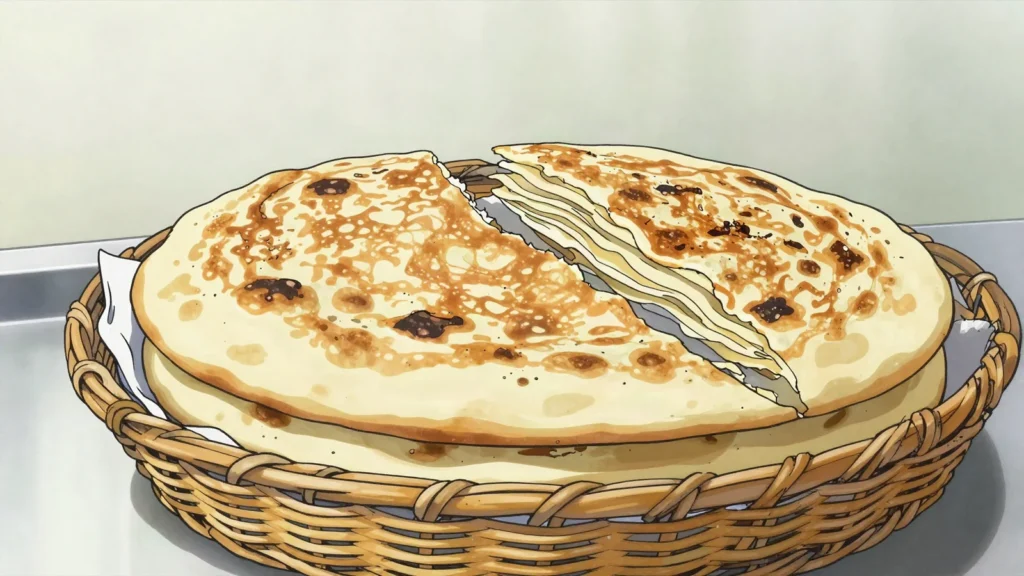
- That coil is what makes an East African chapati layered rather than merely flat. Skip it and you have a plain flatbread, when the whole appeal is layers that pull apart in the hand.
- Rest the coiled discs for a further 15 minutes.
- Roll each one out again to about 20 cm across, pressing gently from the centre outwards so the layers are not squeezed back together.
- Heat a heavy pan over a medium heat and cook the chapati dry for 30 seconds, then brush the top with oil and flip it.
- Cook for 1 to 2 minutes a side, brushing with oil and pressing the edges down with a spatula, until brown spots appear and it puffs in places.
- Stack the cooked chapatis in a cloth or a covered dish as they come off the pan, which steams them and keeps them soft.
- Serve with beans, with stew, or simply with sweet tea.
Technique
- Coil, rest, roll again. That sequence is the difference between this and an Indian chapati, which is unlayered.
- Keep them under a cloth. Left in open air they stiffen within minutes.
- It was adopted from East African Indian cooking and is now a cheap staple of Burundian roadside eateries.
Substitutions
- Margarine in place of ghee, which is what most roadside cooks actually use.
- Half wholemeal flour for a coarser, nuttier bread.
Variations
- Chapati ya maji, made softer and considerably more oily.
- With grated carrot or spinach worked into the dough.
- Rolled around beans or an omelette as a filled wrap.
History
Adopted from East African Indian cooking and now a cheap staple of Burundian roadside eateries.
Frequently asked questions
What is Chapati?
Chapati is a bread & pastry from Burundi: layered wheat flatbread fried in oil and eaten with beans or tea. Adopted from East African Indian cooking and now a cheap staple of Burundian roadside eateries.
How long does Chapati take to make?
Chapati takes 20 min plus 45 min resting of preparation and 25 min of cooking. The recipe makes 8 chapatis. It is rated easy to make.
What can I substitute in Chapati?
Yes, within limits. Margarine in place of ghee, which is what most roadside cooks actually use. Half wholemeal flour for a coarser, nuttier bread.
What is the most important thing to get right in Chapati?
Knead for 10 minutes until smooth, rub the surface with oil, cover, and rest for at least 30 minutes. Unrested dough will not stretch thin and the layers will never form.