
Ingredients
Meat and fat
- 700 gpork head meat, jowl and tongue, simmered until tender
- 300 gpork back fat, diced small
- 200 gcooked short-grain rice
- 200 mlof the cooking broth
Blood and seasoning
- 500 mlfresh pig’s blood, strained through a fine sieve
- 22 gfine salt
- 5 gcoarsely ground black pepper
- 1 tspground cinnamon
- ½ tspground cloves
- ½ tspgrated nutmeg
- 2onions, finely chopped and slowly cooked in 2 tbsp lard or oil until sweet
Casing and serving
- wide beef bung or a pig’s bladder, soaked in salted water
- kitchen string
- olive oil, for frying slices
- country bread and a glass of red wine, to serve
Directions
- Simmer the head meat, jowl and tongue in salted water for about 2 hours, until a skewer slides through with no resistance, then cool slightly, peel the tongue and dice everything into 1 cm pieces. Keep 200 ml of the broth.
- Cook the onions very slowly in the fat for 25 to 30 minutes, until collapsed, sweet and pale gold, then cool them completely.
- Strain the blood through a fine sieve to remove any clots, which would give the finished sausage a gritty texture.
- Mix the diced meat, fat, cooked rice, onions, salt, pepper, cinnamon, cloves and nutmeg in a large bowl, then stir in the blood and the reserved broth until evenly combined and deep burgundy.
- Poach a spoonful of the mixture in simmering water for 3 minutes, taste it, and adjust the salt and pepper now; blood mixtures need more salt than they seem to.
- Fill the soaked bung or bladder loosely, no more than three-quarters full, since the rice swells during cooking and a tightly packed casing will burst.
- Tie the ends firmly with string, tie a loop for hanging, and prick the sausage all over with a fine needle.
- Poach in water held at 80°C (175°F) to 85°C (185°F), never boiling, for 1 hr 15 min to 1 hr 30 min; keep a thermometer in the pot, because a rolling boil splits the casing every time.
- It is cooked when a skewer pushed into the centre comes out clean with no red juice and the internal temperature reaches 75°C (165°F).
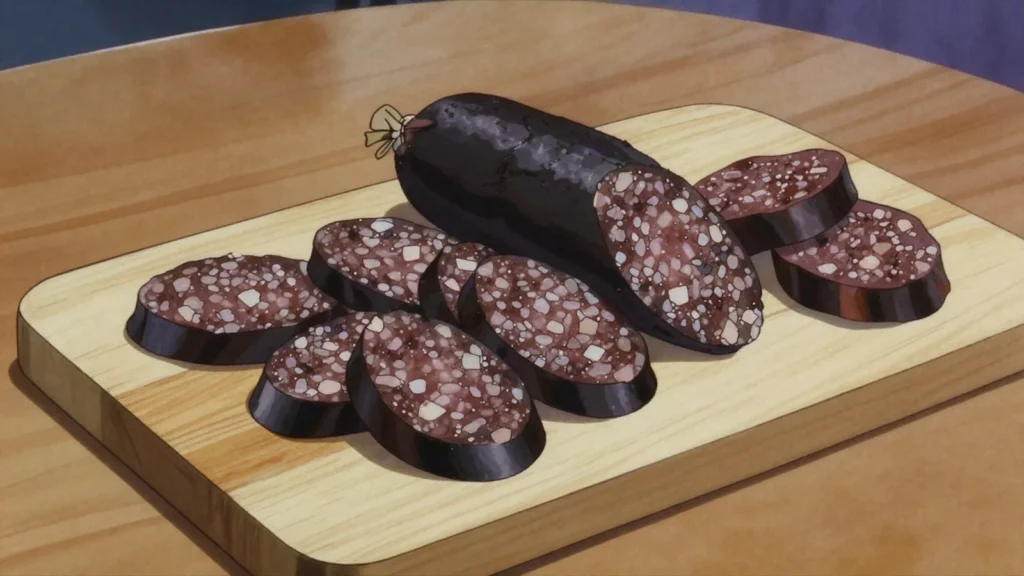
- Lift it out, hang it to drain and cool completely, then refrigerate overnight so it firms. Serve in thick cold slices, or fry the slices in a little olive oil for 2 minutes a side until crusted.
Technique
- Temperature control is the whole craft. Above about 90°C (195°F) the blood proteins seize, the fat renders out and the casing splits, leaving a grey, dry sausage.
- Fresh blood is a highly perishable raw animal product. Use it the day it is collected, keep it below 4°C (40°F), stir in a little salt on collection to stop it clotting, and cook the sausage through to 75°C (165°F).
- Underfill the casing. Rice absorbs liquid and expands, and this is the single most common reason a home-made bull bursts in the pot.
- Bull is the fat Pyrenean blood sausage of Andorra and the Catalan mountain valleys, wider than a botifarra and traditionally made at the winter matanza when the pig was killed.
Substitutions
- No bladder or bung: wide synthetic sausage casings or a double layer of muslin tied into a bolster will hold the mixture through poaching.
- Rice can be replaced by cooked breadcrumbs or by pine nuts and rice together, both of which appear in Catalan versions.
Variations
- Bull blanc is the same sausage made without blood, pale and studded with tongue and fat.
- Some Andorran makers add a handful of pine nuts to the mix.
- Bisbe, a related mountain sausage, uses larger pieces of tongue set in the same blood mixture.
History
One of the classic embotits of the Andorran valleys, made at the winter matança pig slaughter.
Frequently asked questions
What is Bull negre?
Bull negre is a charcuterie & cured from Andorra: fat blood sausage of pork and rice, sliced cold or fried. One of the classic embotits of the Andorran valleys, made at the winter matança pig slaughter.
How long does Bull negre take to make?
Bull negre takes 1 hr 30 min of preparation and 1 hr 30 min plus overnight cooling of cooking. The recipe makes 2 large sausages, about 1.6 kg. It is rated hard to make.
What can I substitute in Bull negre?
Yes, within limits. No bladder or bung: wide synthetic sausage casings or a double layer of muslin tied into a bolster will hold the mixture through poaching. Rice can be replaced by cooked breadcrumbs or by pine nuts and rice together, both of which appear in Catalan versions.
What is the most important thing to get right in Bull negre?
Poach in water held at 80°C (175°F) to 85°C (185°F), never boiling, for 1 hr 15 min to 1 hr 30 min; keep a thermometer in the pot, because a rolling boil splits the casing every time.