
Ingredients
Dough
- 700 gplain flour, plus extra for the bench
- 250 mlwhole milk, warmed to 35°C (95°F)
- 100 mlwater
- 2large eggs
- 60 gbutter, melted and cooled
- 9 gdried yeast, or 25 g fresh
- 2 tbspsugar
- 1.5 tspfine salt
To fry and serve
- 1.5 litressunflower oil, for the kazan
- kaimak or thick sour cream, honey and butter, to serve
- black tea with milk (shai)
Directions
- Whisk the yeast and sugar into the warm milk and water and leave 10 minutes until it foams.
- Beat in the eggs, melted butter and salt, then work in the flour to a soft, smooth dough. Knead 8–10 minutes; it should be tacky rather than stiff, softer than a bread dough.
- Cover and prove in a warm place for 1 hour to 1 hour 30 minutes, until doubled and full of air.
- Knock back gently, then roll out to 1 cm thick on a floured bench. Do not roll it thin: baursak puff by a factor of three.
- Cut into 3 cm squares or diamonds with a knife or a wheel. Kazakh cooks cut squares or diamonds; Kyrgyz cooks often cut rounds.
- Cover the cut pieces with a cloth and let them rest 20–25 minutes so they wake up again. Skipping this second rise gives heavy, dense baursak.
- Heat the oil in a kazan or deep heavy pot to 175–180°C (350–350°F). Test with one piece: it should sink briefly, then rise and start to swell within 5 seconds.
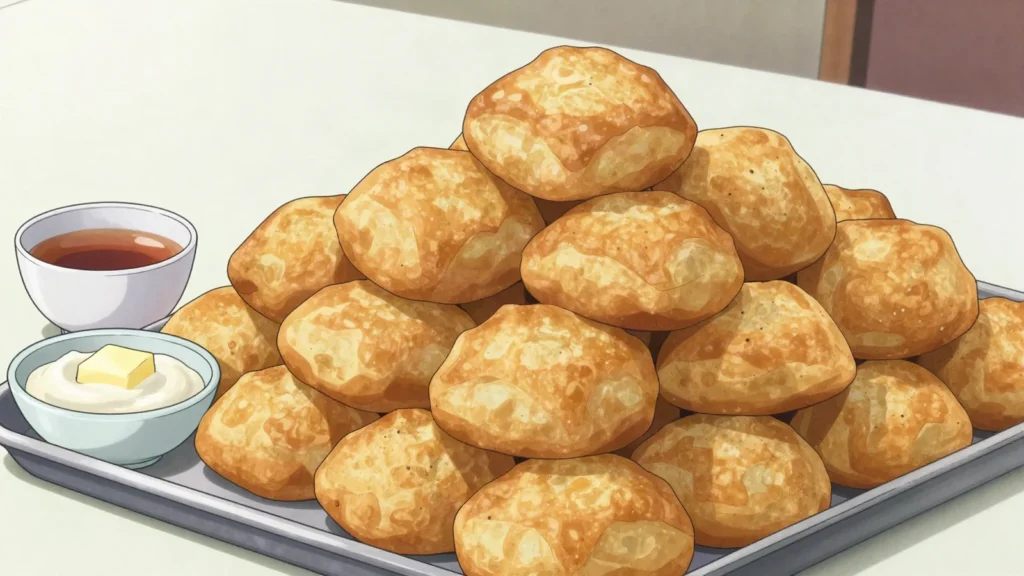
- Fry in small batches, never crowding, turning constantly with a slotted spoon so they colour evenly, 2–3 minutes until deep gold and hollow-sounding. They should balloon, not stay flat.
- Lift onto a cloth or a rack and pile them, still hot, into a wide bowl or straight onto the dastarkhan cloth.
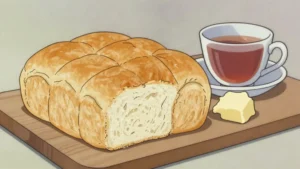
- Serve hot with kaimak, honey and butter and endless bowls of milky tea.
Technique
- Baursak is celebration food and ritual food at once: it is piled on the table for weddings and Nauryz, and the smell of frying is said to honour the ancestors, so it is also made for memorial days.
- Oil temperature is everything. Too cool and they drink oil and stay pale; too hot and they brown before the middle cooks and they collapse when cooled.
- The second rest after cutting is what makes them balloon. Kazakh grandmothers cut, cover with a cloth, then drink a cup of tea before frying.
- They are best within an hour. Day-old baursak get split and toasted, or dunked in tea.
Substitutions
- No fresh milk: use water plus 3 tbsp of milk powder, or kefir, which gives a slightly tangier crumb.
- For an eggless version common in Ramadan, replace the eggs with 100 ml more milk; the crumb is a little denser.
Variations
- Kyrgyz boorsok, usually cut smaller and rounder, served at every jailoo table.
- Sweet baursak, tossed in sugar syrup or served with honey, closer to Tatar chak-chak.
- A flat unyeasted version made quickly with kefir and baking soda when guests arrive unannounced.
History
Fried dough pieces heaped on the table at every celebration and funeral; the smell of frying is said to honour ancestors.
Frequently asked questions
What is Baursak?
Baursak is a bread & pastry from Kazakhstan: puffed fried dough scattered across every celebration table. Fried dough pieces heaped on the table at every celebration and funeral; the smell of frying is said to honour ancestors.
How long does Baursak take to make?
Baursak takes 30 min of preparation and 2 hr rising and frying of cooking. The recipe makes about 60 pieces, for 8 people. It is rated easy to make.
What can I substitute in Baursak?
Yes, within limits. No fresh milk: use water plus 3 tbsp of milk powder, or kefir, which gives a slightly tangier crumb. For an eggless version common in Ramadan, replace the eggs with 100 ml more milk; the crumb is a little denser.
What is the most important thing to get right in Baursak?
Beat in the eggs, melted butter and salt, then work in the flour to a soft, smooth dough. Knead 8–10 minutes; it should be tacky rather than stiff, softer than a bread dough.