
Ingredients
Plantain
- 3green plantains
- neutral oil, for frying
- salt
Soaking water
- 1 litrewater
- 4garlic cloves, crushed
- 1 tablespoonsalt
- juice of 1 lime
To serve
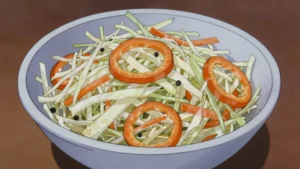
- pikliz, spicy pickled cabbage
- sos ti malis, Haitian tomato sauce
- griot, fried pork, or fried fish
Directions
- Cut both ends off with a sharp knife. Score the skin lengthways along each ridge. Do not cut deeply into the flesh underneath. Work along each scored section in turn. Warm water helps if the skin refuses to move. Oiling your hands first prevents most of that.
- Cut the peeled plantain into thick rounds. Aim for about three centimetres thick. Cut them straight across rather than at an angle. Pour oil into a deep pan to about five centimetres. Never fill a pan more than halfway with oil.
- Heat it to about 150C for this first fry. Fry them for about five minutes. Turn them once during that time. They should be pale yellow and soft throughout. Lift them out onto kitchen paper. Let them cool for two minutes so you can handle them. Set a round on a board or a flat surface. Press it flat with a heavy flat object.
- Press each round to about a centimetre thick. Press firmly but not so hard that it splits apart. Mix the water, crushed garlic, salt and lime juice. Dip each pressed round into that liquid briefly. Two or three seconds is enough.
- Lift it out and let the excess drip off. It also helps the surface crisp in the second fry. Shake off as much water as you can. Wet plantain spits violently in hot oil. Fry four or five of them at a time.
- Stand back, since they will spit at first. Fry them for about three minutes. Turn them once as they colour. They should be deep golden and audibly crisp. Lift them onto a wire rack rather than paper. Salt them immediately while they are still hot. Salt sticks to hot oil and slides off cold slices.
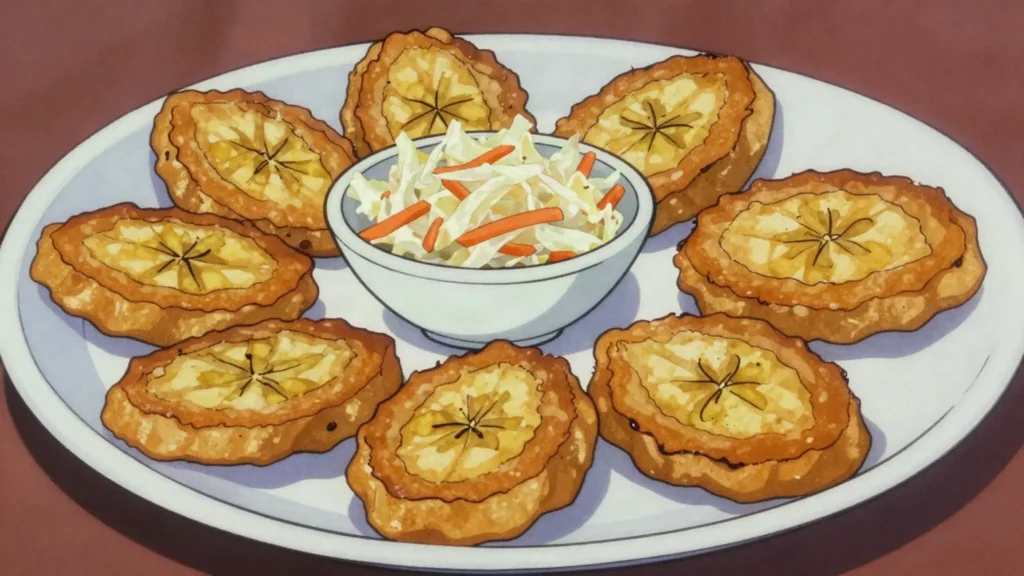
- Let the oil recover between batches. Serving them is done immediately. Pile them onto a plate or into paper. Serve pikliz alongside without fail. They must be eaten within minutes of frying. Press them and hold them, then fry to order.
Technique
- Fritay is the Haitian roadside fried food tradition, and bannann peze appear at every stand alongside griot and marinad.
- The same twice-fried plantain is called tostones in the Spanish Caribbean and patacones in Colombia and Panama.
Substitutions
- Green bananas can be used at a pinch but are smaller and much less starchy.
- The garlic soaking water can be left out, though it is what makes the Haitian version distinctive.
Variations
- Tostones in Puerto Rico and Cuba are made identically without the garlic soak.
- Some cooks press a hollow into them and fill it with meat or seafood.
- Bannann pese are also eaten simply with salt as a snack.
History
Green plantains fried, pressed flat and fried again, eaten with pikliz at every roadside fritay stand.
Frequently asked questions
What is Bannann peze?
Bannann peze is a salad & side from Haiti: twice-fried flattened plantain slices. Green plantains fried, pressed flat and fried again, eaten with pikliz at every roadside fritay stand.
How long does Bannann peze take to make?
Bannann peze takes 15 minutes of preparation and 20 minutes of cooking. The recipe makes serves 4. It is rated easy to make.
What can I substitute in Bannann peze?
Yes, within limits. Green bananas can be used at a pinch but are smaller and much less starchy. The garlic soaking water can be left out, though it is what makes the Haitian version distinctive.
What is the most important thing to get right in Bannann peze?
Cut both ends off with a sharp knife. Score the skin lengthways along each ridge. Do not cut deeply into the flesh underneath. Work along each scored section in turn. Warm water helps if the skin refuses to move. Oiling your hands first prevents most of that.