
Ingredients
Chicken
- 1whole chicken, about 1.6 kg
Base genep
- 12shallots
- 10 clovesgarlic
- 6cm turmeric, fresh
- 5cm galangal
- 4cm ginger
- 3cm kencur, aromatic ginger
- 4candlenuts
- 10red chillies
- 10bird’s eye chillies
- 3 stalkslemongrass, sliced
- 1 tspcoriander seed
- 1 tspwhite pepper
- 1 tspshrimp paste, terasi, toasted
- 1 tsppalm sugar
- 4 tbspcoconut oil
- salt
Also
- 300 gcassava leaves or spinach, blanched, for stuffing
- 6salam leaves
- 4kaffir lime leaves
To wrap
- banana leaves, softened over a flame
- string
To serve
- steamed rice
- sambal matah
- urap, dressed vegetables
Directions
- Wrap the shrimp paste in foil and toast it in a dry pan for a minute or two each side. Pound or blend everything into a smooth paste, adding a little oil to help a blender turn.
- Fry the paste in coconut oil over a medium heat for twenty to twenty-five minutes, stirring often. Fry it until it darkens, smells sweet rather than raw, and the oil visibly separates and pools at the edges. Let it cool before it goes on the chicken. Balinese betutu is properly hot, and the chilli quantity above is not an error.
- Reduce it if you must, and know that a mild version is a considerable departure. Rub the paste thoroughly all over the outside, under the skin where you can loosen it, and inside the cavity. Work it under the skin, which is where the difference between a good betutu and a mediocre one lies.
- Mix a portion of the paste through the blanched cassava leaves or spinach and pack the cavity with it. Cassava leaves are traditional and must be thoroughly cooked, since raw cassava leaves contain cyanogenic compounds.
- Leave it covered in the fridge for at least four hours, and overnight is much better. Pass the banana leaves over a flame until glossy and pliable, which stops them splitting when folded.
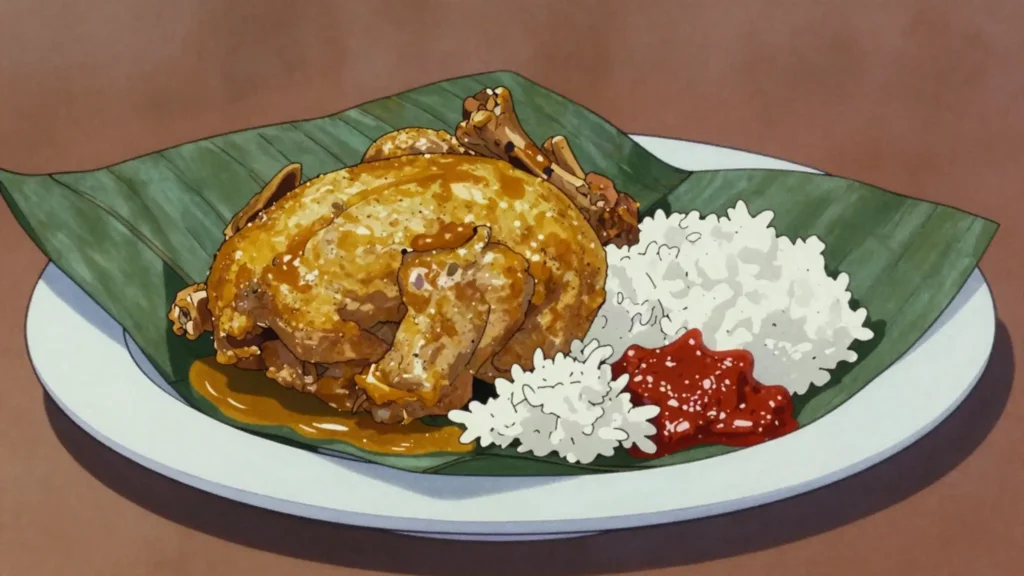
- Wrap the chicken in several layers and tie it firmly with string. Wrap it tightly, since the parcel holds in the steam and the aromatics. Steam the wrapped parcel over simmering water for two and a half to three hours.
- Top up the water and never let the pot boil dry. Now the finish in a very hot oven. Serve it in the leaves, torn apart at the table rather than carved.
Technique
- Base genep is the complete Balinese spice paste and defines the island’s cooking.
- The paste must be fried until the oil separates or it tastes raw.
- Cassava leaves must be thoroughly cooked before they go in the stuffing.
Substitutions
- Macadamias in place of candlenuts.
- Spinach in place of cassava leaves.
Variations
- Bebek betutu, made with duck, which is the more ceremonial version.
- Made with chicken portions rather than a whole bird.
- Made milder, with fewer chillies.
History
Balinese ceremonial dish, traditionally buried in rice husk embers overnight; base genep, the Balinese spice mix, gives it its heat.
Frequently asked questions
What is Ayam Betutu?
Ayam Betutu is a main from Indonesia: whole chicken packed with spice paste, wrapped in leaves and steamed for hours. Balinese ceremonial dish, traditionally buried in rice husk embers overnight; base genep, the Balinese spice mix, gives it its heat.
How long does Ayam Betutu take to make?
Ayam Betutu takes 1 hr of preparation and 3 hr of cooking. The recipe makes 6 servings. It is rated hard to make.
What can I substitute in Ayam Betutu?
Yes, within limits. Macadamias in place of candlenuts. Spinach in place of cassava leaves.
What is the most important thing to get right in Ayam Betutu?
Fry the paste in coconut oil over a medium heat for twenty to twenty-five minutes, stirring often. Fry it until it darkens, smells sweet rather than raw, and the oil visibly separates and pools at the edges. Let it cool before it goes on the chicken. Balinese betutu is properly hot, and the chilli quantity above is not an error.