
Ingredients
Meat and potato
- 700 gpork shoulder, chilled and diced
- 300 gpork belly or back fat, part-frozen and diced
- 500 gfloury potatoes, peeled and coarsely grated
- 26 gfine sea salt per kg of total mix, about 39 g here
- 2.5 gcuring salt no. 2 per kg of total mix, about 3.7 g here
- 4 gcracked black pepper per kg
- 3garlic cloves, crushed to a paste
- 1 tspsweet paprika, optional
- 50 mldry white wine
Casing and hanging
- 1.5m wide natural casing or beef bung, 55–60 mm, soaked and flushed
- butcher’s twine
- labels for the green weight
Directions
- Mince the pork shoulder through an 8 mm plate and the belly through 6 mm, keeping everything close to freezing.
- Grate the potatoes on the coarse side of a box grater straight into a bowl of cold water, then drain and squeeze them very dry in a cloth. Wet potato is the single commonest cause of a spoiled trumfa.
- Mix meat, fat and potato with the salt, curing salt, pepper, garlic, paprika and wine, and work 3 minutes until tacky. Grated potato should stay visible as pale threads through the mix.
- Rest the mixture covered at 3°C (35°F) for 12 hours.
- Stuff into the wide casings, packing tightly to leave no air pockets, prick out any bubbles and tie both ends. Weigh each sausage and record the green weight.
- Hang 24 hours at 18–20°C (65–70°F), then move to a cellar at 10–13°C (50–55°F) with 75–80% humidity and gentle airflow.
- Dry 3–5 weeks. Trumfa is a wide sausage and dries slowly; expect a white bloom, and wipe off anything green with a cloth dipped in brandy.
- It is ready at 30–35% weight loss, when the outside is firm and the centre still yields slightly to a thumb.
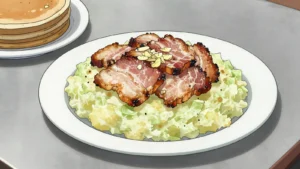
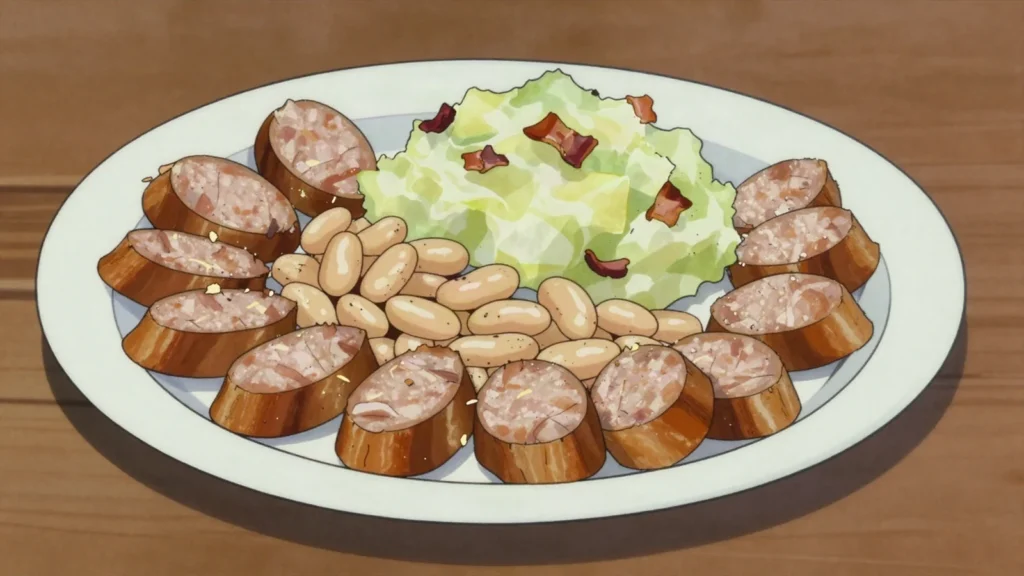
- Eat it in two ways: sliced thin and raw, as a cured sausage, or cut into 1.5 cm rounds and fried in a dry pan 2 minutes a side until the potato crisps and the fat runs.
- Serve the fried version with white beans or trinxat and a glass of Pyrenean red.
Technique
- Trumfa means potato in Pyrenean Catalan, and the sausage was a way of stretching scarce meat through a mountain winter; the potato is a defining ingredient, not a filler to be reduced.
- Starch and moisture make this a riskier cure than a plain llonganissa. Use nitrate curing salt, squeeze the potato bone dry, keep the drying room below 13°C (55°F), and never let humidity climb above 85%.
- Because it dries slowly, watch for case hardening: if the surface goes hard and dark while the middle stays soft, bag it loosely in the fridge for three or four days to let the moisture equalise, then hang it again.
Substitutions
- No curing chamber: a wine fridge at 12°C (55°F) with a tray of saturated salt solution gives about 75% humidity. In a cold winter cellar, hang it away from any draught.
- If you would rather not dry-cure at all, make the same mixture as fresh sausage, omit the curing salt, refrigerate no more than two days and fry it through to 72°C (160°F).
Variations
- Bull de trumfa, the softer Cerdanya version, cooked rather than dried and sliced from a boiled bung.
- A version with a handful of chopped parsley and a grating of nutmeg through the mix.
- Fried and served on toasted coca with allioli.
History
A poor-mountain charcuterie of the Andorran and Pallars valleys, stretching scarce pork with the potato crop.
Frequently asked questions
What is Trumfa?
Trumfa is a charcuterie & cured from Andorra: pyrenean sausage bulked with grated potato, cured then eaten raw or cooked. A poor-mountain charcuterie of the Andorran and Pallars valleys, stretching scarce pork with the potato crop.
How long does Trumfa take to make?
Trumfa takes 1 hr of preparation and 3 to 5 weeks curing of cooking. The recipe makes about 1.5 kg, 3 sausages. It is rated hard to make.
What can I substitute in Trumfa?
Yes, within limits. No curing chamber: a wine fridge at 12°C (55°F) with a tray of saturated salt solution gives about 75% humidity. In a cold winter cellar, hang it away from any draught. If you would rather not dry-cure at all, make the same mixture as fresh sausage, omit the curing salt, refrigerate no more than two days and fry it through to 72°C (160°F).
What is the most important thing to get right in Trumfa?
Starch and moisture make this a riskier cure than a plain llonganissa. Use nitrate curing salt, squeeze the potato bone dry, keep the drying room below 13°C (55°F), and never let humidity climb above 85%.