
Ingredients
What to buy
- a beer carrying the Authentic Trappist Product label
- the hexagonal logo
- Westmalle Dubbel or Tripel
- Chimay Rouge, Blanche or Bleue
- Orval
- Rochefort 6, 8 or 10
- Westvleteren, if you can get it
- see the note on why no method is given
To serve
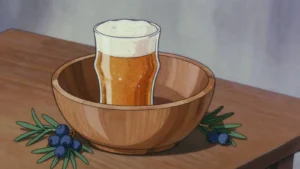
- the proper chalice or goblet, if you have one
- at 10 to 14 degrees
- not ice cold, see the note
- poured slowly
- leaving the sediment behind
To eat with
- Herve or Chimay cheese
- pâté and rustic bread
- carbonnade flamande
- mussels
- dark chocolate, with the strongest ones
Directions
- Stand the bottle upright for a day before opening.
- Pour slowly and steadily in one motion. Stop before the last centimetre.
- Serve them at ten to fourteen degrees. Cold suppresses aroma.
- Take the bottle out of the refrigerator twenty minutes before opening. Or keep it in a cool cupboard rather than the fridge.
Technique
- Trappist is not a recipe and not a style — it is a legal and institutional designation. You could brew a beer identical in every measurable way and it still would not be a Trappist beer, because the label is about who brews it and where. This is the one entry where no method is possible even in principle.
- The Authentic Trappist Product label was created in 1997 by the International Trappist Association. The beer must be brewed within the walls of a Trappist abbey, by or under the supervision of monks, with the brewery secondary to monastic life and profits going to the monastery, the community and charitable work. That last rule is genuinely unusual in a commercial product.
- The number of certified breweries changes, because the label is granted and can be withdrawn. Achel lost the designation when the last monks left the abbey — the beer continued and the label did not, which shows exactly what it means.
- Abbey beer is not Trappist beer. Bière d’Abbaye is a separate category covering beers licensed from an abbey, named after one, or brewed in an old abbey style — Leffe and Grimbergen among them. Look for the hexagonal logo, which is the only reliable marker. The label covers Trappist cheese, bread, chocolate and soap too.
- They are not one thing. Orval is dry, bitter and full of Brettanomyces character; Rochefort 10 is dark, sweet and very strong; Chimay Blanche is a pale tripel. Anyone describing a Trappist taste is describing nothing, and the atlas says so rather than repeating the marketing.
- Serve them at ten to fourteen degrees, not ice cold. Cold suppresses aroma and these beers are built on it — served too cold a Rochefort 10 tastes of almost nothing. Take the bottle out twenty minutes before opening, or keep it in a cool cupboard rather than the fridge.
- They are bottle conditioned, so there is live yeast sediment in the bottom. Stand the bottle upright for a day beforehand, then pour slowly in one motion and stop before the last centimetre — setting it down and starting again stirs the sediment up. The sediment is harmless, cloudy and bready, and some people want it.
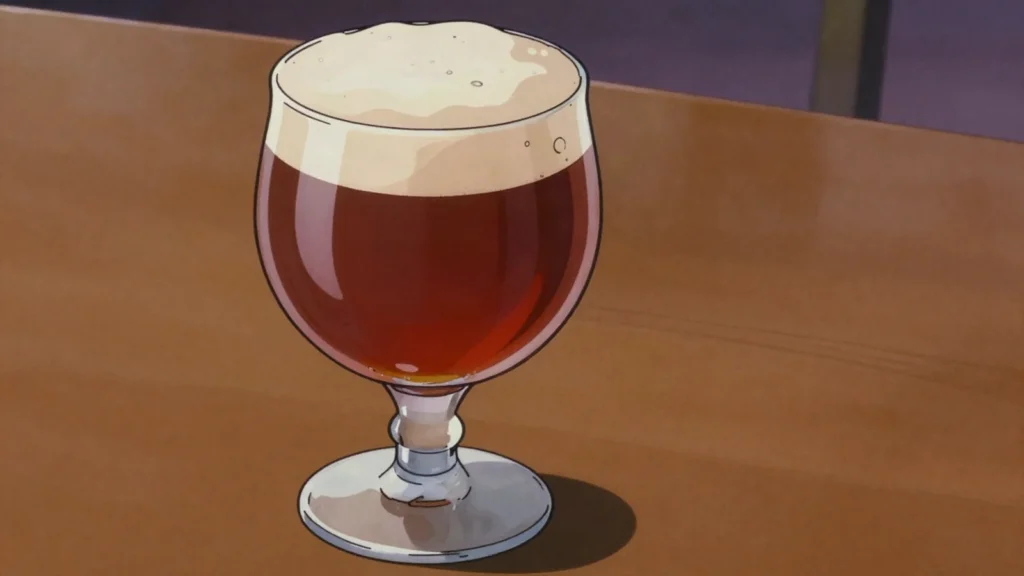
- The branded chalice is partly marketing, but the wide bowl genuinely helps the aroma. Any large wine glass does the same job.
- Many sit between seven and eleven percent, so a single bottle can carry as much alcohol as several glasses of ordinary beer. They drink smoothly for their strength because the sweetness and body hide it, and people misjudge them.
- Westvleteren is sold in very small quantities, by appointment at the abbey with limits per buyer, because the abbey brews only what it needs and does not expand to meet demand — the monastic rule showing in commercial form. Bottles are resold at large markups and the abbey has objected; the atlas records that without taking a side.
- Orval is dry-hopped and dosed with Brettanomyces, a yeast that keeps working in the bottle, slowly drying the beer. A young Orval is fruity and sharply bitter, an older one drier and funkier — the same beer tastes different at three months and at a year, deliberately, and people keep bottles to compare.
- The strong dark ones age well, developing sherry and dried fruit notes as the hops fade. Pale hoppy ones get worse with age. Store upright, cool and dark — upright keeps the sediment in one place and the beer off the cap.
- Do not use a very bitter beer in a long stew. Bitterness concentrates as it reduces and turns harsh; a dubbel is what goes into carbonnade.
- Some beers are fined with isinglass, which comes from fish, though most bottle-conditioned Belgian beers are not. Anyone who needs to know should check with the brewery.
- Do not drink alcohol if you are pregnant or driving.
Substitutions
- Abbey beers — Leffe, Grimbergen, St Bernardus — are the widely available near neighbours.
- St Bernardus Abt 12 is frequently compared with Westvleteren 12.
- La Trappe from the Netherlands is a Trappist brewery outside Belgium.
- Any Belgian dubbel or tripel fills the same place at a table.
- Any large wine glass replaces the branded chalice.
- Non-alcoholic Belgian-style ales exist and are improving.
Variations
- Dubbel is the dark malty style; tripel the strong pale one.
- Quadrupel, as in Rochefort 10, is the strongest dark expression.
- Orval is unique among them, dry-hopped and Brettanomyces-dosed.
- Chimay Blanche, Rouge and Bleue span pale, dark and strong.
- Trappist cheese, bread and chocolate carry the same label.
- Patersbier is the weak table beer the monks drink themselves.
History
Brewed inside Cistercian abbey walls with profits going to the monastery; the Authentic Trappist Product label, created in 1997, restricts who may use the name.
Frequently asked questions
What is Trappist beer?
Trappist beer is a wine & spirit from Belgium: strong abbey ales brewed by monks: Westmalle, Chimay, Westvleteren. Brewed inside Cistercian abbey walls with profits going to the monastery; the Authentic Trappist Product label, created in 1997, restricts who may use the name.
How long does Trappist beer take to make?
Trappist beer takes 5 minutes of preparation and none of cooking. The recipe makes buy by the bottle. It is rated easy to make.
What can I substitute in Trappist beer?
Yes, within limits. Abbey beers — Leffe, Grimbergen, St Bernardus — are the widely available near neighbours. St Bernardus Abt 12 is frequently compared with Westvleteren 12. La Trappe from the Netherlands is a Trappist brewery outside Belgium. Any Belgian dubbel or tripel fills the same place at a table. Any large wine glass replaces the branded chalice. Non-alcoholic Belgian-style ales exist and are improving.
What is the most important thing to get right in Trappist beer?
Take the bottle out of the refrigerator twenty minutes before opening. Or keep it in a cool cupboard rather than the fridge.