
Ingredients
The fruit
- 20ripe cashew apples
- about 2 kg
- nuts already removed
- yellow or red
- washed
To reduce astringency
- salted water
- for soaking
- or a little salt
- rubbed over the fruit
To finish
- sugar, to taste
- about 100 g
- juice of 2 limes
- cold water, to dilute
- if it is too strong
To serve
- well chilled
- over ice
- in tall glasses
- during the harvest
Directions
- Rub salt over the cut fruit and leave it. Rinse it off thoroughly before pressing. Anyone with a cashew allergy should take medical advice. Discard any nut still attached to the apple. That is done at the point of harvest. Warm conditions start fermentation quickly. Cold conditions slow that right down. Wash the cashew apples thoroughly in cold water.
- Rinse them through two or three changes of water. Discard any that are soft or damaged. Check that no nuts remain attached to them. Any nut still attached must be removed. Discard the whole nut and shell together. Rub salt over the fruit and let it stand.
- Cut each apple in half or into quarters first. Rub salt over all the cut surfaces. Let them stand for about twenty minutes. Use about a tablespoon of salt per litre. Soak the cut fruit for about half an hour.
- Rinse the salted fruit thoroughly in cold water. Rinse through several changes of water. All the salt must be washed off entirely. Squeeze the juice out of the fruit by hand. Work over a bowl to catch all of it. Squeeze each piece until it is dry. Do not waste any of that juice. Blend the fruit and then strain it. Strain the juice through a fine sieve.
- Press the pulp against the sieve to extract more. Do not push the pulp itself through. Strain it again through muslin for a clearer juice. It is genuinely worth the extra minute. Taste the juice and add sugar if needed. Add it gradually and taste as you go. Dissolve the sugar in a little warm water first.
- Squeeze lime juice into the drink. Add it gradually and taste as you go. Add cold water if the juice is too strong. Adjust it entirely to your own taste. Refrigerate the juice until it is properly cold.
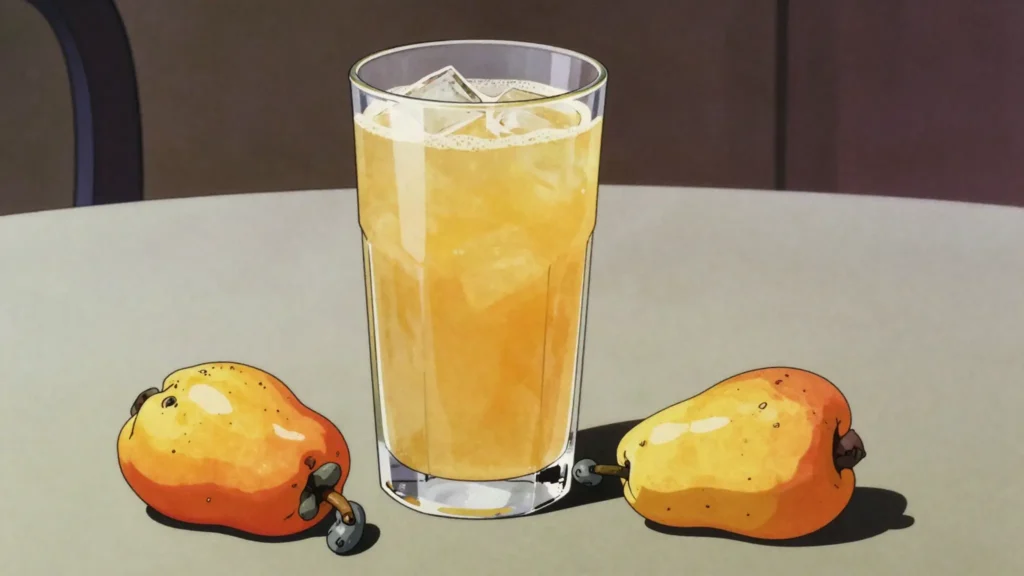
- Pour the cold juice into glasses over ice. Fill the glass with ice first. That keeps it properly cold as it is drunk. Make it slightly stronger than you want. It is drunk very cold from a glass over ice. Press it fresh and drink it the same day.
Technique
- The cashew shell contains a caustic oil related to the one in poison ivy, which causes genuine burns and blistering, and that is why raw cashews are never sold in shell. This recipe uses apples with the nuts already removed — discard any nut still attached, shell and all, and never try to open one yourself.
- The nut and the apple are parts of one plant. The atlas cannot advise on allergy cross-reactivity, which is a genuinely medical question, so anyone with a cashew allergy should take medical advice.
- Cashew apple juice ferments extremely fast, sometimes bubbling within hours in the heat, since it is sugary and carries wild yeasts. Refrigerate it immediately and drink it on the day it is pressed; fizzing means fermentation has begun rather than spoilage, and the juice becomes slightly alcoholic at that point.
Substitutions
- A juicer or blender with straining replaces hand pressing and extracts rather more; both are genuinely used in Guinea-Bissau. Cloudy juice is entirely traditional and a second strain through muslin for clarity is a refinement rather than a rule.
- Fermented cashew juice becomes a light local wine and is distilled into a spirit in places; the atlas records those as separate preparations.
Variations
- The juice is sweet and fragrant but noticeably astringent from tannins in the flesh, which is characteristic rather than a fault. Rubbing salt over the cut fruit for twenty minutes, or soaking it in salted water, draws out some of those tannins — rinse it off thoroughly afterward, since salty juice is unpleasant. None of these methods removes the astringency entirely and some always remains.
- The cashew nut grows on the outside of a fleshy false fruit, the apple, which swells beneath it. The nut has the commercial value and the apple is usually discarded when nuts are collected, so vast quantities go to waste — juicing uses what would otherwise be thrown away. Cashews are Guinea-Bissau’s dominant export crop and the country depends heavily on that single crop.
- Cashew apples bruise easily, rot within a day and do not travel at all, which is why this is a local harvest drink. Handle them gently, discard any that are soft, and note that the juice stains fabric badly — wear an apron.
History
The apple is the fleshy false fruit discarded when nuts are collected; between April and June it is pressed and drunk fresh or fermented into wine.
Frequently asked questions
What is Sumo de caju?
Sumo de caju is a drink from Guinea-Bissau: fresh juice pressed from cashew apples during the harvest. The apple is the fleshy false fruit discarded when nuts are collected; between April and June it is pressed and drunk fresh or fermented into wine.
How long does Sumo de caju take to make?
Sumo de caju takes 30 minutes of preparation and no cooking at all. The recipe makes about 1.5 litres. It is rated easy to make.
What can I substitute in Sumo de caju?
Yes, within limits. A juicer or blender with straining replaces hand pressing and extracts rather more; both are genuinely used in Guinea-Bissau. Cloudy juice is entirely traditional and a second strain through muslin for clarity is a refinement rather than a rule. Fermented cashew juice becomes a light local wine and is distilled into a spirit in places; the atlas records those as separate preparations.
What is the most important thing to get right in Sumo de caju?
Rub salt over the cut fruit and leave it. Rinse it off thoroughly before pressing. Anyone with a cashew allergy should take medical advice. Discard any nut still attached to the apple. That is done at the point of harvest. Warm conditions start fermentation quickly. Cold conditions slow that right down. Wash the cashew apples thoroughly in cold water.