
Ingredients
Meat
- 2pig’s trotters, split
- 2pig’s ears
- 1 kgpork hock, on the bone
- 2onions, halved
- 2carrots
- 1 headgarlic, halved
- 3bay leaves
- 1 tbspblack peppercorns
- 1 tbspallspice berries
- 2 tbspsalt
- water, to cover
To season
- 4 clovesgarlic, crushed
- 1 tspground black pepper
- salt, to taste
To serve
- white vinegar or mustard
- raw onion
- boiled potatoes
Directions
- Wash the trotters, ears and hock well and soak in cold water for two hours to draw out the blood, which otherwise leaves the jelly grey and cloudy.
- Put everything in a large pot with the onion, carrot, garlic, bay, peppercorns, allspice and salt, cover with cold water by 5 cm and bring very slowly to a bare simmer. Skim the grey foam off thoroughly in the first twenty minutes.
- Simmer for three to four hours, never letting it boil. The surface should barely move. A boil emulsifies the fat into the stock and gives a cloudy, greasy set instead of a clear one.
- Lift the meat out and cool it enough to handle. Pick every scrap off the bones, discard the bones and gristle, and chop the meat coarsely.
- Strain the stock through muslin and test it: chill a spoonful on a saucer for five minutes. It should set firm. If it does not, boil the stock down further and test again — this is the only reliable way to know it will hold.
- Stir the crushed garlic and pepper into the meat, then taste the stock and season it hard. Cold jelly mutes salt badly and a stock that tastes right hot will taste of nothing tomorrow.
- Divide the meat between bowls or a loaf tin, pour the stock over to cover, and refrigerate overnight until firmly set.
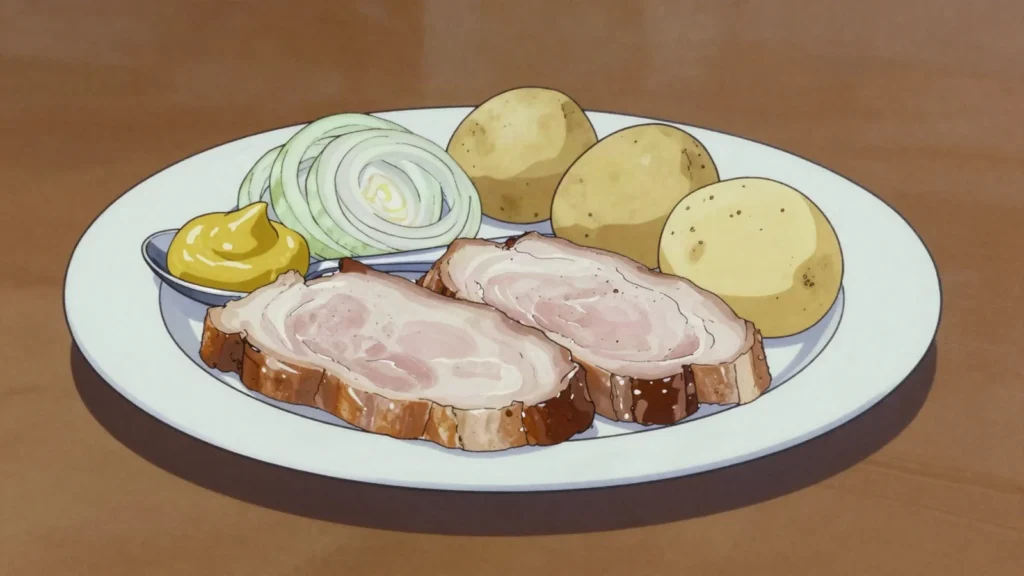
- Turn out or serve from the bowl, cut in slices, with vinegar or mustard, raw onion and boiled potatoes.
Technique
- The saucer test is the whole thing. Reduce until it sets on the plate, then a little more.
- Never let it boil. Every cloudy, greasy sült is one that boiled.
- Season the stock aggressively while hot. This is the second most common mistake after boiling.
Substitutions
- Beef shin and a calf’s foot for a beef sült, which is made in some Estonian households.
- A little powdered gelatine as insurance if the stock will not set, though the flavour is thinner.
Variations
- The Latvian galerts and Russian kholodets are the same dish.
- Some households set it with a layer of sliced boiled egg and carrot at the bottom of the mould, which appears on top when turned out.
History
Jellied pork set by the gelatine of trotters and ears, served cold with mustard; a Christmas and funeral table dish.
Frequently asked questions
What is Sült?
Sült is a charcuterie & cured from Estonia: cold jellied pork eaten with mustard or vinegar. Jellied pork set by the gelatine of trotters and ears, served cold with mustard; a Christmas and funeral table dish.
How long does Sült take to make?
Sült takes 45 min of preparation and 4 hours, plus overnight setting of cooking. The recipe makes serves 10. It is rated medium to make.
What can I substitute in Sült?
Yes, within limits. Beef shin and a calf’s foot for a beef sült, which is made in some Estonian households. A little powdered gelatine as insurance if the stock will not set, though the flavour is thinner.
What is the most important thing to get right in Sült?
Wash the trotters, ears and hock well and soak in cold water for two hours to draw out the blood, which otherwise leaves the jelly grey and cloudy.