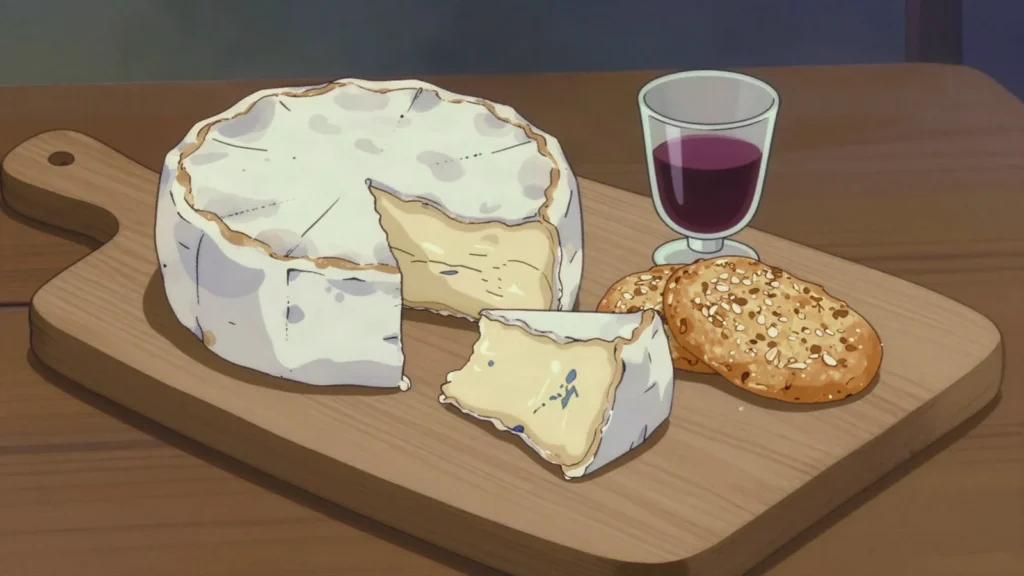

A blue-veined cow’s milk cheese, crumbly and salty, eaten with port at Christmas. It was sold to coach travellers at the Bell Inn in Stilton on the Great North Road, and PDO rules now allow production only in Derbyshire, Leicestershire and Nottinghamshire — not in Stilton itself.
It is a PDO made in three counties only, and it needs a mould culture, hand-sealing of the rind, needle piercing at the right moment and months in a store held at controlled temperature and humidity.
What goes into it
- pasteurised cow’s milk
- Penicillium roqueforti
- rennet
- salt
How it is made
The milk is set with rennet and inoculated with blue mould spores, the curd drained overnight and milled, salted and packed into cylinders without pressing. The cylinders are turned daily and their sides smoothed by hand to seal the rind, then pierced with needles after several weeks so air can reach the mould and the blue spreads inward.
How long it takes: nine to twelve weeks
How it is eaten
With port at Christmas, crumbled into soup, or on oatcakes.
History
Sold to coach travellers at the Bell Inn in Stilton on the Great North Road; PDO rules now allow production only in three Midland counties.
Frequently asked questions
What is Stilton?
Stilton is a cheese & dairy from United Kingdom: blue-veined cow’s milk cheese, crumbly and salty, eaten with port at Christmas. Sold to coach travellers at the Bell Inn in Stilton on the Great North Road; PDO rules now allow production only in three Midland counties.
How is Stilton made?
The milk is set with rennet and inoculated with blue mould spores, the curd drained overnight and milled, salted and packed into cylinders without pressing. The cylinders are turned daily and their sides smoothed by hand to seal the rind, then pierced with needles after several weeks so air can reach the mould and the blue spreads inward. It takes nine to twelve weeks.
Can I make Stilton at home?
No, and the atlas gives no method for it. It is a PDO made in three counties only, and it needs a mould culture, hand-sealing of the rind, needle piercing at the right moment and months in a store held at controlled temperature and humidity.
What goes into Stilton?
Pasteurised cow’s milk, penicillium roqueforti, rennet, salt.
How is Stilton eaten?
With port at Christmas, crumbled into soup, or on oatcakes.