
Ingredients
The pulses
- 300 gdried beans or peas
- sugar beans, cowpeas or field peas
- soaked overnight
The grain
- 300 gsamp or crushed maize
- or whole sorghum grain
- rinsed
The pot
- about 2 litres water
- 1onion, chopped, optional
- 2 tablespoonsoil or butter
- salt
To serve
- hot in bowls
- on a cold highland day
Directions
- Salt is most of the seasoning. Rinse the beans and pick them over. Discard any stones or damaged ones. Pick through all of them properly. It takes only a few short minutes. Cover the beans well with cold water. Leave them all to soak overnight. They swell to about twice their size. Use a bowl far larger than they need. Top the water up if they rise above it.
- Rinse the samp and cover it with water. Leave it to soak alongside the beans. Samp is very hard indeed when dry. Drain both the beans and the samp. Discard all of the soaking water. Rinse both of them once more after. Put the samp and beans in a large pot.
- Cover them well with fresh water. Cover them by a good few centimetres. Top it up with hot water as needed. Do not let the pot run dry at all. Add the chopped onion if you want it. Some households add onion and some do not. Bring the pot up to a full boil. Skim off any foam that rises up. Foam rises in the first minutes.
- Let it simmer for about two hours. Samp and beans both take a long time. Stir it every twenty minutes or so. Stirring stops it burning there. Add the salt once they start to soften. Salt added at the very start toughens skins.
- Add it about halfway through cooking. That gives soft beans and good flavour. Add hot water as the pot reduces. The pot can go dry surprisingly fast.
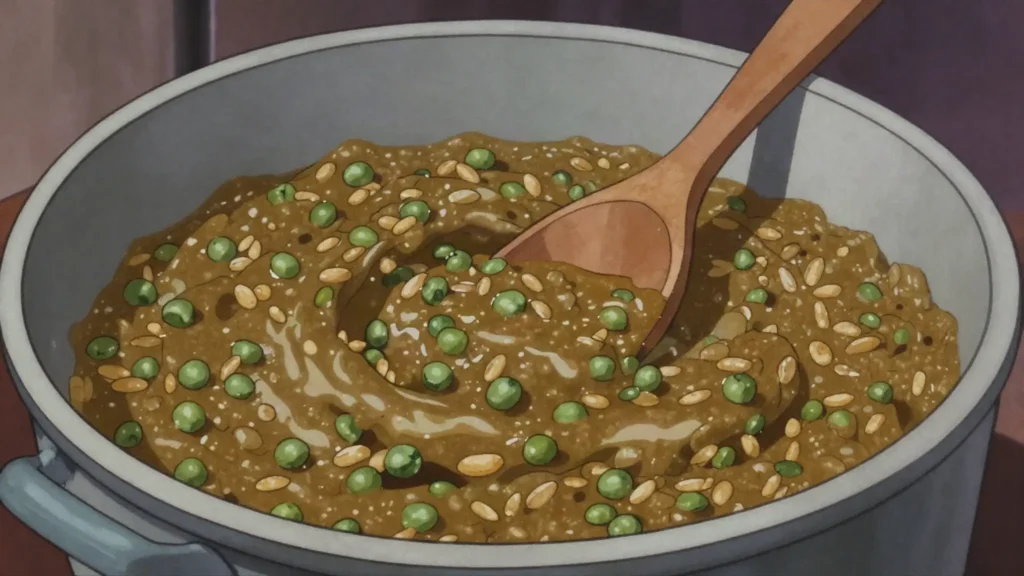
- Add hot rather than cold water. Cold water slows the cooking down. Cook it on if it still resists. It should be thick and porridge-like. Cook it down further if it is loose. Stir in the oil or the butter. Butter is a very common finish.
- Taste it and adjust the salt as needed. A plain pot needs real seasoning. Spoon it out into deep warm bowls. It keeps three days refrigerated.
Technique
- Grain and pulse cooked together appear across Africa because they complement each other nutritionally — grains and pulses carry different amino acids — which is why the pairing recurs everywhere rather than by coincidence of taste. The atlas carries several: mucapata in Mozambique and mseto in Zanzibar both pair rice and mung beans, and nyekoe is the Lesotho version of the same idea.
- Both the samp and the beans need long cooking, which is why they go in together and why the pot takes about two hours; older beans take considerably longer, so judge it by texture rather than a clock. Add the salt about halfway through, since salt at the very start toughens the skins.
- The mixture thickens as it cooks and catches on the bottom readily, so stir every twenty minutes scraping right into the corners, and top the pot up with hot rather than cold water as the grain absorbs it — cold water slows the cooking.
Substitutions
- Sorghum grain stands in for samp and tolerates drought far better than maize, with a distinct earthy flavour; both are used in Lesotho.
- Some households add chopped onion and some do not, and the plainest version has none at all.
Variations
- Samp is maize stamped to break the kernels with the hull removed, cooking to a chewy grainy texture quite unlike maize meal.
- Soak the samp alongside the beans, since it is very hard when dry and soaking cuts its cooking time as well.
- Lesotho sits entirely above a thousand metres with genuinely cold winters and snow in the highlands, which is what a slow filling pot like this is for.
History
Sorghum or maize cooked together with beans in one pot until soft, a filling highland dish for cold weather.
Frequently asked questions
What is Nyekoe?
Nyekoe is a main from Lesotho: hearty pot of peas or beans cooked with grain. Sorghum or maize cooked together with beans in one pot until soft, a filling highland dish for cold weather.
How long does Nyekoe take to make?
Nyekoe takes 15 minutes plus soaking of preparation and 2 hours of cooking. The recipe makes serves 6. It is rated easy to make.
What can I substitute in Nyekoe?
Yes, within limits. Sorghum grain stands in for samp and tolerates drought far better than maize, with a distinct earthy flavour; both are used in Lesotho. Some households add chopped onion and some do not, and the plainest version has none at all.
What is the most important thing to get right in Nyekoe?
Cover them well with fresh water. Cover them by a good few centimetres. Top it up with hot water as needed. Do not let the pot run dry at all. Add the chopped onion if you want it. Some households add onion and some do not. Bring the pot up to a full boil. Skim off any foam that rises up. Foam rises in the first minutes.