
Ingredients
The dates
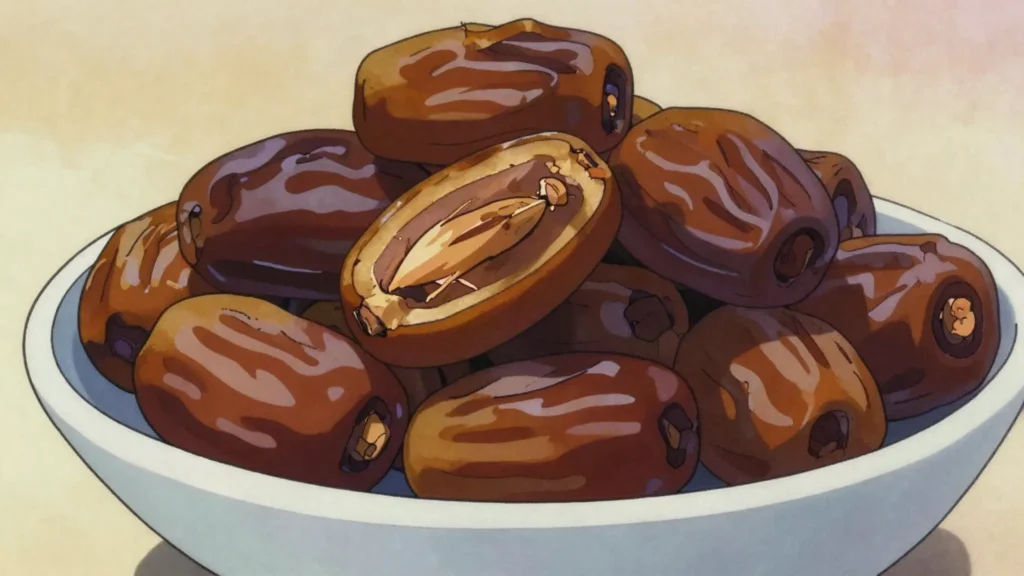
- 500 gMedjool dates
- large, soft and plump
To stuff, optional
- 24whole blanched almonds
- or walnut halves
- or 100 g tahini
- or 100 g soft white cheese
To finish, optional
- sesame seeds, toasted
- desiccated coconut
- ground cardamom
To serve
- Arabic coffee
- or black tea
- on a shallow dish
Directions
- Discard any date that is genuinely mouldy. Dates keep a long time at room temperature.
- Cut a slit down one side of each date. Do not cut the date in half entirely. Discard all of the stones entirely.
- Press the date gently closed around it. It gives crunch against the soft date.
- Warm the almonds in a dry pan first. Give them about four full minutes. Let them cool before stuffing.
- Spoon a little tahini into each pocket. Push a little soft white cheese into each. Roll the stuffed dates in sesame seeds. It also stops them sticking to each other.
- Set them out on a shallow dish. Arrange them in a single layer. A single layer keeps them separate.
- Serve Arabic coffee with them. Whole dates keep months in a cool place.
Technique
- A fungal disease called bayoud killed very large numbers of Moroccan date palms and hit the Medjool groves hard; a small number of offshoots were sent abroad in the nineteen twenties, quarantined and propagated, and almost all Medjool palms worldwide descend from those few. The crop has an unusually narrow founding base, which is documented and worth knowing.
- White crystals on the surface are sugar crystallising out of the fruit, entirely harmless and normal — they dissolve if you warm the date briefly. Mould is fuzzy and grey or green, and any genuinely mouldy date should be discarded.
- Wipe dates with a damp cloth rather than washing them under running water, which makes the surface wet and sticky and shortens how long they keep; and cut a slit down one side to remove the stone rather than halving them, so the pocket stays whole for filling.
Substitutions
- Walnut halves stand in for almonds; say clearly when a shared dish is stuffed with nuts, since the allergy can be severe.
- Tahini or soft white cheese fill the pocket instead, both cutting the sweetness.
Variations
- Dates pass through named stages — crisp khalal, soft rutab and fully ripe tamr; Medjool are usually sold at tamr, with rutab sold fresh in season.
- The Jordan Valley lies below sea level and is among the lowest farmland on earth, giving the long intense heat and dry harvest that dates need.
- They are served with unsweetened cardamom-scented Arabic coffee, which is bitter on its own and pairs with the sweetness.
History
A Moroccan cultivar planted in the valley’s warm farms below sea level, now one of Jordan’s leading agricultural exports.
Frequently asked questions
What is Medjool dates?
Medjool dates is a snack from Jordan: large soft caramel-sweet dates grown in the Jordan Valley. A Moroccan cultivar planted in the valley’s warm farms below sea level, now one of Jordan’s leading agricultural exports.
How long does Medjool dates take to make?
Medjool dates takes 15 minutes of preparation and no cooking at all. The recipe makes serves 8. It is rated easy to make.
What can I substitute in Medjool dates?
Yes, within limits. Walnut halves stand in for almonds; say clearly when a shared dish is stuffed with nuts, since the allergy can be severe. Tahini or soft white cheese fill the pocket instead, both cutting the sweetness.
What is the most important thing to get right in Medjool dates?
Cut a slit down one side of each date. Do not cut the date in half entirely. Discard all of the stones entirely.