
Ingredients
Sausage — Vigan style, garlicky
- 1 kgpork shoulder, coarsely minced
- 250 gpork back fat, chopped small
- 1whole head garlic, crushed
- 3 tbspcane vinegar
- 2 tspsalt
- 1 tbspblack pepper
- 1 tspground annatto, for colour
- narrow natural hog casing, about 2 m
For the sweet Pampanga version instead
- 60 gbrown sugar
- 2 tbspsoy sauce
- less vinegar, less garlic
To serve
- garlic fried rice
- a fried egg
- spiced vinegar for dipping
Directions
- Mix the pork, fat, garlic, vinegar, salt, pepper and annatto thoroughly with your hands. Cover and refrigerate overnight — the vinegar acidifies the meat and carries the garlic through it.
- Fry a spoonful the next day and taste. Vigan longganisa should be aggressively garlicky and sour; the Pampanga version sweet; the Lucban sour and herby. Adjust before you fill anything.
- Fill the narrow casing and twist off into short sausages, about 6 cm long — longganisa are small, and two or three make a serving.
- Prick each once and leave them uncovered in the fridge for a few hours so the surfaces dry.
- To cook, put the sausages in a cold pan with a splash of water and set over medium-low heat. Cover and let them steam for 10 minutes.
- Then take the lid off and let the water boil away. Once the pan is dry they will begin frying in their own rendered fat — turn them for another 8 to 10 minutes until browned and glossy.
- This steam-then-fry method is how longganisa is cooked everywhere in the Philippines. Fried from raw, the sugar in the sweet versions burns black long before the middle is done.
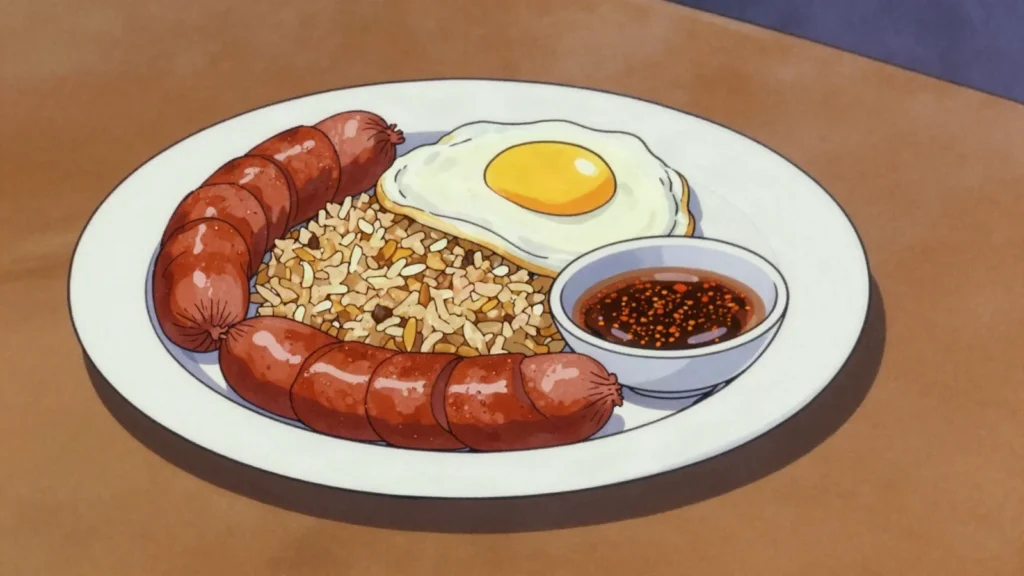
- Serve with garlic rice, a fried egg and spiced vinegar — the plate known as longsilog.
Technique
- Steam first, then fry dry. Especially with the sweet versions, this is the whole technique.
- A fresh sausage — refrigerate and eat within two days, or freeze.
- There is no single longganisa. Nearly every province has its own and the differences are a matter of real local pride.
Substitutions
- Chicken thigh with extra fat, for a lighter sausage.
- Sweet paprika for the annatto, which colours similarly.
- Skinless — simply shape the mixture into logs and wrap in clingfilm to firm, which is how many households make it.
Variations
- Vigan is garlicky and sour; Pampanga sweet; Lucban sour with oregano; Cebu sweet and garlicky at once.
- Chopped into fried rice or a pandesal sandwich.
History
A Filipino sausage, brought to the Philippines through Spanish colonization beginning in the 1500s, with the name and basic sausage concept clearly derived from Spanish longaniza, though Filipino cooks reworked the recipe substantially with local ingredients and techniques over subsequent centuries of adaptation, producing a sausage often noticeably sweeter and more garlicky than its Spanish ancestor. Regional Philippine variations are extensive, with different provinces and specific towns maintaining their own distinct longganisa recipes and reputations, some sweet, some garlicky and savory, and some notably sour through natural fermentation, reflecting the diversity of local adaptation across the Philippine archipelago. It remains a staple Filipino breakfast food, commonly paired with garlic rice and egg in the same combination pattern as tapsilog.
Frequently asked questions
What is Longganisa?
Longganisa is a charcuterie & cured from Philippines: short pork sausages, garlicky in Vigan, sweet in Pampanga, sour in Lucban. A Filipino sausage, brought to the Philippines through Spanish colonization beginning in the 1500s, with the name and basic sausage concept clearly derived from Spanish longaniza, though Filipino cooks reworked the recipe substantially with local ingredients and techniques over subsequent centuries of adaptation, producing a sausage often noticeably sweeter and more garlicky than its Spanish ancestor. Regional Philippine variations are extensive, with different provinces and specific towns maintaining their own distinct longganisa recipes and reputations, some sweet, some garlicky and savory, and some notably sour through natural fermentation, reflecting the diversity of local adaptation across the Philippine archipelago. It remains a staple Filipino breakfast food, commonly paired with garlic rice and egg in the same combination pattern as tapsilog.
How long does Longganisa take to make?
Longganisa takes 40 min plus overnight resting of preparation and 20 min of cooking. The recipe makes makes 20 short sausages. It is rated medium to make.
What can I substitute in Longganisa?
Yes, within limits. Chicken thigh with extra fat, for a lighter sausage. Sweet paprika for the annatto, which colours similarly. Skinless — simply shape the mixture into logs and wrap in clingfilm to firm, which is how many households make it.
What is the most important thing to get right in Longganisa?
Steam first, then fry dry. Especially with the sweet versions, this is the whole technique.