
Ingredients
The spirit
- 50 mljenever
- jonge or oude
- chilled or at cellar temperature
The chaser
- 250 mlpilsner beer
- cold
- a Dutch lager
Glassware
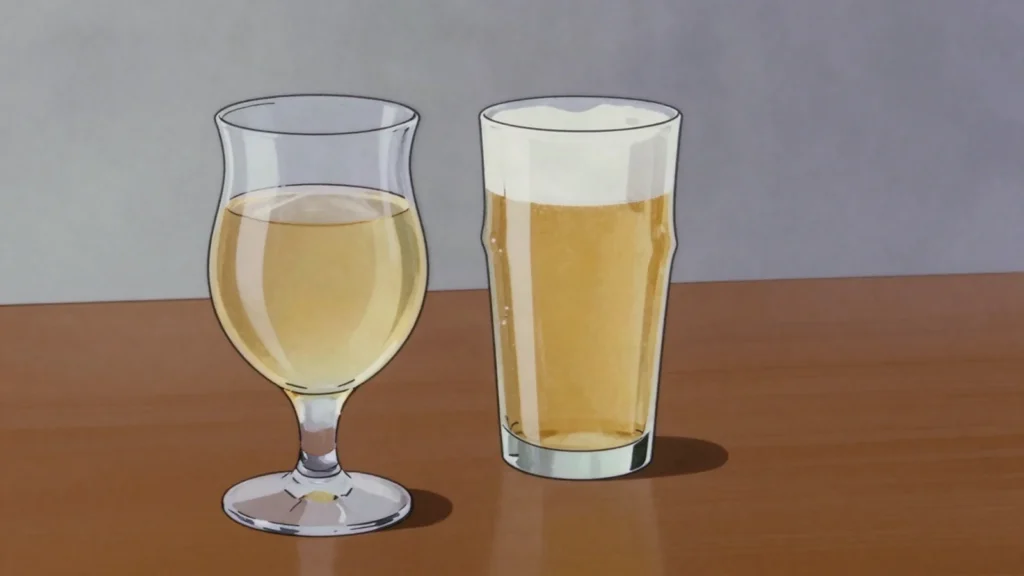
- a tulip-shaped jenever glass
- a beer glass
Where
- a brown café
- a proefloka al
- a tasting house
Directions
- Serve each according to its style. Put the tulip glass in the freezer. Give it about twenty minutes in there.
- Set the glass on the bar or table. Do not hold it at all as you pour. Pour slowly and steadily into it.
- Keep pouring past the level of the rim. Stop the instant it looks like spilling.
- Pour the last of it very slowly indeed.
- Bring the bottle right down to the rim. Stop the very moment the dome forms.
- Pour a cold pilsner into a beer glass. Set it beside the jenever glass. Leave the jenever glass on the bar.
- Put your hands behind your back. Bring your lips down to the rim. Chase it down with the cold beer.
Technique
- The jenever glass is filled past the rim until surface tension holds a visible dome above it, which is deliberate; the glass is then too full to lift, so the drinker leaves it on the bar, puts their hands behind their back and bends down to sip the top off. That bow is the head butt of the name, and the ritual grew from the practical fact that lifting it would spill it.
- Jenever is not gin: gin is a neutral spirit flavoured with botanicals, while jenever is built on malt wine distilled from rye, wheat and barley, closer to an unaged whisky with juniper added on top. Jonge and oude describe the style rather than the age, oude carrying more malt wine and jonge being the lighter newer recipe, which confuses almost everyone.
- A spirit at around thirty-five percent alongside a beer adds up quickly, and the beer makes the spirit easier to drink; sip rather than shoot it, count what you have had, and never drive after drinking them.
Substitutions
- Jonge jenever is served very cold and oude at cellar temperature, since cold mutes the malt.
- Any cold Dutch pilsner works as the chaser.
Variations
- Some bars serve a flavoured jenever, a bessenjenever or citroenjenever, instead.
- It is drunk in brown cafés and in proeflokalen, the old tasting houses.
- Oude and jonge give quite different drinks from the same ritual.
History
The Dutch name means little head butt; the first sip is taken bent over the overfull glass.
Frequently asked questions
What is Kopstootje?
Kopstootje is a cocktail from Netherlands: brimming tulip glass of jenever sipped hands-free, chased with beer. The Dutch name means little head butt; the first sip is taken bent over the overfull glass.
How long does Kopstootje take to make?
Kopstootje takes 2 minutes of preparation and no cooking at all. The recipe makes serves 1. It is rated easy to make.
What can I substitute in Kopstootje?
Yes, within limits. Jonge jenever is served very cold and oude at cellar temperature, since cold mutes the malt. Any cold Dutch pilsner works as the chaser.
What is the most important thing to get right in Kopstootje?
Set the glass on the bar or table. Do not hold it at all as you pour. Pour slowly and steadily into it.