
Ingredients
Production
- 1strong hive of 40,000–60,000 bees with a laying queen
- Access to a dense stand of flowering manuka (Leptospermum scoparium)
- 8–10frames of drawn comb per honey super
- 1escape board or bee brush, for clearing frames
- 1uncapping knife and a radial extractor
- 1coarse then fine sieve, and a settling tank
Testing
- 1laboratory assay for methylglyoxal (MGO), dihydroxyacetone (DHA), leptosperin and HMF
- 1rating: UMF 5+ to 20+ or MGO 83 to 829
To serve
- 2 tspmanuka honey, UMF 10+ or above
- 200 mlhot water, cooled to below 40°C (105°F)
- Juice of ½ lemon
- 10 gfresh ginger, sliced
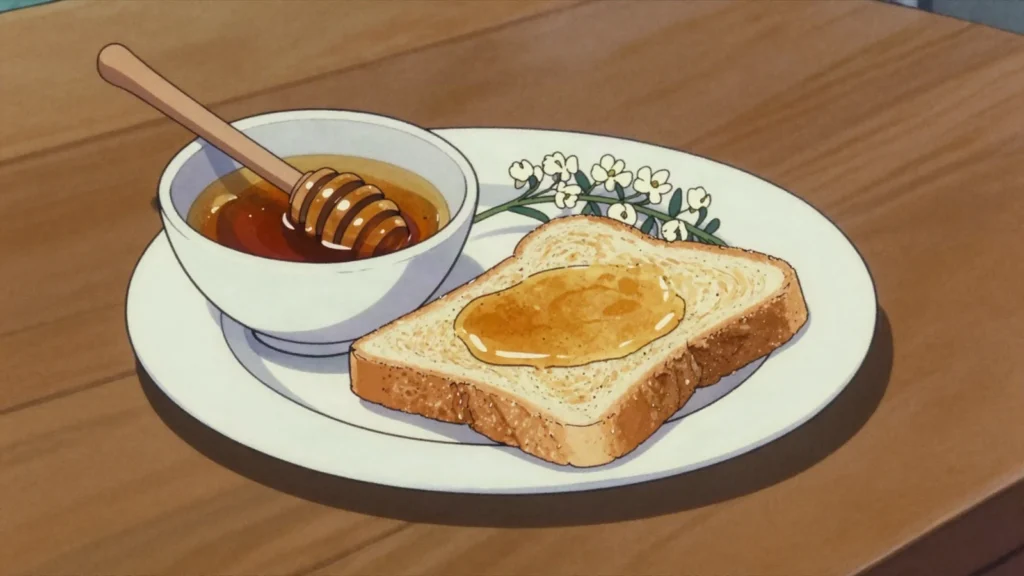
- Or simply: 1 thick slice of toast and 20 g butter
Directions
- Move the hives into the manuka stand just before flowering, usually December to February depending on latitude and altitude, often by helicopter into remote back-country blocks.
- Put clean, empty supers on the hives so the bees store manuka nectar separately from any earlier honey. Mixing flows is what drops a batch out of manuka grading.
- Leave the bees to work the flowering, which lasts only 2–6 weeks per stand. Each colony forages a radius of a few kilometres, so the density of manuka around the site decides the purity.
- Pull the supers once at least three quarters of each frame is capped with wax, which means the bees have reduced the moisture below about 18 percent and the honey will not ferment.
- Clear the bees off with an escape board or a brush, and take the frames to the shed the same day.
- Uncap the frames with a heated knife and spin them in a radial extractor at ambient temperature. Manuka honey is thixotropic, a gel that only flows when agitated, so it is stubborn to extract and is often pressed or stirred rather than simply spun.
- Strain through a coarse then fine sieve to remove wax, and settle it in a tank for 1–2 weeks so air bubbles rise and are skimmed. Never heat it above about 40°C (105°F); heat destroys enzymes and raises HMF, which fails the grading.
- Let it mature. The dihydroxyacetone in the manuka nectar converts slowly into methylglyoxal over weeks to months, and it is that MGO that gives manuka its distinctive activity, so the rating rises with storage.
- Send a sample for assay. Genuine monofloral manuka must meet a set of chemical and DNA markers set by New Zealand’s Ministry for Primary Industries; the UMF and MGO numbers on the jar come from that testing.
- Serve it as it is: on toast, stirred into porridge, or as a soothing drink with lemon and ginger in water below 40°C (105°F) so the enzymes survive. Its flavour is dark, mineral, faintly medicinal and much less sweet-tasting than clover honey.
Technique
- Manuka is not something you cook. It is a raw product whose value lies in enzymes and MGO, both of which are damaged by heat, so use it as a finishing honey and never bake with the expensive grades.
- The gel texture is natural. Manuka honey is thixotropic because of a protein that makes it set into a jelly at rest and liquefy when stirred, so a jar that seems stiff is correct, not crystallised.
- Grading is legally defined in New Zealand and there is far more manuka sold worldwide than is produced, so buy from a brand that prints a UMF or MGO number and a batch code.
- The rating measures the potency markers, not the flavour. A 5+ is perfectly good on toast; the high grades are bought for their claimed antibacterial activity.
Substitutions
- For everyday sweetening, any raw local honey does the job and costs a fraction. Manuka is worth buying only when you specifically want its flavour or its rating.
- Australian jellybush honey comes from a closely related Leptospermum species and carries similar MGO levels.
- If a recipe needs honey and heat, use a cheap clover or bush honey and keep the manuka for the table.
Variations
- Multifloral manuka, blended with other bush nectars, milder and much cheaper.
- Comb manuka, sold as cut comb in the wax.
- Manuka honey creamed to a spreadable set, common in New Zealand supermarkets.
History
Waikato researcher Peter Molan identified its unusual antibacterial activity in the 1980s, later traced to methylglyoxal, creating a global export industry.
Frequently asked questions
What is Manuka Honey?
Manuka Honey is a sauce & condiment from New Zealand: dark thixotropic honey from manuka blossom, medicinal and intensely herbal. Waikato researcher Peter Molan identified its unusual antibacterial activity in the 1980s, later traced to methylglyoxal, creating a global export industry.
How long does Manuka Honey take to make?
Manuka Honey takes Hive work across the flowering of preparation and 2–6 weeks flowering plus 2 weeks settling of cooking. The recipe makes about 25 kg from a strong hive in a season. It is rated hard to make.
What can I substitute in Manuka Honey?
Yes, within limits. For everyday sweetening, any raw local honey does the job and costs a fraction. Manuka is worth buying only when you specifically want its flavour or its rating. Australian jellybush honey comes from a closely related Leptospermum species and carries similar MGO levels. If a recipe needs honey and heat, use a cheap clover or bush honey and keep the manuka for the table.
What is the most important thing to get right in Manuka Honey?
Uncap the frames with a heated knife and spin them in a radial extractor at ambient temperature. Manuka honey is thixotropic, a gel that only flows when agitated, so it is stubborn to extract and is often pressed or stirred rather than simply spun.