
Ingredients
Pork
- 2.5 kgpork loin or belly with the rind on, scored
To season
- 3 tbspcoarse salt
- 10bay leaves
- 1 tbspwhole cloves, optional
To roast
- 500 mlwater, for the tray
Gravy
- the pan juices
- 2 tbspflour
- 300 mlstock
- a splash of cream
- gravy browning, optional
To serve
- rødkål, braised red cabbage
- boiled potatoes
- brunede kartofler, caramelised potatoes
- pickled cucumber
To serve
- at Christmas Eve, as the main course
Directions
- Use a joint with a good even layer of fat under the rind. Fat under the rind renders and helps it puff, and a lean joint gives poor crackling however carefully you work.
- Score the rind in parallel lines about half a centimetre apart. Cut right through the rind and into the fat but not into the meat. Cutting into the meat lets juices escape upward and they stop the rind crisping.
- Use a very sharp blade, a scalpel-type knife or a clean utility blade. Rub coarse salt hard into every score, working it right down into the cuts. Leave the salted joint uncovered in the fridge overnight, rind upward. A wet rind steams rather than crisping, and no amount of oven heat fixes that.
- Check it with a spirit level if you are serious, which many Danes genuinely are. Pour water into the tray around the joint, not over the rind. The water keeps the meat moist and stops the drips burning, and it becomes the gravy.
- Start at 200°C for twenty to thirty minutes. Reduce to 160°C and roast for a further two hours or so. Cook it to an internal temperature of around 65°C for loin. Raise the heat to 220°C for the last ten to fifteen minutes.
- Rest for fifteen to twenty minutes. Skim the fat from the tray juices, thicken with a little flour and stock, and finish with cream.
- Cut the crackling off in one piece and break it into shards. Serving crackling as separate shards is how it is done and everyone takes some. Serve pickled cucumber alongside, which cuts the richness.
Technique
- The crackling is what the dish is judged on, and everything aims at it.
- Drying the salted rind uncovered overnight makes the biggest difference.
- The joint must sit absolutely level or fat pools and the rind will not crisp.
Substitutions
- Pork belly in place of loin, which is richer.
- A hot grill to rescue any soft crackling.
Variations
- Served cold in rye bread sandwiches.
- Made with belly for a fattier roast.
- With cloves as well as bay in the scores.
History
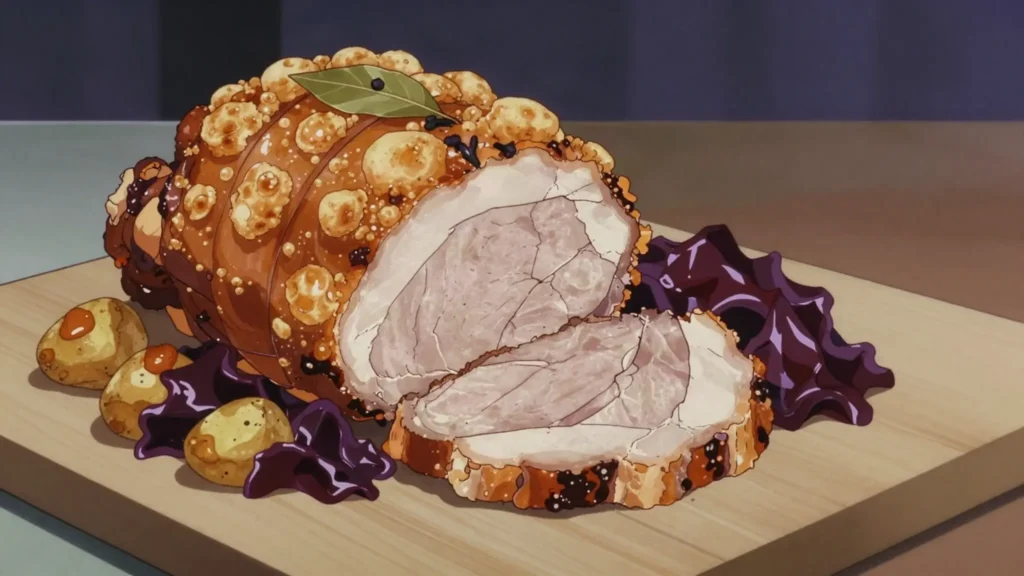
Roast pork with crackling, the Danish Christmas Eve main; the rind is scored and salted so it blisters into crisp sheets.
Frequently asked questions
What is Flæskesteg?
Flæskesteg is a main from Denmark: roast pork with crackling and red cabbage; Christmas centrepiece. Roast pork with crackling, the Danish Christmas Eve main; the rind is scored and salted so it blisters into crisp sheets.
How long does Flæskesteg take to make?
Flæskesteg takes 30 min plus overnight drying of preparation and 2 hr 30 min of cooking. The recipe makes 8 servings. It is rated medium to make.
What can I substitute in Flæskesteg?
Yes, within limits. Pork belly in place of loin, which is richer. A hot grill to rescue any soft crackling.
What is the most important thing to get right in Flæskesteg?
Use a very sharp blade, a scalpel-type knife or a clean utility blade. Rub coarse salt hard into every score, working it right down into the cuts. Leave the salted joint uncovered in the fridge overnight, rind upward. A wet rind steams rather than crisping, and no amount of oven heat fixes that.