
Ingredients
- 6 slicesof soft white sandwich bread, fresh, thin-sliced, crusts on or off as you prefer
- 80 gsalted butter, at proper room temperature and very soft
- 6 tbsphundreds and thousands (nonpareil sprinkles), the round ones, not the long jimmies
To serve
- a large flat plate
- cordial or lemonade alongside
Directions
- Take the butter out of the fridge at least an hour ahead. It must be soft enough to spread without tearing the bread, and no shortcut with a microwave gives the same texture, since melted butter soaks in and goes greasy.
- Use fresh soft white sandwich bread, the cheapest sliced kind. Sourdough, wholemeal or anything toasted is wrong: the point is a soft, plain, slightly sweet base.
- Spread the butter right to the very edges of each slice in a thin, even layer, paying particular attention to the corners, because bare bread will hold no sprinkles.
- Pour the hundreds and thousands into a shallow tray or plate with a lip, spread out into an even bed about 5 mm deep.
- Press each slice butter side down into the sprinkles and push gently with your palm, then lift it straight up; this gives far better coverage than shaking sprinkles from the jar.
- Check for bald patches and press those corners back into the tray. The finished slice should show almost no white butter through the colour.
- Cut each slice corner to corner into two triangles with a sharp knife in one clean stroke, wiping the blade between slices so you do not drag sprinkles across the surface.
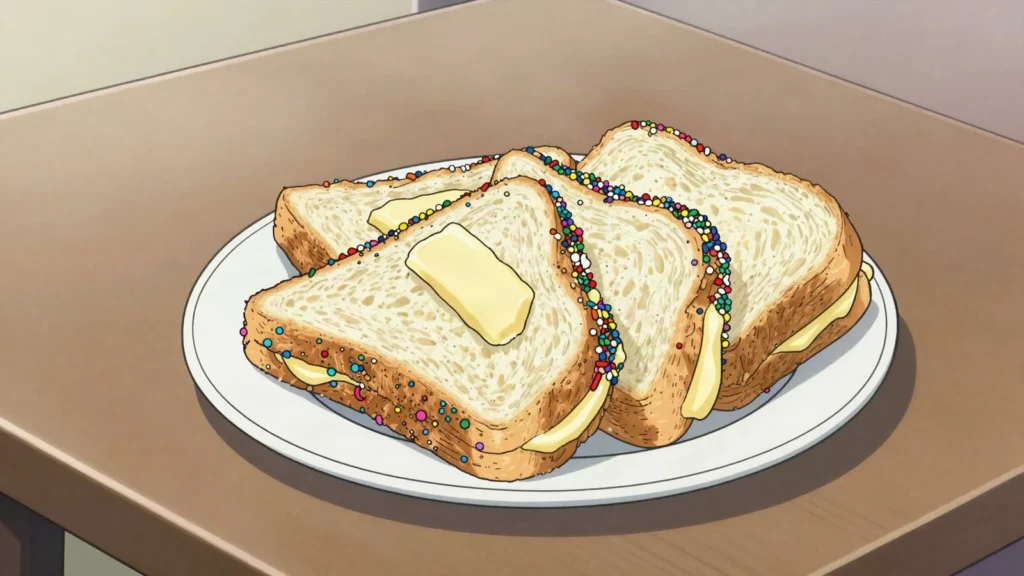
- Arrange the triangles overlapping on a plate and serve within an hour, before the sprinkles start to bleed their colour into the butter and go tacky.
Technique
- Triangles are compulsory. Australian children’s party convention holds that fairy bread cut into squares or fingers is not fairy bread, and this is taken more seriously than an outsider expects.
- The name is usually traced to a Robert Louis Stevenson poem, Fairy Bread, in A Child’s Garden of Verses, and the dish appears in Australian newspapers from the 1920s.
- Timing matters more than any technique: make it close to serving, because the sprinkles dissolve and streak within a couple of hours and the bread dries at the edges.
- Hundreds and thousands are the round nonpareils. The long sprinkle strands sold as jimmies do not adhere as well and taste waxier.
Substitutions
- Margarine is what many households actually use and holds the sprinkles just as well, though butter tastes far better.
- For a dairy-free version, a good plant-based spread works identically.
Variations
- Fairy bread rolled into pinwheels around a sprinkle-studded butter is a modern party-table version.
- Some households use a single colour of sprinkles to match a party theme.
- A New Zealand variant does the same thing and calls it fairy bread too, which is an unresolved point of rivalry.
History
White bread, buttered and covered in colourful round sprinkles called hundreds and thousands, an extremely simple party food strongly associated with Australian and New Zealand children’s birthday parties, with its name generally believed to reference a description of fairy-related bread found in a 19th-century Christina Rossetti poem, though the specific dish itself as commonly made today likely developed independently in Australian home kitchens through the 1900s rather than being a direct, deliberate recreation of anything described in that poem. Its extreme simplicity, requiring no cooking or specialized skill beyond buttering bread and adding sprinkles, made it an easy, reliable party food for parents to prepare in bulk for a group of children. It remains closely tied specifically to Australian and New Zealand childhood and party culture rather than being widely known or made elsewhere.
Frequently asked questions
What is Fairy Bread?
Fairy Bread is a snack from Australia: white bread triangles with butter and rainbow sprinkles, birthday party essential. White bread, buttered and covered in colourful round sprinkles called hundreds and thousands, an extremely simple party food strongly associated with Australian and New Zealand children’s birthday parties, with its name generally believed to reference a description of fairy-related bread found in a 19th-century Christina Rossetti poem, though the specific dish itself as commonly made today likely developed independently in Australian home kitchens through the 1900s rather than being a direct, deliberate recreation of anything described in that poem. Its extreme simplicity, requiring no cooking or specialized skill beyond buttering bread and adding sprinkles, made it an easy, reliable party food for parents to prepare in bulk for a group of children. It remains closely tied specifically to Australian and New Zealand childhood and party culture rather than being widely known or made elsewhere.
How long does Fairy Bread take to make?
Fairy Bread takes 10 min of preparation and no cooking at all. The recipe makes 24 triangles. It is rated easy to make.
What can I substitute in Fairy Bread?
Yes, within limits. Margarine is what many households actually use and holds the sprinkles just as well, though butter tastes far better. For a dairy-free version, a good plant-based spread works identically.
What is the most important thing to get right in Fairy Bread?
Take the butter out of the fridge at least an hour ahead. It must be soft enough to spread without tearing the bread, and no shortcut with a microwave gives the same texture, since melted butter soaks in and goes greasy.