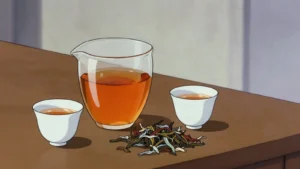

Ingredients
The leaf
- 6 gDong Ding oolong, tightly rolled semi-balls, from Lugu Township in Nantou
- made from the Qingxin (green heart) cultivar grown at 600 to 1200 m
- oxidised to roughly 25 to 30 percent, then charcoal roasted, which is what gives the toasty caramel finish
Water and vessels
- 500 mlsoft spring water, low in minerals
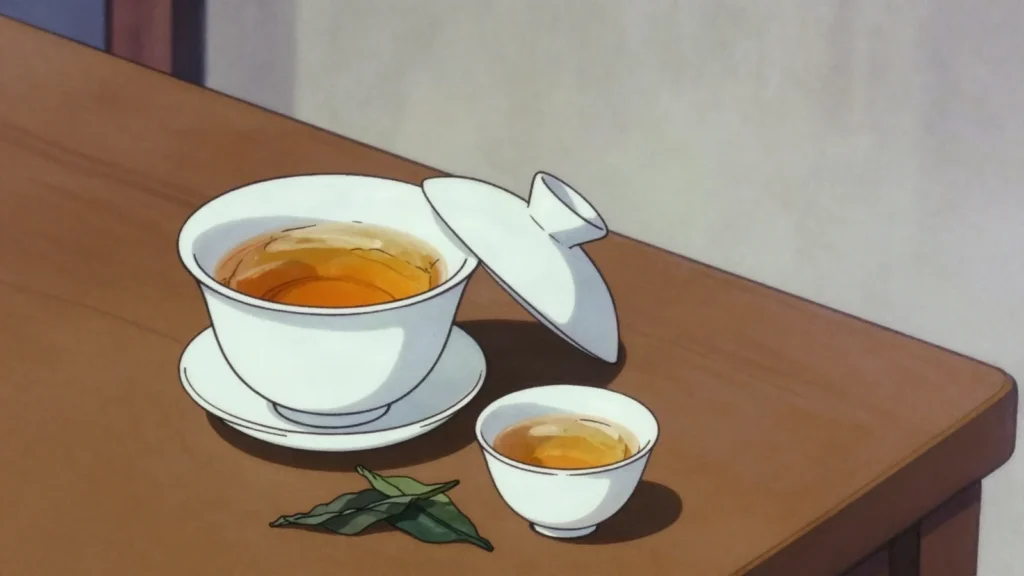
- 1gaiwan or small clay pot, 120 ml
- 1fairness pitcher (cha hai)
- 6small tasting cups, 30 ml each
- a strainer and a tea tray to catch the rinse
Directions
- Understand how the leaf was made: picked as a bud and three leaves, withered in the sun then indoors, tossed repeatedly in bamboo baskets to bruise the leaf edges and start oxidation, fixed in a hot drum to kill the enzymes, then rolled in a cloth ball and un-balled twenty to forty times until the leaves compress into tight nuggets, dried, and finally roasted over charcoal in stages.
- Heat the water to 95 to 100°C (200°F). Dong Ding is a roasted oolong and it wants near-boiling water; cooler water leaves it thin and sour.
- Rinse the gaiwan, pitcher and cups with the hot water and pour it away, so nothing cools the first infusion.
- Put 6 g of leaf into the warmed empty gaiwan, cover, and smell the dry leaf against the hot porcelain: it should smell of toasted grain, honey and a little stone fruit.
- Pour water over the leaf and immediately pour it off after 5 seconds. This wash wakes the tightly rolled leaves and is not drunk.
- For the first infusion, fill the gaiwan, cover and steep 45 seconds, then decant every drop into the pitcher; leaving liquor in the pot stews the leaves.
- Pour from the pitcher into all the cups so each is the same strength, and drink hot in two or three sips. Expect a thick, buttery body, roasted sweetness and a returning sweetness at the back of the throat, the huigan.
- Add 10 to 15 seconds to each following infusion. A good Dong Ding gives six to eight infusions before the leaf gives out and the balls have opened into whole flat leaves.
- Look at the spent leaf at the end: it should be intact, olive green in the middle with reddish edges, which shows the oxidation was done by bruising and not by machine.
Technique
- Dong Ding means frozen summit, the mountain in Lugu where the tea was established with cuttings brought from Fujian in the nineteenth century. The name now covers a style as much as a strict place of origin.
- Roast level is the axis Taiwanese drinkers argue about: light roast keeps floral notes, heavy traditional roast gives coffee-like depth and ages well for years. Competition teas from Lugu Farmers Association are graded on it.
- Do not judge it on the first infusion. Rolled oolong needs two or three steeps to open, and the third is usually the best cup in the session.
Substitutions
- No gaiwan: use a small teapot of 120 to 150 ml. Avoid a large mug, which oversteeps and turns the roast bitter.
- Western brewing works at a pinch: 3 g per 250 ml, 95°C (205°F), 3 minutes, one or two infusions, though you lose the layered progression.
- Hard tap water flattens the aroma; filtered or bottled soft water makes an audible difference.
Variations
- Traditional heavy-roast Dong Ding, dark and nutty, still preferred by older drinkers.
- Modern light-roast Dong Ding, greener and more floral, closer to high mountain oolong.
- Aged Dong Ding, re-roasted every few years and kept for a decade or more, drunk medicinally in winter.
History
Legend says scholar Lin Fengchi carried Wuyi tea cuttings home to Lugu in 1855; Dong Ding became Taiwan’s benchmark oolong.
Frequently asked questions
What is Dong Ding Oolong?
Dong Ding Oolong is a drink from Taiwan: rolled semi-oxidised oolong from Nantou, roasted for a sweet toasty finish. Legend says scholar Lin Fengchi carried Wuyi tea cuttings home to Lugu in 1855; Dong Ding became Taiwan’s benchmark oolong.
How long does Dong Ding Oolong take to make?
Dong Ding Oolong takes 5 min of preparation and 10 min for a full gongfu session of cooking. The recipe makes 6 to 8 small cups from one pot. It is rated medium to make.
What can I substitute in Dong Ding Oolong?
Yes, within limits. No gaiwan: use a small teapot of 120 to 150 ml. Avoid a large mug, which oversteeps and turns the roast bitter. Western brewing works at a pinch: 3 g per 250 ml, 95°C (205°F), 3 minutes, one or two infusions, though you lose the layered progression. Hard tap water flattens the aroma; filtered or bottled soft water makes an audible difference.
What is the most important thing to get right in Dong Ding Oolong?
Do not judge it on the first infusion. Rolled oolong needs two or three steeps to open, and the third is usually the best cup in the session.