
Ingredients
The pork
- 2 kgpork belly
- or pork ribs and belly mixed
- skin on
- cut into large chunks
- about 6 cm
The seasoning
- 2 tablespoonssalt
- or to taste
- 1 tablespoonground cumin
- 6 clovesgarlic, crushed
- 1 teaspoonblack pepper
- 2 teaspoonsají panca paste
- or ají amarillo, optional
The liquid
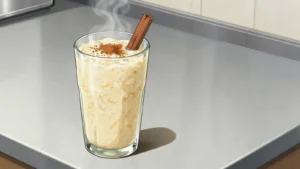
- 500 mlchicha de maíz
- the fermented maize drink
- or 500 ml dark beer
- or 500 ml water
- with a splash of vinegar
To serve
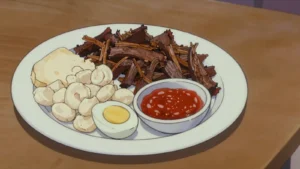
- mote, boiled hominy
- large white maize kernels
- boiled potatoes
- or chuño, the freeze-dried potato
- llajua, the Bolivian chilli sauce
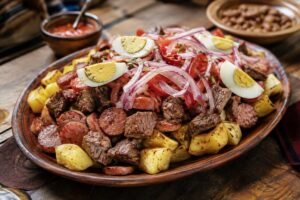
- sliced onion and tomato salad
- sarza criolla
Directions
- Cut it into large chunks of about six centimetres. Small pieces dry out completely.
- Rub the pork with salt, cumin and garlic. Add the pepper and the ají paste. Work it into every surface. Score the skin in a diamond pattern if you like. That helps the fat render out.
- Let it sit thirty minutes, or overnight refrigerated. Use more than feels right if you want it authentic.
- Put the pork in a wide heavy pot. Arrange it in a single layer if possible. Pour the chicha or beer over it. It should come about halfway up. Bring it to a boil. Simmer it uncovered for about an hour. Turn the pieces occasionally.
- Skim off any scum at the start. The last of the water meets very hot fat. Stand back and use a splatter guard. Do not lean over the pot. Keep the heat at medium.
- Turn the pieces regularly. Give them twenty to thirty minutes. Pour some off if there is more than a centimetre. Keep it, since rendered lard is useful. Pork must be cooked through.
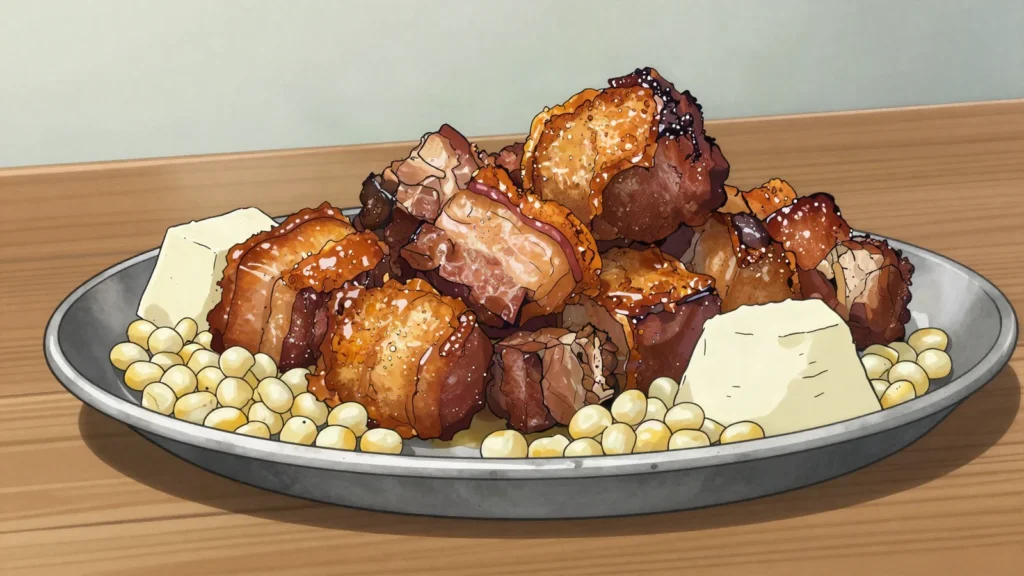
- Add more and simmer again. Nixtamalisation prevents that. Pile the chicharrón on a platter. Serve llajua in a bowl alongside. Serve a sharp onion and tomato salad. It keeps three days refrigerated.
Technique
- The whole technique is one pot going from boiling to frying. The pork simmers in liquid, the liquid cooks away entirely, the pork’s own fat renders out and the meat then fries in it. No fat is ever added.
- The moment the last liquid meets hot fat, the pot spits violently. Stand back, use a splatter guard, do not lean over it, and wear long sleeves. It settles once the water has gone.
- Cut the pork into large six-centimetre chunks. Small pieces dry out; large ones stay juicy inside while the outside crisps, which is the contrast the dish exists for.
- Pour off excess fat if it rises above about a centimetre in the pot. Beyond that the pork boils in fat rather than frying. Keep what you pour off — rendered lard keeps for months and is excellent for potatoes.
- If the meat is still tough when the liquid has gone, the liquid went too early. Add more and simmer again; there is no way to crisp your way to tender.
- Use plenty of cumin. It is a defining flavour of Bolivian meat cooking and more than feels right is about right.
- Chicha de jora is fermented maize beer; chicha morada is unfermented sweet purple maize. Only the fermented kind belongs here, and dark beer or water with vinegar substitutes where it cannot be found.
- Mote is nixtamalised maize — treated with alkali, which loosens the hulls and makes niacin available to the body. Populations relying on untreated maize developed pellagra, and the treatment developed in Mesoamerica thousands of years ago prevents it. Tinned or frozen mote from a Latin American grocer saves an overnight soak and an hour of boiling.
- Llajua, ground from locoto chillies, tomato and quirquiña in a stone batán, is on every Bolivian table and is not optional here.
- Serve something sharp alongside — sarza criolla of onion, tomato and lime. The dish is deliberately rich and needs the contrast.
- Chuño is potato freeze-dried in the high Andes, left out in the frost then trodden and dried. It keeps for years, it is genuinely ancient, and its texture surprises people.
- Reheat in a hot dry pan or oven, never a microwave. The crispness goes overnight and only dry heat brings any of it back.
Substitutions
- Dark beer replaces chicha de jora, which is hard to find outside the Andes; water with a splash of vinegar also works.
- Pork ribs mixed with belly are common and give a better mix of meat and fat.
- Ají amarillo replaces ají panca for a brighter, fruitier heat.
- Tinned or frozen mote replaces dried and saves an overnight soak.
- Boiled potatoes replace mote where hominy is unavailable.
- Any fresh chilli and tomato sauce stands in for llajua, though quirquiña has no close substitute.
Variations
- Chicharrón de chancho in Peru uses the same method and is served in a bread roll for breakfast.
- Carnitas in Mexico confit the pork in lard for far longer and then shred it.
- Lechon kawali in the Philippines boils then deep-fries the belly whole.
- Fricasé, the Bolivian pork and hominy soup, uses much the same ingredients in liquid form.
- Ranga ranga and other Cochabamba dishes belong to the same weekend eating tradition.
- A version cooked over a wood fire outdoors is made at rural festivals.
Frequently asked questions
What is Chicharrón de cerdo?
Chicharrón de cerdo is a main from Bolivia: pork crisped in its own fat with chicha, served with mote.
How long does Chicharrón de cerdo take to make?
Chicharrón de cerdo takes 20 minutes of preparation and 2 hours of cooking. The recipe makes serves 6. It is rated medium to make.
What can I substitute in Chicharrón de cerdo?
Yes, within limits. Dark beer replaces chicha de jora, which is hard to find outside the Andes; water with a splash of vinegar also works. Pork ribs mixed with belly are common and give a better mix of meat and fat. Ají amarillo replaces ají panca for a brighter, fruitier heat. Tinned or frozen mote replaces dried and saves an overnight soak. Boiled potatoes replace mote where hominy is unavailable. Any fresh chilli and tomato sauce stands in for llajua, though quirquiña has no close substitute.
What is the most important thing to get right in Chicharrón de cerdo?
Skim off any scum at the start. The last of the water meets very hot fat. Stand back and use a splatter guard. Do not lean over the pot. Keep the heat at medium.