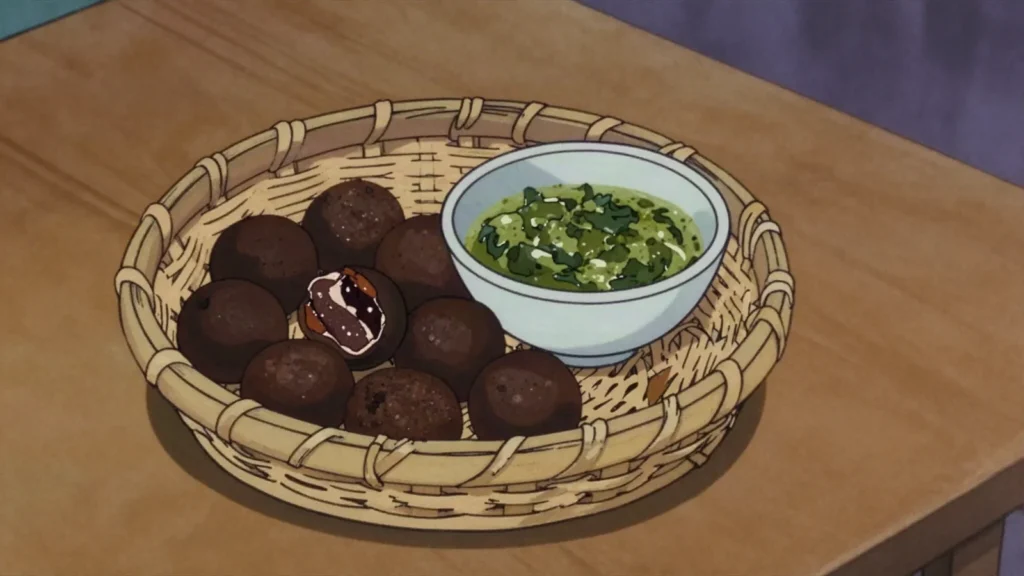

A Burkinabè condiment of roselle seeds fermented until they turn black and pungent, then pressed into balls and crumbled into sauces. It works like a bouillon cube, supplying salt and a deep savoury note.
This is an alkaline Bacillus ferment of a high-protein seed at ambient temperature, held for days before any salt is added, and it relies on a traditional inoculum and a warm climate that a kitchen cannot approximate safely.
What goes into it
- roselle (hibiscus) seeds
- water
- salt, added after fermenting
How it is made
The seeds are boiled for hours, drained, wrapped warm and left to ferment for two to four days while Bacillus bacteria colonise them, break the proteins down and turn them dark and sticky. They are then salted, pounded and shaped into balls, which are dried in the sun and keep for months.
How long it takes: two to four days of fermentation, then sun-drying
How it is eaten
Crumbled into leaf sauces, tô and soups for salt and depth.
History
A Burkinabe condiment made by boiling hibiscus seeds and fermenting them for days until they turn black and pungent.
Frequently asked questions
What is Bikalga?
Bikalga is a fermented & pickled from Burkina Faso: fermented roselle seeds pressed into dark balls and crumbled into sauces. A Burkinabe condiment made by boiling hibiscus seeds and fermenting them for days until they turn black and pungent.
How is Bikalga made?
The seeds are boiled for hours, drained, wrapped warm and left to ferment for two to four days while Bacillus bacteria colonise them, break the proteins down and turn them dark and sticky. They are then salted, pounded and shaped into balls, which are dried in the sun and keep for months. It takes two to four days of fermentation, then sun-drying.
Can I make Bikalga at home?
No, and the atlas gives no method for it. This is an alkaline Bacillus ferment of a high-protein seed at ambient temperature, held for days before any salt is added, and it relies on a traditional inoculum and a warm climate that a kitchen cannot approximate safely.
What goes into Bikalga?
Roselle (hibiscus) seeds, water, salt, added after fermenting.
How is Bikalga eaten?
Crumbled into leaf sauces, tô and soups for salt and depth.