
Ingredients
Tahini
- 400 ggood tahini, well stirred, at room temperature
Syrup
- 500 gsugar
- 180 mlwater
- 1 tbspglucose or honey, optional
- 1 tsplemon juice
Traditional aerator
- 10 gdried soapwort root, çöven, simmered and reduced
- or 1 egg white, as the domestic substitute
Sometimes
- 100 gpistachios or almonds
- a little vanilla or cocoa
To serve
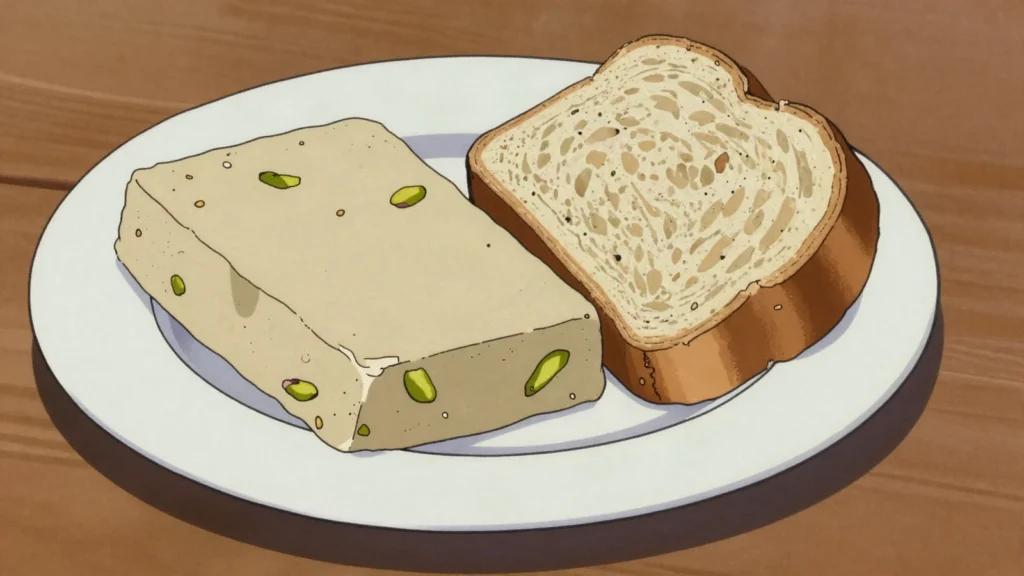
- cut into slabs, with bread, or with tea
Directions
- Use a good tahini made from hulled sesame, and taste it first. Stir it thoroughly, since the oil separates and sits on top of the jar. Use it at room temperature rather than cold, since cold tahini seizes when hot syrup meets it.
- Boil the sugar, water and lemon juice without stirring. Do not stir once it boils, since stirring encourages crystallisation and a grainy halva is the commonest failure. Brush down the sides of the pan with a wet brush to dissolve any stray crystals. Now the temperature, which must be measured. Cook the syrup to between 120 and 125°C, the hard ball stage.
- Use a thermometer, since this is not a stage you can judge by eye and a few degrees either way changes everything. Below that temperature the halva stays soft and fudgy, and above it the sugar goes brittle and glassy.
- Whisk the egg white or the reduced soapwort extract to stiff peaks in a large heatproof bowl. Now pour the hot syrup into the whipped white in a thin steady stream while whisking constantly.
- Pour it slowly down the side of the bowl rather than into the middle, which stops it setting into hard threads. Keep whisking until the mixture is thick, glossy and holds its shape, like a stiff meringue. Warm the tahini slightly, then pour it into the meringue.
- Fold the mixture over on itself with a spatula, a few strokes only, leaving visible streaks. Stirring it smooth destroys the layers and gives a uniform, fudgy block instead.
- Fold in whole pistachios or almonds with the last stroke or two. Line a tin and press the mixture in firmly, levelling the top. Press it down properly, since air pockets make it crumble apart when cut. Now let it set, which takes time.
- Cover it and leave it at room temperature for at least twelve hours, and a full day is better. It needs that time for the sugar to stabilise and the texture to develop, and cut too early it is soft and sticky. Cut it into slabs or squares with a sharp knife. It keeps several weeks wrapped at room temperature and it dries out slowly.
Technique
- Commercial halva is aerated with soapwort root extract, which is hard to obtain.
- The syrup must reach hard ball stage, measured with a thermometer.
- Fold rather than stir, since the streaks become the flaky layers.
Substitutions
- Egg white in place of soapwort extract, which breaks a strict fast.
- Any good hulled tahini, tasted first.
Variations
- With pistachios or almonds through it.
- Marbled with cocoa.
- Flavoured with vanilla.
History
Halva made and sold across North Macedonia, particularly during fasting periods when dairy is avoided.
Frequently asked questions
What is Alva?
Alva is a dessert from North Macedonia: crumbly sesame paste block, cut in slabs and eaten with bread. Halva made and sold across North Macedonia, particularly during fasting periods when dairy is avoided.
How long does Alva take to make?
Alva takes 20 min of preparation and 25 min, plus overnight setting of cooking. The recipe makes about 800 g. It is rated hard to make.
What can I substitute in Alva?
Yes, within limits. Egg white in place of soapwort extract, which breaks a strict fast. Any good hulled tahini, tasted first.
What is the most important thing to get right in Alva?
Use a good tahini made from hulled sesame, and taste it first. Stir it thoroughly, since the oil separates and sits on top of the jar. Use it at room temperature rather than cold, since cold tahini seizes when hot syrup meets it.