
Ingredients
Sakau
- 2 kgfresh sakau root and lower stems (Piper methysticum), 3–5 years old, washed free of every trace of soil
- 2 litrescool fresh water
- Long strips of inner bark (bast) stripped from a hibiscus branch, keleu, washed and pounded soft
Equipment and service
- 1flat basalt pounding stone (peitehl)
- 3or 4 rounded basalt pounding stones
- Coconut shell halves, polished, for cups
- 1wooden bowl for the strained sakau
Directions
- Wash the roots obsessively. Scrub every crevice under running water and cut away any bark that is discoloured or damaged; grit ruins the drink and soil is the main source of the moulds you do not want.
- Cut the roots and lower stems into short lengths so they sit flat on the stone.
- Lay a handful on the peitehl and strike with the basalt stones in a steady, shared rhythm, three or four people working around the stone, turning the mass in between blows. The knocking of stone on stone carries through the village and is the signal that sakau is being made.
- Pound for 20–30 minutes until the root is broken into wet grey fibre, with no hard pieces left. Sakau on Pohnpei is pounded, never grated or blitzed, and the pounding is part of the occasion, not a chore to be shortened.
- Gather the pounded mass into a bundle of hibiscus bast strips, laid crosswise to make a loose cradle.
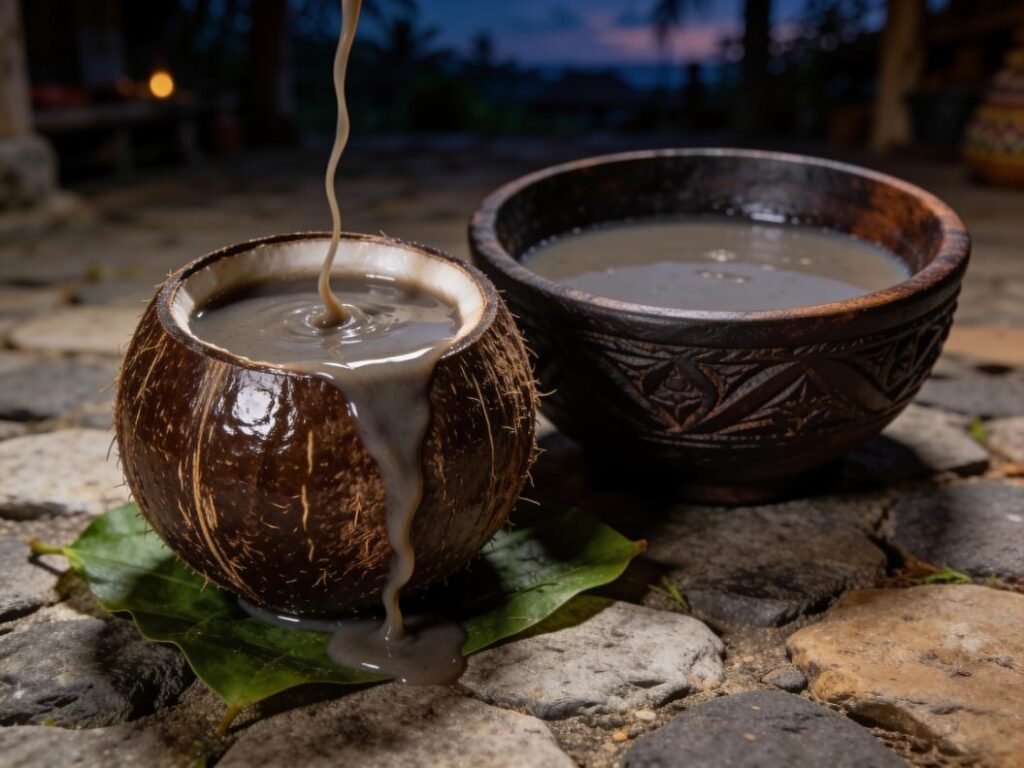
- Pour a little of the water over the mass, then twist and wring the bast bundle over the wooden bowl. The liquid runs out slippery and grey-brown, and the mucilage from the hibiscus bark thickens it into the viscous, ropy strands that Pohnpeian sakau is known for.
- Open the bundle, turn the fibre, add more water and squeeze again. Repeat until the 2 litres are used and the fibre gives up only thin liquid.
- Do not strain it further. The suspended fine particles carry much of the effect, and a clear sakau is a weak one.
- Serve in coconut shell cups, poured by a designated server. In the nahs, the feast house, protocol governs the order: the first cup goes to the Nahnmwarki or the highest title present, and each drinker takes their cup in both hands and drinks it down in one.
- Drink it fresh. Sakau is made and consumed the same evening, and it sours and separates within hours.
Technique
- Sakau en Pohnpei is kava, the same plant drunk across Fiji, Vanuatu, Tonga and Samoa, but the Pohnpeian preparation is distinctive: pounded on basalt, squeezed through hibiscus bast, and served thick and slippery rather than thin and watery.
- It is ceremonial before it is recreational. Sakau is central to title bestowals, apology and reconciliation, funerals and requests to a chief, and the sequence of who drinks when is a serious matter of respect.
- Effects are sedative and mildly numbing on the lips and tongue, and they build over several cups. Do not drive afterwards. Kava should not be combined with alcohol or with sedative or liver-affecting medication, and heavy long-term use has been linked to skin and liver problems. Use only root and lower stem: the leaves and green aerial parts are implicated in reported liver toxicity and are never used traditionally.
- Kava is legally restricted or banned in some countries, so check before carrying root across a border.
Substitutions
- No fresh root: dried kava root powder can be kneaded in water in a straining cloth for 10 minutes and squeezed out, but it lacks the slippery body of fresh root and is a plainer drink.
- No hibiscus bast: a clean piece of loose-weave cotton or a nylon straining bag works, though you lose the mucilage that gives Pohnpeian sakau its texture.
- No basalt stones: a heavy mortar and pestle, worked in small batches, is the honest home compromise.
Variations
- Sakau markets in Kolonia now sell it by the bottle, pounded earlier the same day.
- Fijian yaqona and Vanuatu kava use the same plant but are strained thinner and drunk from a communal tanoa bowl.
- Some Pohnpeian servers add a small amount of coconut water to soften the taste for a first-time drinker.
History
Kava root is pounded on flat basalt stones and squeezed through hibiscus bast; the first cup is served by rank in the nahs feast house.
Frequently asked questions
What is Sakau?
Sakau is a drink from Micronesia: pohnpei’s ceremonial kava, pounded on stones and strained through hibiscus bast. Kava root is pounded on flat basalt stones and squeezed through hibiscus bast; the first cup is served by rank in the nahs feast house.
How long does Sakau take to make?
Sakau takes 45 min of preparation and 30 min of pounding and squeezing of cooking. The recipe makes enough for a small gathering, about 12 cups. It is rated medium to make.
What can I substitute in Sakau?
Yes, within limits. No fresh root: dried kava root powder can be kneaded in water in a straining cloth for 10 minutes and squeezed out, but it lacks the slippery body of fresh root and is a plainer drink. No hibiscus bast: a clean piece of loose-weave cotton or a nylon straining bag works, though you lose the mucilage that gives Pohnpeian sakau its texture. No basalt stones: a heavy mortar and pestle, worked in small batches, is the honest home compromise.
What is the most important thing to get right in Sakau?
Wash the roots obsessively. Scrub every crevice under running water and cut away any bark that is discoloured or damaged; grit ruins the drink and soil is the main source of the moulds you do not want.