
Ingredients
Fruit
- 1tonne hand-picked Riesling from steep Devonian slate slopes of the Mosel or Rheingau, at 75–95 Oechsle
- Botrytis-affected berries, picked separately, for the sweet Prädikat wines
- 20–40 mgper litre sulphur dioxide, added at the press
Cellar
- Stainless steel tanks, or traditional 1,000-litre oak Fuder casks
- Ambient cellar yeast, or a neutral cool-ferment strain
To serve
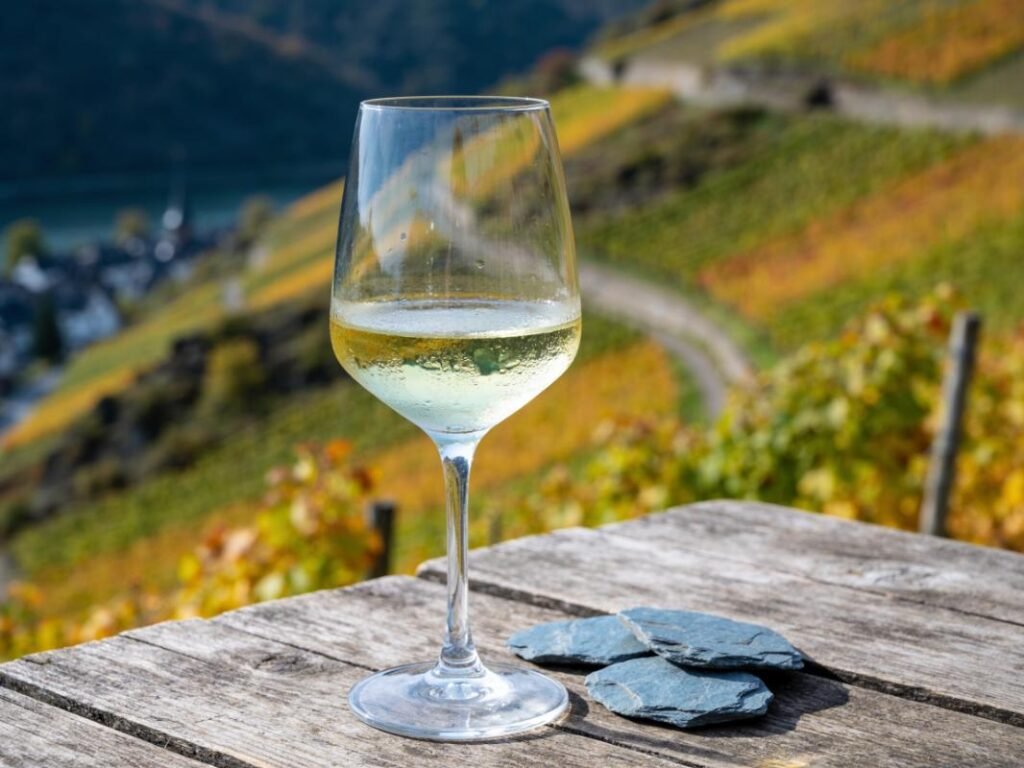
- Tall, slightly tapered white wine glasses
- Riesling is served at 8–10 C
Directions
- Harvest by hand in October and November. The slopes reach 60 degrees, so every basket is carried or winched down; pickers go through the same row several times, taking only the ripeness they want.
- Sort on a table, separating clean berries for dry wines from shrivelled botrytis berries destined for Beerenauslese and Trockenbeerenauslese.
- Press whole bunches slowly and gently in a pneumatic press over 2–3 hours, keeping only the free-run and light-pressure juice, so the must stays low in phenolics.
- Settle the cloudy must cold at 8°C (45°F) for 12–24 hours and rack the clear juice off the solids.
- Ferment cool at 15–18°C (60–65°F), in steel for precision or in old Fuder casks for texture. Spontaneous ferments can crawl on for months.
- Decide the style by when you stop: chill and rack off the yeast to leave residual sugar, or let it run dry to 11–12 g per litre alcohol with piercing acidity.
- Rest the wine on its fine lees over winter; the cold Mosel cellar drops the tartrates out naturally and blocks the malolactic fermentation that would soften the acid.
- Rack, lightly filter and bottle in spring, usually under screwcap or a long cork; good Riesling is bottled early and matures in glass, not in wood.
- Serve at 8–10 C in a tall glass. Kabinett with smoked trout or Thai food, dry Grosses Gewächs with roast poultry, Auslese with blue cheese, Eiswein alone.
Technique
- The Prädikat ladder is measured by must weight at harvest, not by sweetness in the bottle: Kabinett, Spätlese, Auslese, Beerenauslese, Eiswein and Trockenbeerenauslese, with trocken meaning fermented dry.
- Slate soil, cool nights and a long hanging season give the grape its combination of low alcohol, high acidity and intense aroma. That acid is why a great Riesling can age 30 years and more.
- The kerosene or petrol note in mature Riesling comes from TDN, a compound that develops with sun exposure and bottle age. Germans see it as a marker of maturity, not a fault.
- Eiswein grapes must freeze on the vine at minus 7°C (19°F) or below and be pressed while frozen, so the ice stays behind and only concentrated syrup runs out.
Substitutions
- Cannot find German Riesling: Alsace Riesling is drier and fuller, Austrian Riesling from the Wachau is drier and more mineral, Clare Valley is bone dry and lime-driven.
- For a comparable off-dry German white try a Mosel Weissburgunder or a Rheinhessen Silvaner, though neither has Riesling’s acid backbone.
Variations
- Mosel Kabinett, light, off-dry, often under 9 per cent alcohol.
- Rheingau Grosses Gewächs, dry and powerful from a single top vineyard.
- Trockenbeerenauslese, botrytised nectar picked berry by berry, and Eiswein, pressed from frozen fruit.
History
First documented in a 1435 cellar inventory of Count Katzenelnbogen at Rüsselsheim; Germany grows more Riesling than any other country.
Frequently asked questions
What is Riesling?
Riesling is a wine & spirit from Germany: aromatic white wine from slate slopes, dry to intensely sweet. First documented in a 1435 cellar inventory of Count Katzenelnbogen at Rüsselsheim; Germany grows more Riesling than any other country.
How long does Riesling take to make?
Riesling takes 4 hr at harvest of preparation and 4–8 months in cellar of cooking. The recipe makes one 750 ml bottle serves 4–6. It is rated hard to make.
What can I substitute in Riesling?
Yes, within limits. Cannot find German Riesling: Alsace Riesling is drier and fuller, Austrian Riesling from the Wachau is drier and more mineral, Clare Valley is bone dry and lime-driven. For a comparable off-dry German white try a Mosel Weissburgunder or a Rheinhessen Silvaner, though neither has Riesling’s acid backbone.
What is the most important thing to get right in Riesling?
Press whole bunches slowly and gently in a pneumatic press over 2–3 hours, keeping only the free-run and light-pressure juice, so the must stays low in phenolics.