
Ingredients
The pap
- about 400 g cold cooked pap
- stiff maize porridge
- left over from a previous meal
- crumbled into small pieces
- or 300 g cold phutu
The sour milk
- about 500 ml amasi
- thick fermented milk
- or cultured buttermilk
- or thin plain yoghurt
- see the safety note
- well chilled
Sometimes added
- a pinch of salt
- or a little sugar
- for a sweeter version
To serve
- a deep bowl
- and a spoon
- cold, straight away
Directions
- Take the cold cooked pap from the fridge. It must be genuinely cold, not warm.
- Warm pap dissolves into the milk. Crumble it with your fingers into a bowl.
- Break it into pieces about a centimetre. Now pour the cold amasi over it.
- Use enough to cover the crumbs generously. Some like it thick and porridge-like.
- Start with less milk and add more. Stir it gently rather than beating it. That is not what umvubo should be.
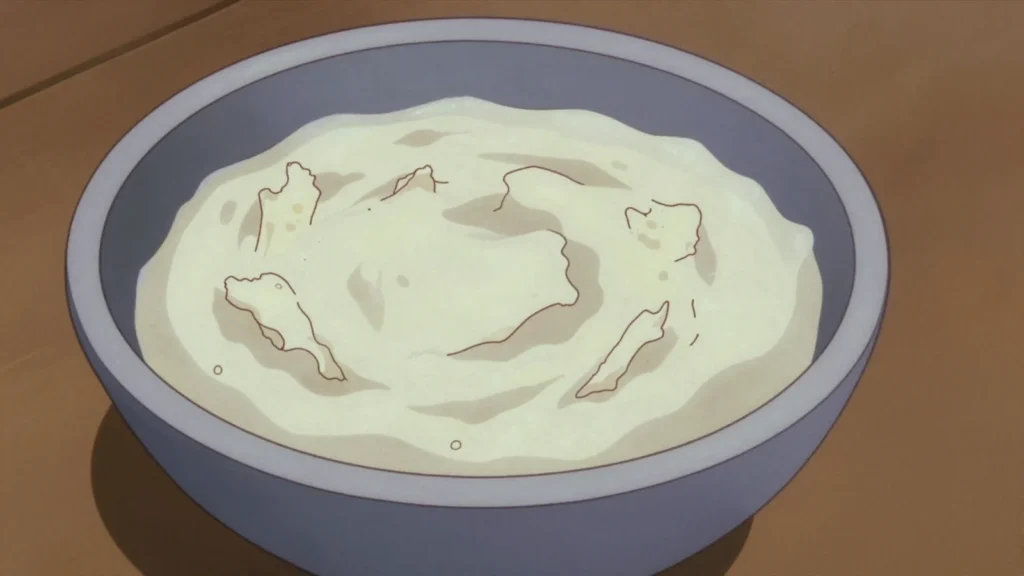
- Let it stand for two or three minutes. Add more milk if it has thickened too far. Now taste and season if you want to.
- Serve it cold in a deep wide bowl. It is genuinely cooling in hot weather.
Technique
- This is a dish made from two leftovers — cold pap from a previous meal and milk that has soured on its own. It is thrift rather than invention, and it is also genuinely enjoyed by choice. Both are true.
- The pap must be cold and it must be the stiff crumbly kind. Warm pap dissolves into the milk and warms it; soft runny porridge simply disappears. You want distinct crumbs in the bowl.
- Stir gently rather than beating. The crumbs should stay distinct; beaten smooth it becomes a uniform paste, which is not umvubo.
- Traditional amasi is soured raw milk, historically in a calabash gourd whose walls carried the culture from batch to batch — the same principle as a sourdough starter. Raw milk can carry harmful bacteria that souring does not reliably destroy, and that matters more for young children, pregnant women, older people and anyone immunocompromised. Commercial pasteurised-then-cultured amasi, cultured buttermilk or thin plain yoghurt are all safer. That is practical advice, not a criticism of households who know their own animals.
- Eat it immediately once mixed. The pap keeps absorbing milk and within an hour it is a thick paste.
- It needs no fire at all, which is a real part of its appeal in hot weather and in a hot kitchen.
- Maize came to Africa from the Americas through Portuguese Atlantic trade and displaced sorghum and millet, which grow better in dry conditions. Maize yields more where there is rain and fails where the older grains would survive — a shift that shows in droughts.
Substitutions
- Cultured buttermilk or thin plain yoghurt replaces amasi safely and closely.
- Commercial pasteurised amasi is widely sold in South Africa and is the straightforward choice there.
- Any stiff maize porridge works — phutu, pap or crumbled ugali.
- Cooked samp or crumbled cornbread are used in some households.
- A pinch of salt or a little sugar are both common; many people add nothing.
- The proportion of milk to pap is entirely a matter of taste, from thick and spoonable to loose and drinkable.
Variations
- A sweeter version with sugar is often made for children.
- Some households use crumbled bread rather than pap, which is a townships variation.
- Amasi is also drunk on its own, and poured over samp or over cooked greens.
- Related sour milk and grain dishes are eaten across southern Africa under their own names.
- A version made with fresh milk rather than soured milk is milder and is made where amasi is not available.
- Some people warm the amasi very slightly, though cold is the standard.
History
A Xhosa everyday meal that needs no cooking, eaten with a spoon straight from the bowl.
Frequently asked questions
What is Umvubo?
Umvubo is a main from South Africa: crumbled cold pap stirred into thick sour milk. A Xhosa everyday meal that needs no cooking, eaten with a spoon straight from the bowl.
How long does Umvubo take to make?
Umvubo takes 5 minutes of preparation and none of cooking. The recipe makes serves 2. It is rated easy to make.
What can I substitute in Umvubo?
Yes, within limits. Cultured buttermilk or thin plain yoghurt replaces amasi safely and closely. Commercial pasteurised amasi is widely sold in South Africa and is the straightforward choice there. Any stiff maize porridge works — phutu, pap or crumbled ugali. Cooked samp or crumbled cornbread are used in some households. A pinch of salt or a little sugar are both common; many people add nothing. The proportion of milk to pap is entirely a matter of taste, from thick and spoonable to loose and drinkable.
What is the most important thing to get right in Umvubo?
Take the cold cooked pap from the fridge. It must be genuinely cold, not warm.