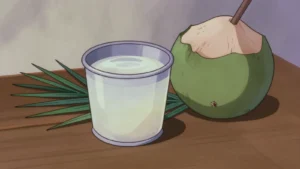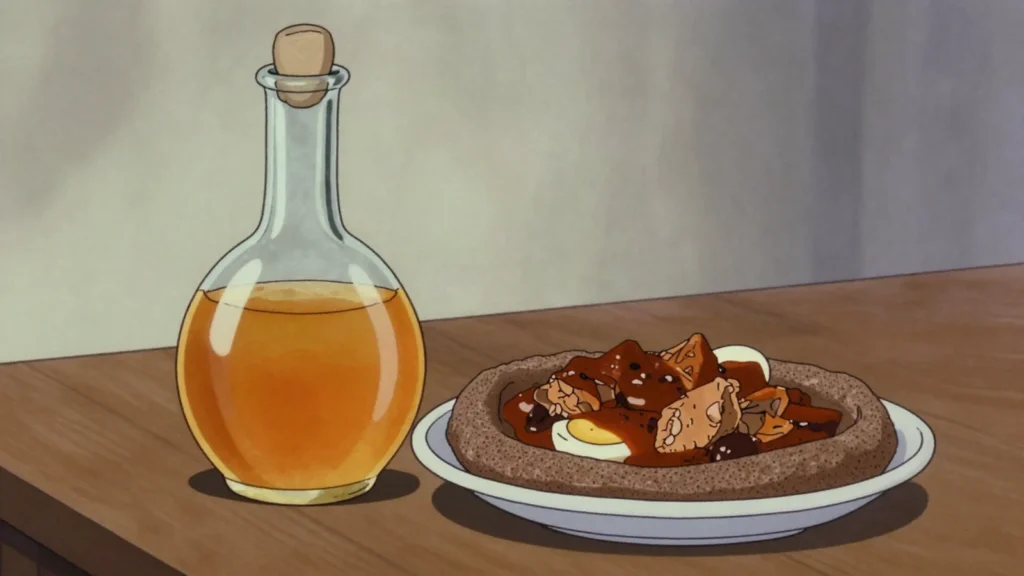

Golden Ethiopian honey wine fermented with bitter gesho leaves, historically the drink of the imperial court and the clergy. It is poured from a round-bottomed berele flask and it is far stronger than its sweetness suggests.
Fermenting alcohol at home is licensed or restricted in most of the atlas’s readership, and it depends on unpasteurised honey with its own live yeasts and on gesho, for which there is no substitute.
What goes into it
- honey
- water
- gesho — leaves and twigs of Rhamnus prinoides
How it is made
Honey is diluted with water in a covered vessel and gesho is added after the first few days, once fermentation is going. The gesho bitters the drink and suppresses spoilage organisms, much as hops do in beer. Wild yeasts from the raw honey ferment it over two to four weeks, and it is strained before serving.
How long it takes: two to four weeks
How it is eaten
From a berele flask with doro wat, kitfo and injera, in a tej bet.
History
Honey wine fermented with bitter gesho leaves, historically the drink of the imperial court and clergy, poured from a round-bottomed berele flask.
Frequently asked questions
What is Tej?
Tej is a wine & spirit from Ethiopia: golden honey wine fermented with gesho leaves. Honey wine fermented with bitter gesho leaves, historically the drink of the imperial court and clergy, poured from a round-bottomed berele flask.
How is Tej made?
Honey is diluted with water in a covered vessel and gesho is added after the first few days, once fermentation is going. The gesho bitters the drink and suppresses spoilage organisms, much as hops do in beer. Wild yeasts from the raw honey ferment it over two to four weeks, and it is strained before serving. It takes two to four weeks.
Can I make Tej at home?
No, and the atlas gives no method for it. Fermenting alcohol at home is licensed or restricted in most of the atlas’s readership, and it depends on unpasteurised honey with its own live yeasts and on gesho, for which there is no substitute.
What goes into Tej?
Honey, water, gesho — leaves and twigs of Rhamnus prinoides.
How is Tej eaten?
From a berele flask with doro wat, kitfo and injera, in a tej bet.