
Ingredients
- 500 gfine or medium semolina
- 250 gunsalted butter, or 200 g smen
- 300 gmild honey, gently warmed
- 1 tspground cinnamon
- 1 pinchsalt
- 1 tbsporange-flower water (optional)
To decorate
- 2 tbspground cinnamon, for dusting
- blanched almonds or walnut halves
- icing sugar (optional)
Directions
- Toast the semolina dry in a wide heavy pan over medium-low heat, stirring constantly with a wooden spoon, for 20 to 25 minutes.
- Keep the grains moving the whole time; semolina scorches in seconds if it sits still, and burnt grains make the whole batch bitter.
- Watch for the colour to move from pale cream to an even hazelnut brown, and for the smell to turn nutty and biscuity. That aroma, not a clock, is what tells you it is done.
- Tip the toasted semolina into a bowl to stop the cooking, since it will keep browning in a hot pan.
- Melt the butter in the same pan over low heat until it foams, then let it cook a further 2 minutes until it smells nutty, and pour it over the semolina.
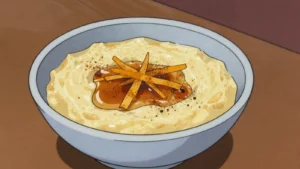
- Stir in the salt, then the warm honey and the orange-flower water, working quickly with a wooden spoon until the mixture comes together into a thick, glossy, sandy paste.
- Taste and adjust the honey; tamina should be rich and sweet but still taste clearly of toasted grain.
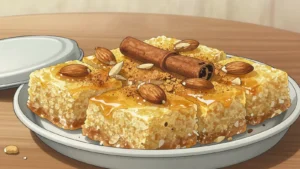
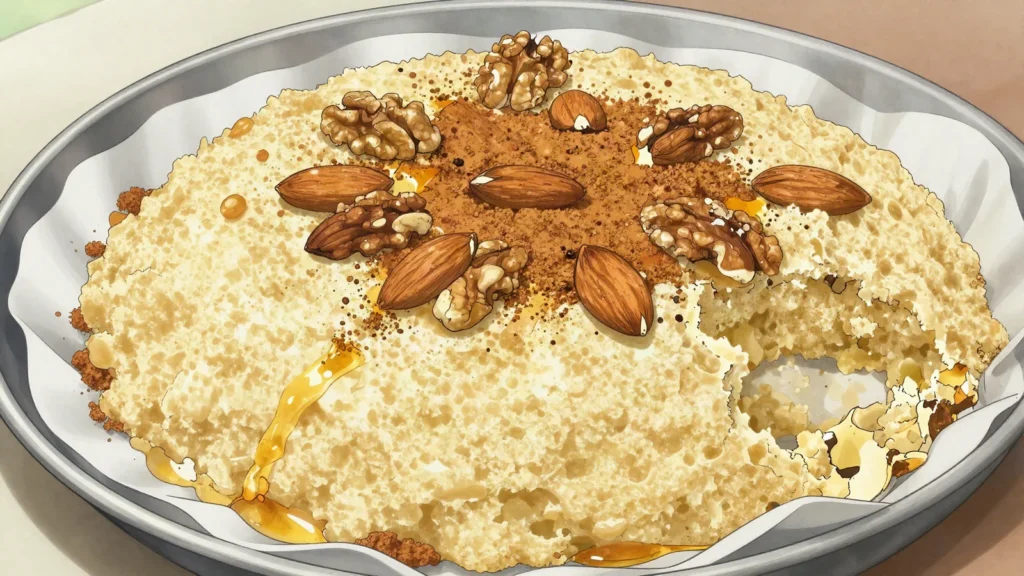
- Press it firmly into a shallow dish or shape it into a mound on a plate while still warm, smoothing the top with the back of a wet spoon.
- Dust the whole surface thickly with cinnamon, press almonds or walnut halves in a pattern over the top, and cool to room temperature before cutting into small squares or scooping with a spoon. It keeps two weeks in a covered dish.
Technique
- The toasting is the entire recipe. Underdone and it tastes of raw flour, over-toasted and it is acrid, so use a low heat and accept the twenty-odd minutes of stirring.
- Honey is stirred in off the direct heat and while merely warm. Boiling honey turns harsh and loses its perfume.
- Tamina is made to celebrate the birth of a child and is offered to visitors who come to see the baby, as well as for Mawlid; it is rich enough to be eaten in very small quantities.
Substitutions
- Smen gives the authentic aged, faintly cheesy depth; ghee is the closest substitute and plain butter the mildest option.
- A syrup of 250 g sugar boiled with 100 ml water can replace the honey, which is what some households do, giving a plainer sweet.
Variations
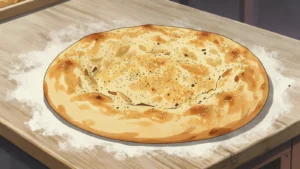
- Rfiss is the closely related dish where the toasted semolina is mixed with crumbled kesra and dates.
- A Kabyle version replaces some of the honey with date syrup.
- Some families work ground toasted almonds or sesame into the paste.
History
Toasted semolina bound with butter and honey, prepared to celebrate a birth and for Mawlid, and offered to visitors who come to greet a newborn.
Frequently asked questions
What is Tamina?
Tamina is a dessert from Algeria: toasted semolina bound with butter and honey, made to celebrate births. Toasted semolina bound with butter and honey, prepared to celebrate a birth and for Mawlid, and offered to visitors who come to greet a newborn.
How long does Tamina take to make?
Tamina takes 10 min of preparation and 30 min of cooking. The recipe makes 8 to 10 servings. It is rated easy to make.
What can I substitute in Tamina?
Yes, within limits. Smen gives the authentic aged, faintly cheesy depth; ghee is the closest substitute and plain butter the mildest option. A syrup of 250 g sugar boiled with 100 ml water can replace the honey, which is what some households do, giving a plainer sweet.
What is the most important thing to get right in Tamina?
Keep the grains moving the whole time; semolina scorches in seconds if it sits still, and burnt grains make the whole batch bitter.