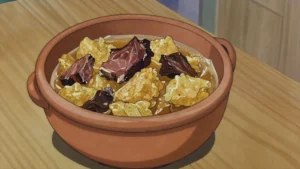

Salted clotted cream skimmed off milk and matured in wooden vessels — Montenegro’s version of kajmak. The highland Durmitor skorup is the most prized, and a mature pot is treated as a serious gift.
Mature skorup is a raw-milk product ripened for months at cellar temperature under its own salt, which needs a controlled store and milk from a known herd.
What goes into it
- whole raw milk, cow’s or sheep’s
- salt
How it is made
Milk is boiled and left in a wide shallow pan while a thick skin forms as it cools. That skin is lifted off, laid in a wooden kablica and salted, and the next day’s skin laid on top of it. The stack ripens for weeks or months while the salt and the milk’s own bacteria turn it sharp and firm.
How long it takes: days for young skorup, months for mature
How it is eaten
Spread on hot bread, melted over meat and potatoes, or eaten with pršut.
History
A rich, clotted dairy product made by skimming and collecting the thick layer of cream that rises when milk is gently heated and left to cool slowly, closely related to Balkan kajmak though generally considered its own distinct product within Montenegrin and wider regional dairy tradition, differing somewhat in production method and final texture. Its production reflects a long-established pastoral and dairy-farming tradition across Montenegro’s mountainous terrain, where sheep and cow milk have historically been processed into a range of preserved dairy products suited to a rural, often remote mountain lifestyle without reliable refrigeration for much of the region’s history. Skorup remains closely associated with traditional Montenegrin mountain and rural cooking, eaten spread on bread or alongside other simple, hearty regional foods.
Frequently asked questions
What is Skorup?
Skorup is a cheese & dairy from Montenegro: salted clotted cream skimmed from milk and matured in wooden vessels. A rich, clotted dairy product made by skimming and collecting the thick layer of cream that rises when milk is gently heated and left to cool slowly, closely related to Balkan kajmak though generally considered its own distinct product within Montenegrin and wider regional dairy tradition, differing somewhat in production method and final texture. Its production reflects a long-established pastoral and dairy-farming tradition across Montenegro’s mountainous terrain, where sheep and cow milk have historically been processed into a range of preserved dairy products suited to a rural, often remote mountain lifestyle without reliable refrigeration for much of the region’s history. Skorup remains closely associated with traditional Montenegrin mountain and rural cooking, eaten spread on bread or alongside other simple, hearty regional foods.
How is Skorup made?
Milk is boiled and left in a wide shallow pan while a thick skin forms as it cools. That skin is lifted off, laid in a wooden kablica and salted, and the next day’s skin laid on top of it. The stack ripens for weeks or months while the salt and the milk’s own bacteria turn it sharp and firm. It takes days for young skorup, months for mature.
Can I make Skorup at home?
No, and the atlas gives no method for it. Mature skorup is a raw-milk product ripened for months at cellar temperature under its own salt, which needs a controlled store and milk from a known herd.
What goes into Skorup?
Whole raw milk, cow’s or sheep’s, salt.
How is Skorup eaten?
Spread on hot bread, melted over meat and potatoes, or eaten with pršut.