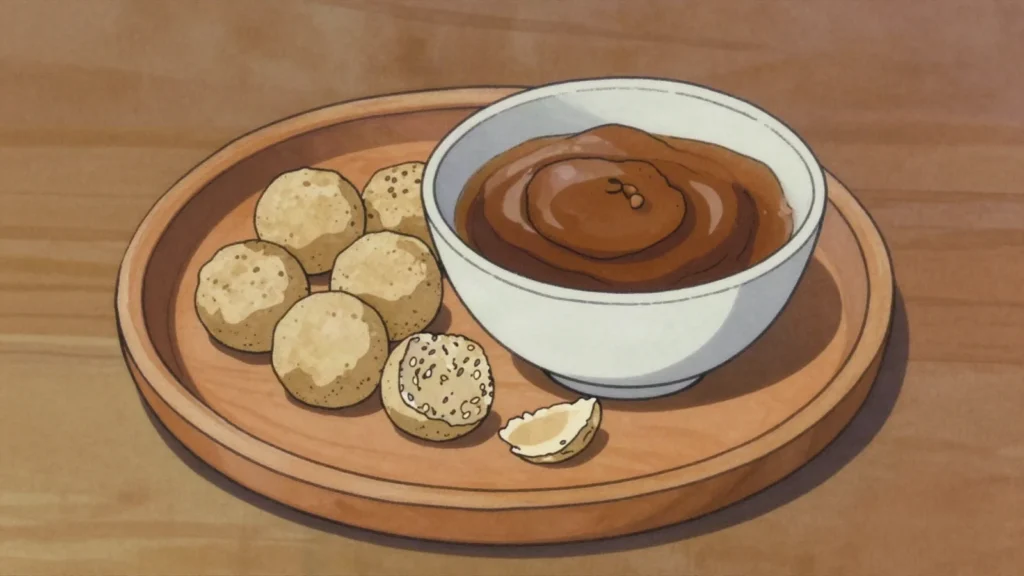

A pressed sesame cake fermented into savoury balls, dried and added to sauces. It is made from the residue left after pressing sesame for oil, so that nothing of the crop is wasted.
It is an alkaline Bacillus ferment of a high-protein press-cake held warm for days, and both the residue and the traditional inoculum are byproducts of a milling process rather than kitchen ingredients.
What goes into it
- sesame press-cake left from oil extraction
- water
- salt
How it is made
The press-cake is moistened, packed into a covered vessel and left in the warm for several days to a week while Bacillus species ferment it and it darkens and sharpens. It is then salted, rolled into balls and dried hard in the sun, after which it keeps for months and is crumbled into sauces.
How long it takes: several days of fermenting, then sun-drying
How it is eaten
Crumbled into mulah stews and vegetable sauces for depth and salt.
History
Made from the residue left after pressing sesame for oil, fermented and sun-dried so nothing of the crop is wasted.
Frequently asked questions
What is Sigda?
Sigda is a fermented & pickled from Sudan: pressed sesame cake fermented into savoury balls, dried and added to sauces. Made from the residue left after pressing sesame for oil, fermented and sun-dried so nothing of the crop is wasted.
How is Sigda made?
The press-cake is moistened, packed into a covered vessel and left in the warm for several days to a week while Bacillus species ferment it and it darkens and sharpens. It is then salted, rolled into balls and dried hard in the sun, after which it keeps for months and is crumbled into sauces. It takes several days of fermenting, then sun-drying.
Can I make Sigda at home?
No, and the atlas gives no method for it. It is an alkaline Bacillus ferment of a high-protein press-cake held warm for days, and both the residue and the traditional inoculum are byproducts of a milling process rather than kitchen ingredients.
What goes into Sigda?
Sesame press-cake left from oil extraction, water, salt.
How is Sigda eaten?
Crumbled into mulah stews and vegetable sauces for depth and salt.