
Ingredients
Dough
- 500 gplain flour
- 1 tspsalt
- 3 tbspcoconut oil or vegetable oil
- 300 mlwarm water, approximately
Sometimes added
- 80 gfreshly grated coconut
- 1 tbspsugar, for a sweeter bread
To cook
- a little oil, for the pan
Equipment
- a heavy flat pan or a tawa
- a rolling pin
To serve
- mas huni
- any Maldivian curry
- sweet tea
Directions
- Put the flour and salt in a large bowl. Add the oil and rub it through the flour with your fingertips. That fat is what keeps the bread soft rather than brittle. Add the grated coconut now if you are using it. Adding the water is done gradually. Add the warm water a little at a time. Mix it with your hand as you go.
- Bring it together into a soft dough. Kneading it develops enough structure to roll thin. Knead it for eight to ten minutes. It should become smooth and elastic. Cover the dough with a damp cloth.
- Let it rest for at least thirty minutes. An hour is better if you have time. Divide the dough into twelve pieces. Roll each into a smooth ball between your palms. Cover them so they do not dry out.
- Let them sit for another five minutes. Rolling them out takes a light touch. Dust the surface lightly with flour. Roll one ball out into a thin round. Aim for about eighteen centimetres across. Roll from the centre outward and turn it as you go. Turning keeps it round and even. Set a heavy flat pan over a medium-high heat.
- Let it heat for a full five minutes. Test it with a pinch of flour: it should brown in a few seconds. Lay a rolled round onto the dry hot pan. Cook it for about forty seconds. Turn it with tongs or your fingers.
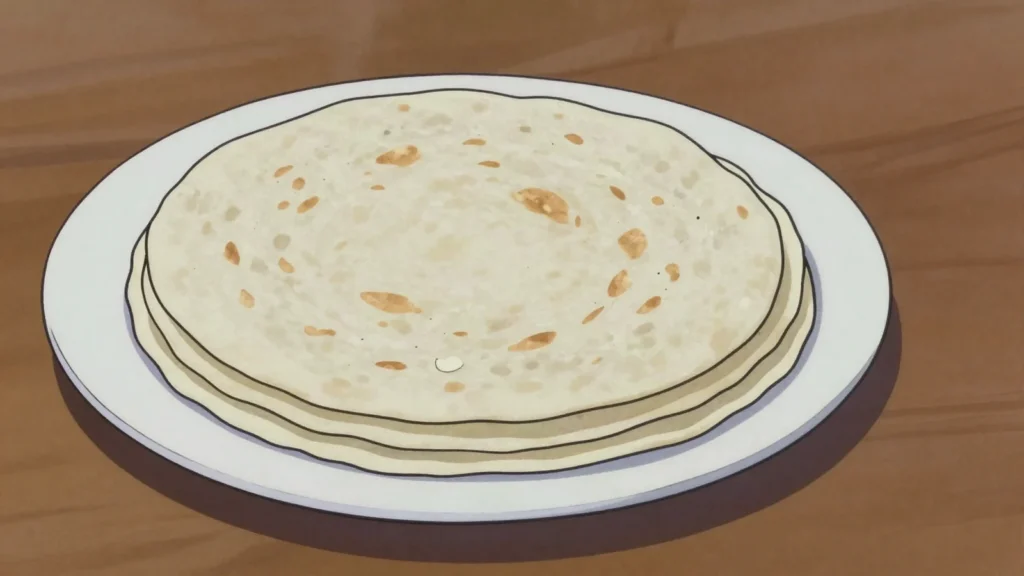
- Cook the second side for another forty seconds. Brown spots should appear across both faces. Press the bread lightly with a folded cloth as it cooks. Press around the edges and move around it. Steam builds inside and the bread balloons up. Not every roshi will puff and it is still fine if it does not.
- Stack the cooked roshi in a cloth as you go. Wrap the cloth over the top of them. The trapped steam keeps them soft and pliable. Serve them warm with mas huni at breakfast. They are best fresh but reheat well on a dry pan.
Technique
- Rest the dough for at least thirty minutes, or it springs back as you roll.
- Press the bread with a folded cloth as it cooks, which makes it puff.
- Stack them in a cloth as they come off, since uncovered roshi stiffens within minutes.
Substitutions
- Vegetable oil in place of coconut oil.
- A heavy frying pan in place of a tawa.
Variations
- With grated coconut worked into the dough.
- Made thicker, as a more substantial bread.
- Made slightly sweet, with sugar in the dough.
History
An unleavened flatbread, cooked on a dry griddle without oil, that forms one of the two staple starches, alongside rice, eaten daily across the Maldives, an island nation where limited arable land historically restricted large-scale grain cultivation, making imported wheat flour for roshi a practical dietary staple despite not being locally grown. Its simple, unleavened preparation reflects a broader pattern of flatbread traditions found across the Indian Ocean and South Asian region, with which the Maldives has maintained trade and cultural contact for many centuries. Roshi is most commonly eaten alongside mas huni, a tuna and coconut mixture, forming one of the most standard and widely eaten breakfast combinations across Maldivian households.
Frequently asked questions
What is Roshi?
Roshi is a bread & pastry from Maldives: thin griddled flatbread eaten with nearly every meal. An unleavened flatbread, cooked on a dry griddle without oil, that forms one of the two staple starches, alongside rice, eaten daily across the Maldives, an island nation where limited arable land historically restricted large-scale grain cultivation, making imported wheat flour for roshi a practical dietary staple despite not being locally grown. Its simple, unleavened preparation reflects a broader pattern of flatbread traditions found across the Indian Ocean and South Asian region, with which the Maldives has maintained trade and cultural contact for many centuries. Roshi is most commonly eaten alongside mas huni, a tuna and coconut mixture, forming one of the most standard and widely eaten breakfast combinations across Maldivian households.
How long does Roshi take to make?
Roshi takes 25 min plus 30 min resting of preparation and 25 min of cooking. The recipe makes 12 flatbreads. It is rated easy to make.
What can I substitute in Roshi?
Yes, within limits. Vegetable oil in place of coconut oil. A heavy frying pan in place of a tawa.
What is the most important thing to get right in Roshi?
Put the flour and salt in a large bowl. Add the oil and rub it through the flour with your fingertips. That fat is what keeps the bread soft rather than brittle. Add the grated coconut now if you are using it. Adding the water is done gradually. Add the warm water a little at a time. Mix it with your hand as you go.