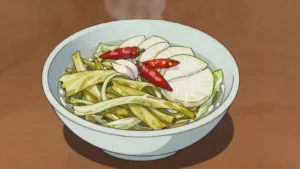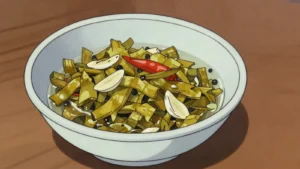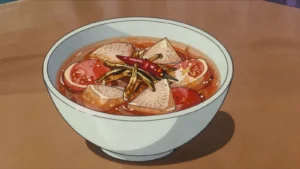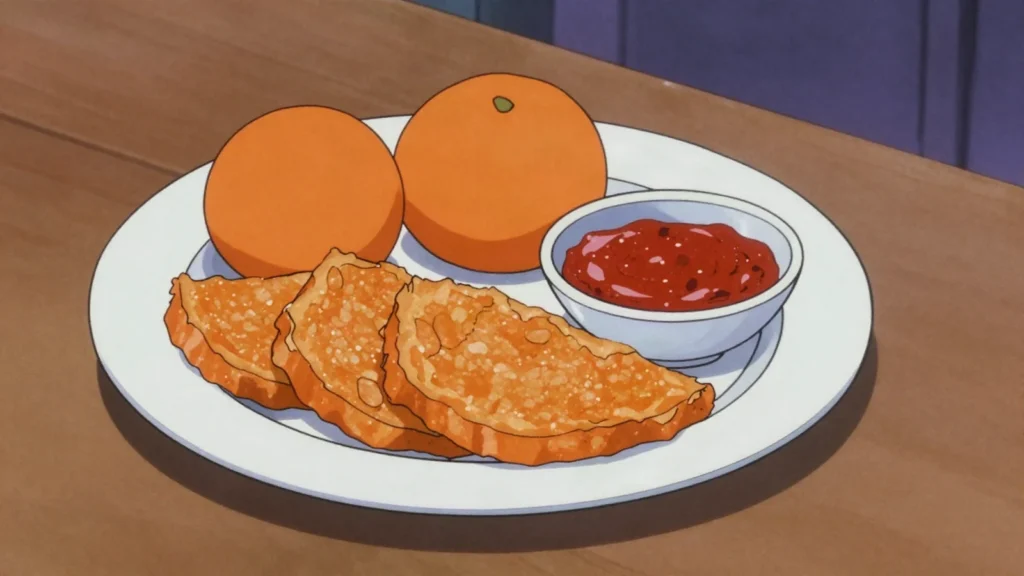

An orange fermented cake made from peanut press-cake or the residue left over from making tofu, unique to West Java. It is a Bandung speciality that turns what would be waste into a food, and the mould that colours it is the same genus laboratories use as a model organism.
It is a mould ferment needing a live starter and a warm humid incubation, and it is made on a press-cake residue that is itself a byproduct of another process — neither is something a home kitchen has to hand.
What goes into it
- peanut press-cake, or okara left from tofu making
- a Neurospora intermedia starter for the orange type
- or a Rhizopus starter for the black type
How it is made
The press-cake is soaked, steamed and pressed into blocks, then inoculated with mould spores and left in a warm humid place for a day or two. Neurospora grows through the block and turns the surface bright orange; the black variety uses Rhizopus instead. The mould also breaks down some of the residue’s fibre and phytate, which is what makes it digestible.
How long it takes: one to three days of incubation
How it is eaten
Fried in slices, crumbled into sambal, or wrapped in leaves and grilled as pepes.
History
Bandung speciality fermented with Neurospora mould; it turns the residue left from making tofu and peanut oil into food.
Frequently asked questions
What is Oncom?
Oncom is a fermented & pickled from Indonesia: orange fermented cake made from peanut press-cake or soy waste, unique to West Java. Bandung speciality fermented with Neurospora mould; it turns the residue left from making tofu and peanut oil into food.
How is Oncom made?
The press-cake is soaked, steamed and pressed into blocks, then inoculated with mould spores and left in a warm humid place for a day or two. Neurospora grows through the block and turns the surface bright orange; the black variety uses Rhizopus instead. The mould also breaks down some of the residue’s fibre and phytate, which is what makes it digestible. It takes one to three days of incubation.
Can I make Oncom at home?
No, and the atlas gives no method for it. It is a mould ferment needing a live starter and a warm humid incubation, and it is made on a press-cake residue that is itself a byproduct of another process — neither is something a home kitchen has to hand.
What goes into Oncom?
Peanut press-cake, or okara left from tofu making, a Neurospora intermedia starter for the orange type, or a Rhizopus starter for the black type.
How is Oncom eaten?
Fried in slices, crumbled into sambal, or wrapped in leaves and grilled as pepes.