
Ingredients
Vegetables
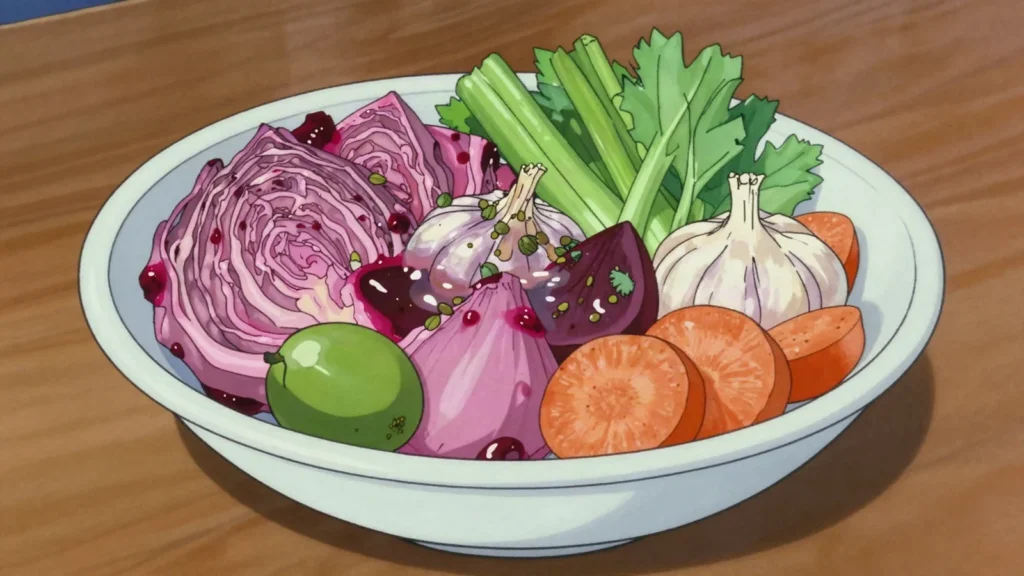
- 1small white cabbage, cut in wedges through the core
- 400 ggreen tomatoes
- 300 gcarrots, in thick batons
- 2 headsgarlic, cloves peeled
- 2beetroot, peeled and sliced, for the red version
Brine
- 2 litreswater
- 100 gcoarse non-iodised salt — 5% of the water’s weight
Aromatics
- 1 bunchcelery with leaves
- 2 tbspcoriander seed
- 1 tbspblack peppercorns
- 3bay leaves
- 2hot chillies
- 1 bunchtarragon or dill
Directions
- Wash the vegetables and cut them large. The cabbage stays in wedges with the core attached so the leaves hold together, and everything else is cut thick — small pieces go soft.
- Dissolve the salt completely in the water. Weigh it: 5% is what protects the jar through the weeks before the acidity builds, and it is the only measurement here that has to be right.
- Pack the vegetables into a clean jar, layering the beetroot through if you want the red version — the colour bleeds into everything and turns the cabbage a deep magenta, which is the point of it.
- Tuck the celery, coriander seed, peppercorns, bay, chilli and tarragon among the vegetables and pour over the brine so everything sits 3 cm below the surface.
- Weight everything down. Anything floating above the brine will grow mould, and that is the only real way this fails.
- Cover loosely and leave at cool room temperature for two to four weeks, skimming any white film off as it appears.
- Taste from the second week. When it is properly sour and still crisp, move it somewhere cold. It keeps through the winter.
- Serve straight from the jar alongside grilled meat, khachapuri and wine at a supra.
Technique
- Non-iodised salt, weighed. Iodine holds back the bacteria you are relying on.
- Skim the surface film. A thin white bloom is harmless yeast; coloured fuzzy mould means something rose above the brine.
- Cool room, not warm. At 25°C (77°F) it sours in ten days and goes flabby; at 18°C (64°F) it takes a month and stays crisp.
Substitutions
- Green beans, small aubergines or cauliflower, all of which Georgians pickle this way.
- Blackcurrant or oak leaves for extra crunch, whose tannins keep the vegetables firm.
Variations
- The beetroot-red cabbage version is the one most often seen at a supra.
- Stuffed aubergines — badrijani mtsvanilit — are fermented in the same brine with a herb and garlic filling.
History
Georgian households salt-ferment autumn vegetables in jars and barrels; the deep red cabbage version is coloured with beetroot.
Frequently asked questions
What is Mzhaveuli?
Mzhaveuli is a fermented & pickled from Georgia: brined vegetables such as cabbage, green tomatoes and garlic, eaten with meat and wine. Georgian households salt-ferment autumn vegetables in jars and barrels; the deep red cabbage version is coloured with beetroot.
How long does Mzhaveuli take to make?
Mzhaveuli takes 40 min plus 2 to 4 weeks fermenting of preparation and no cooking at all. The recipe makes fills a 3-litre jar. It is rated easy to make.
What can I substitute in Mzhaveuli?
Yes, within limits. Green beans, small aubergines or cauliflower, all of which Georgians pickle this way. Blackcurrant or oak leaves for extra crunch, whose tannins keep the vegetables firm.
What is the most important thing to get right in Mzhaveuli?
Dissolve the salt completely in the water. Weigh it: 5% is what protects the jar through the weeks before the acidity builds, and it is the only measurement here that has to be right.