
Ingredients
Brew
- 1 kgdried mogwana berries (Grewia flava), rinsed
- 1 kgbrown sugar
- 4 litresclean water, at blood heat
- 200 gsorghum malt meal, or 7 g baker’s yeast for a reliable start
Equipment
- 1food-grade plastic drum or clay pot of 8 litres
- 1clean cotton cloth and string
- 1long wooden stirring stick
Directions
- Sort the berries, discarding any mouldy fruit, and rinse in cold water. Crush them lightly with a wooden pestle so the skins split but the stones stay whole.
- Dissolve the sugar in 1 litre of hot water, then top up with cool water until the whole batch sits at about 35°C (95°F) — warm enough to start the ferment, cool enough not to kill it.
- Tip the crushed berries into the drum, pour over the sweet water, and stir with the clean wooden stick.
- Stir in the sorghum malt meal or the yeast. Traditionally a cupful of a previous batch goes in instead, carrying its own wild yeasts.
- Cover the mouth with the cloth tied down against flies, and stand the drum somewhere warm and shaded, around 25 to 30°C (85°F).
- Stir once each morning. By day two the surface should be foaming and smelling of cider; by day three it turns sharp and yeasty.
- Taste from day three. When the sweetness has mostly gone and the brew is tart with a light fizz, it is ready — typically 3 days in summer heat, 5 in winter.
- Strain through cloth into jugs and drink cold within a day or two, cloudy and unfiltered, straight from a cup.
Technique
- Khadi is a home brew, and it is exactly the kind of drink that gets adulterated. Nothing belongs in it but berries, sugar, water and a yeast starter — never battery acid, methylated spirits or tobacco, all of which have been reported in illicit versions and are genuinely dangerous.
- It keeps fermenting in the jug. After about three days it turns vinegary and flat, so it is brewed in small batches and drunk young.
- Strength lands roughly between 3 and 6 percent alcohol depending on time and temperature; there is no way to know accurately without a hydrometer reading before and after.
Substitutions
- Mogwana berries are hard to buy outside southern Africa. Raisins plus a handful of dried hibiscus give a similar sugar-and-tartness balance, though not the same resinous fruit note.
Variations
- Some brewers add a few crushed marula fruits in season for extra aroma.
- A stronger household version doubles the sugar and ferments a full week, giving a much sharper, headier drink.
History
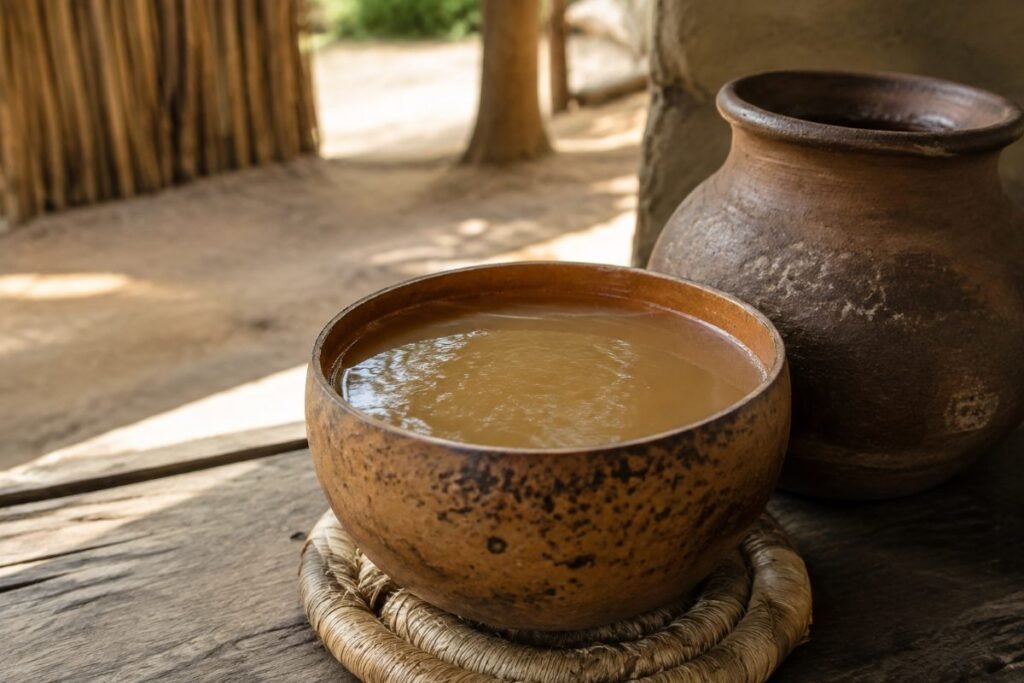
A traditional fermented drink made from the fruit of the wild sengaparile or a similar indigenous plant, sometimes combined with sugar or maize, documented among the Batswana people for generations as a home-brewed beverage tied closely to rural and traditional Tswana culture. Its production, fermenting the fruit naturally over several days, reflects a broader Southern African tradition of home-brewed fermented drinks made from locally available fruit or grain rather than commercially produced alcohol, historically important in a region where formal breweries were not widely accessible in rural areas. Khadi remains closely associated with traditional Batswana social and ceremonial gatherings, though its production and consumption have become less common in more urbanized parts of Botswana over recent decades.
Frequently asked questions
What is Khadi?
Khadi is a wine & spirit from Botswana: country brew of wild grewia berries fermented with sugar, sharp and cloudy. A traditional fermented drink made from the fruit of the wild sengaparile or a similar indigenous plant, sometimes combined with sugar or maize, documented among the Batswana people for generations as a home-brewed beverage tied closely to rural and traditional Tswana culture. Its production, fermenting the fruit naturally over several days, reflects a broader Southern African tradition of home-brewed fermented drinks made from locally available fruit or grain rather than commercially produced alcohol, historically important in a region where formal breweries were not widely accessible in rural areas. Khadi remains closely associated with traditional Batswana social and ceremonial gatherings, though its production and consumption have become less common in more urbanized parts of Botswana over recent decades.
How long does Khadi take to make?
Khadi takes 30 min of preparation and 3 to 5 days fermenting of cooking. The recipe makes about 4 litres. It is rated medium to make.
What can I substitute in Khadi?
Yes, within limits. Mogwana berries are hard to buy outside southern Africa. Raisins plus a handful of dried hibiscus give a similar sugar-and-tartness balance, though not the same resinous fruit note.
What is the most important thing to get right in Khadi?
Dissolve the sugar in 1 litre of hot water, then top up with cool water until the whole batch sits at about 35°C (95°F) — warm enough to start the ferment, cool enough not to kill it.