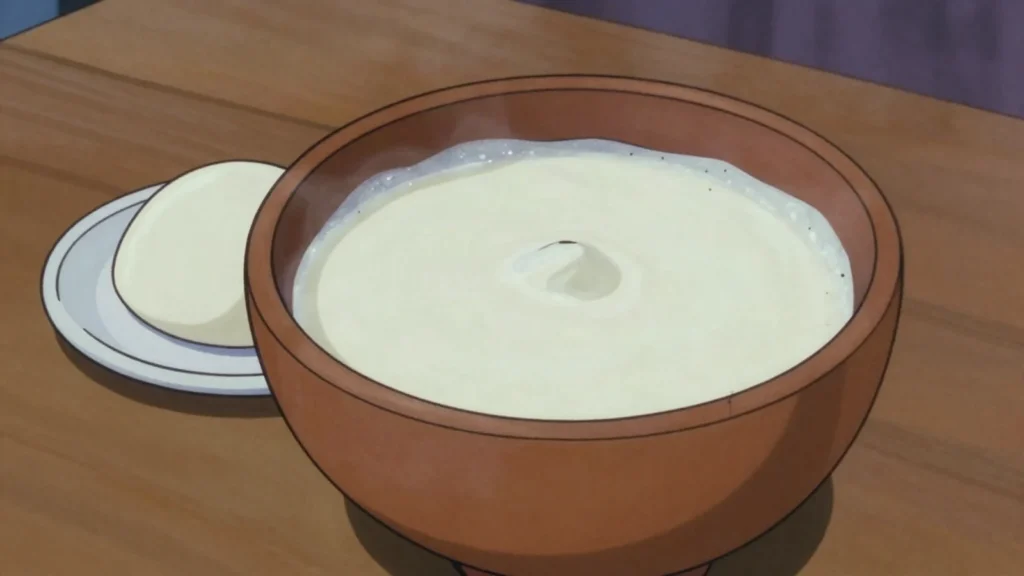

Ingredients
Milk
- 2 litresraw whole milk
- or 2 litres pasteurised milk with 4 tbsp live natural yoghurt
Vessel
- a dried gourd (calabash), or a clean jar
- a cloth, to cover
To serve
- nshima
- or drunk cold from a cup
Directions
- Pour the fresh milk into a clean gourd or jar and cover it with a cloth rather than a lid, so gas can escape.
- Leave it undisturbed at room temperature for two to three days. Do not stir it, do not shake it, do not open it to check.
- That stillness is the method. Tonga and Ila households call this the spontaneous ferment: no starter is added at all, and the bacteria already in the raw milk and in the wall of the gourd do the work — a gourd used for years carries its own reliable population.
- It will separate into a thick white curd with a layer of clear whey beneath. That separation is correct and is how you know it has worked.
- It is ready when it is thick, cleanly sour and smells tangy rather than putrid. Two days in real heat, three in a cooler room.
- A bitter taste, a pink or grey colour, or a smell that is rotten rather than sour means the wrong organisms won. Throw it out and scald the gourd.
- Shake or stir it just before serving to bring the curd and whey back together.
- Drink it cold from a cup, or pour it over hot nshima and eat the two together.
- Because it uses raw milk and no starter, this is a preparation of households that know their own animals. With shop milk the culture is gone, and you must add the yoghurt — which gives something closer to mabisi than to nothing at all.
Technique
- Do not disturb it while it ferments.
- Clean sour smell good. Bitter or rotten smell out.
- Raw milk with no starter is the traditional version. Pasteurised milk needs a starter or it spoils.
Substitutions
- Live natural yoghurt as a starter with pasteurised milk.
- A glass jar in place of a gourd, though the gourd carries the culture.
- Illa mabisi, the version churned to take the butter off first.
Variations
- The Zimbabwean mukaka wakakora and Kenyan mursik are the same practice.
- Sweetened with sugar, which is now common in Lusaka.
History
Milk is left to ferment in a gourd for days without a starter; Tonga and Ila cattle-keeping households have kept it this way for generations.
Frequently asked questions
What is Mabisi?
Mabisi is a cheese & dairy from Zambia: spontaneously soured milk, thick and tangy, eaten with nshima. Milk is left to ferment in a gourd for days without a starter; Tonga and Ila cattle-keeping households have kept it this way for generations.
How long does Mabisi take to make?
Mabisi takes 15 min plus 2 to 3 days souring of preparation and no cooking at all. The recipe makes makes about 2 litres. It is rated easy to make.
What can I substitute in Mabisi?
Yes, within limits. Live natural yoghurt as a starter with pasteurised milk. A glass jar in place of a gourd, though the gourd carries the culture. Illa mabisi, the version churned to take the butter off first.
What is the most important thing to get right in Mabisi?
Pour the fresh milk into a clean gourd or jar and cover it with a cloth rather than a lid, so gas can escape.