The slender, fragrant, separate-grained rices of the Indian subcontinent and Southeast Asia — basmati from the Himalayan foothills, jasmine from Thailand — and the long-grain rices of the Americas and West Africa: the rices that are steamed or boiled to stay fluffy and apart, for pilaus, biryanis, and plates piled beside a curry or a stew.
Where it comes from
Basmati — ‘fragrant’ in Hindi — has been grown in the Punjab and the Himalayan foothills of India and Pakistan for centuries and is aged for a year or more before sale, which dries the grain so that it cooks longer, fluffier and more separate than any other rice; its scent is the same compound as in pandan leaf and it is the rice of biryani, pulao and the Persian chelow. Jasmine rice, from Thailand and Cambodia, is softer and slightly clinging, with a milder, floral scent, and is the everyday rice of Thai and much Southeast Asian eating.
The long-grain rices of the Americas — Carolina Gold, the Louisiana and Texas rices, and the Caribbean’s — came with rice culture from West Africa, where rice had been grown for three thousand years and where the Jollof and Senegalese thieboudienne traditions still cook it in the pot with the sauce. American long-grain is neutral and firm, the rice of Cajun and Creole cooking, of Mexican arroz rojo, and of most of the world’s plain boiled rice.
Varieties
- Basmati (aged, Indian and Pakistani) — Very long, thin, aromatic; elongates to twice its length. For biryani, pulao, plain rice with curry. Aged basmati is dearer and better.
- Sella / parboiled basmati — Basmati parboiled in the husk; firmer, yellower, harder to overcook. Common in restaurant biryanis.
- Jasmine (hom mali) — Thai fragrant rice; soft, slightly sticky, floral. The rice with Thai and Lao curries and stir-fries.
- American long-grain (Carolina, Louisiana) — Neutral, firm, separate; for jambalaya, red beans and rice, arroz rojo and plain boiled rice.
- West African and Asian parboiled rice — Nutty, yellow, separate; the rice of jollof and thieboudienne, and of much South Indian and Sri Lankan eating.
- Persian rices (domsiah, tarom) — Iranian long-grain aromatic rices for chelow and tahdig; basmati is the usual substitute.
In the kitchen
Basmati: rinse until the water runs clear, soak thirty minutes, then either boil in plenty of salted water for 6–8 minutes until just tender and drain (the Persian and Indian restaurant method, which gives the most separate grains) or cook by absorption with one and a half times its volume of water, covered, low, for 12 minutes and rest for 10. Do not stir it while it cooks. A tahdig — the golden crust — forms when drained rice is returned to the pan with oil or yoghurt and cooked low for 40 minutes.
Jasmine: rinse, then cook by absorption with slightly less water than basmati, or steam. It is meant to be a little clinging. American long-grain cooks by absorption in the same way and takes to being cooked in stock with sofrito for jambalaya or fried in oil with tomato for arroz rojo. For fried rice, use cold cooked rice from the day before.
Choosing and keeping
Aged basmati from Indian and Pakistani grocers in large cloth or plastic sacks is better and cheaper than supermarket boxes; the grains should be long, unbroken and slightly translucent. Rice keeps for years dry; rinse before cooking to remove starch dust.
Cooked rice should be cooled fast and refrigerated within an hour or two, kept no more than a day, and reheated thoroughly; Bacillus cereus grows in rice left warm. Cold cooked rice is what fried rice wants.
Dishes with basmati
 Diri kole ak pwaRice cooked together with red kidney beans, thyme and cloves
 MucapataZambezia rice cooked with mung beans and coconut
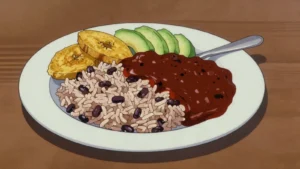 AyimolouRice and beans with dark pepper sauce, everyday street lunch
 Seasoned riceOne-pot rice cooked with meats and vegetables
 JuaneRice, chicken and olives steamed in bijao leaf, jungle festival dish
 Samlor KorkoAncient 'stirring soup' of many vegetables, roasted rice and fish
 Arroz con patoDuck rice tinted green with coriander and dark beer, northern classic
 Khao Man GaiPoached chicken on garlic rice with fermented-bean ginger sauce
Basmati and the long-grain rices is tagged on 143 dishes from 82 countries in the atlas. These notes are written from general knowledge and carry no per-fact citation — see About.